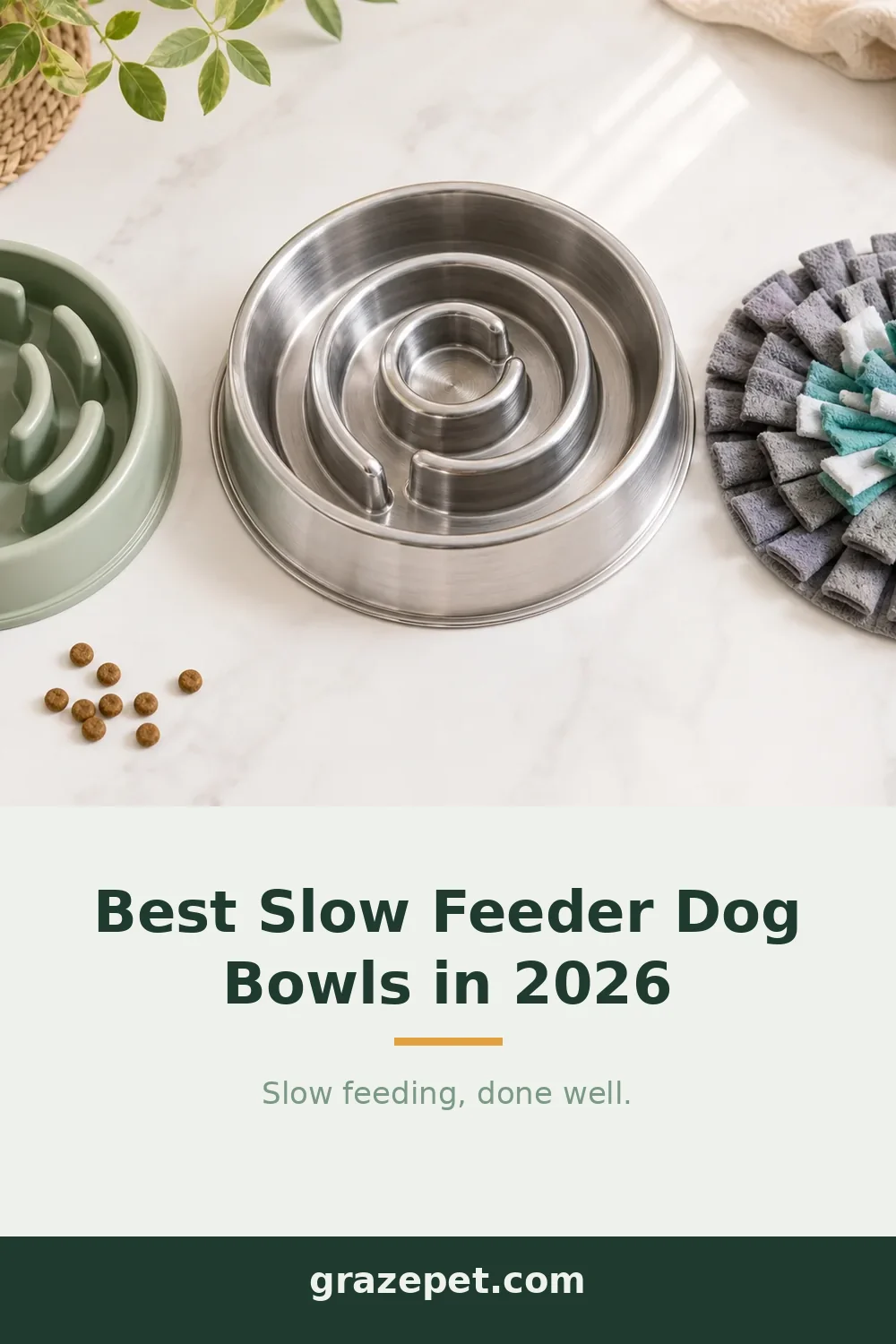
Best Slow Feeder Dog Bowls in 2026 (Compared)
For most dogs, the best slow feeder dog bowl is a stainless steel maze bowl: it slows gulping as well as plastic, but it's easier to keep hygienic and tends to last far longer. A slow feeder is simply a bowl (or mat) with ridges, mazes or pockets that force a dog to eat in smaller bites; our what is a slow feeder dog bowl explainer covers the basics. That's the short answer. The longer one depends on what your dog actually does at mealtime, so this guide compares the main types of slow feeder, shows which one fits which dog, and covers the cases where a bowl isn't the right tool at all.
We haven't run lab tests and we won't pretend to. What follows is a comparison framework: the criteria that decide whether a slow feeder works in a real kitchen, how each type scores against them, and how to match one to your dog.
How should you choose a slow feeder dog bowl?
Five questions separate a useful slow feeder from a frustrating one:
- Does the design really slow this dog? A maze that stops a Beagle may be solved by a Labrador in a minute. A pattern that suits a long muzzle may be unreachable for a flat-faced breed.
- What is it made of? Material decides hygiene, lifespan and what happens when a strong dog chews it. See the material angle in our stainless steel slow feeder guide.
- Does it stay put? A bowl that skates across the floor makes dogs frustrated and floors messy. Look for a non-slip base.
- Can you clean it properly? Deep grooves and wet food are a bad mix if you can't reach the bottom. Our slow feeder cleaning guide explains the routine.
- Does it fit a whole meal? If the food won't fit in the maze, you'll end up pouring a heap on top, and the design stops working.
A bowl can win on price and still lose overall if you're replacing it every few months or scrubbing scratched grooves by hand.
Which type of slow feeder is best? Quick comparison
| Type | Hygiene | Durability | Slows gulping | Best for |
|---|---|---|---|---|
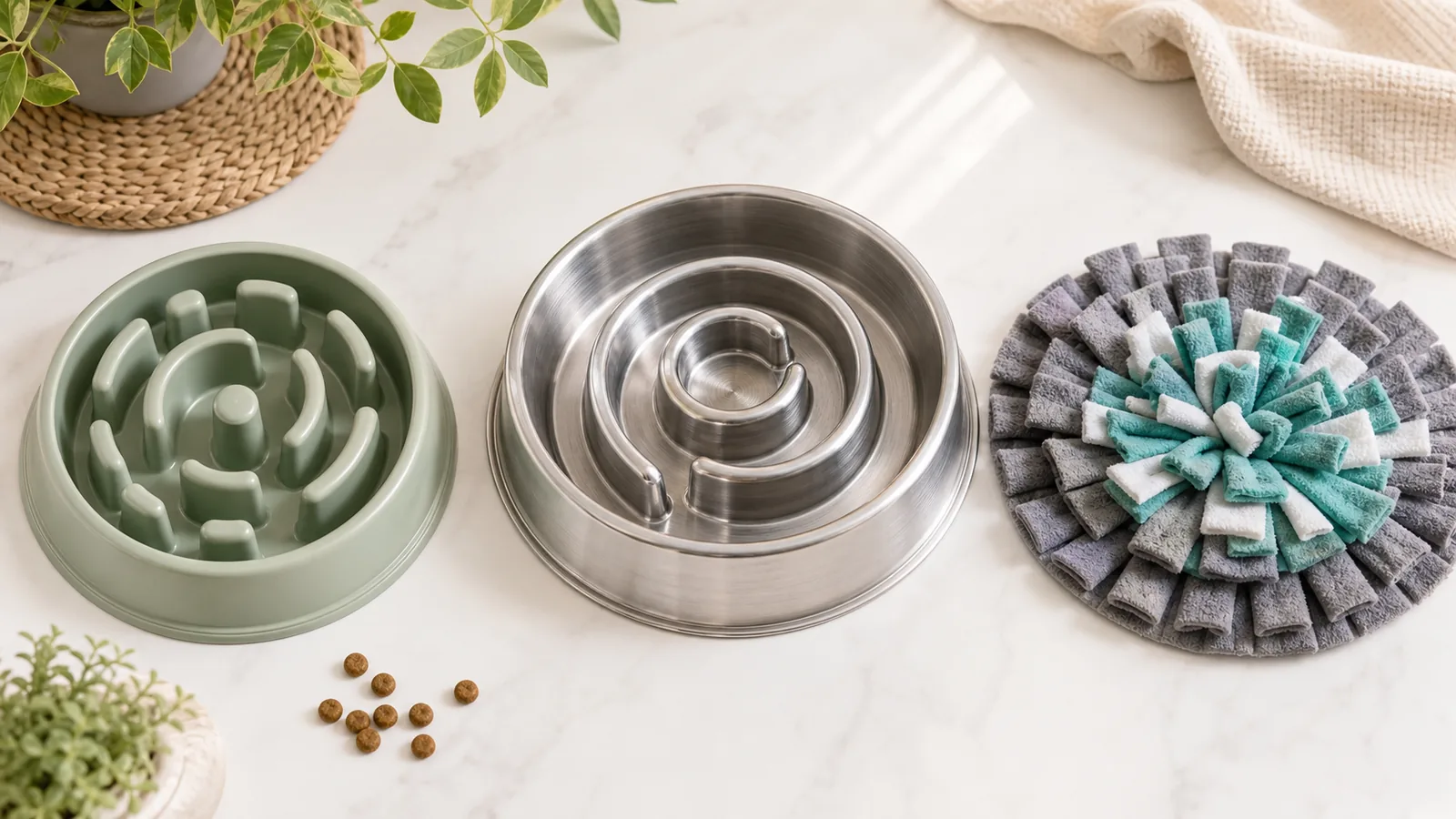
| Stainless steel maze bowl | Non-porous, easy to sanitise | Years | Yes, with a proper maze | Everyday dry-food feeding, most dogs |
| Plastic maze bowl | Scratches can trap residue | Months to a couple of years, depending on dog | Yes | Lowest upfront cost, light chewers |
| Ceramic slow feeder | Smooth, easy to clean | Can chip or crack if dropped | Yes | Gentle eaters, owners who like the look |
| Silicone feeder mat / lick mat | Fair, can retain smells | Medium; can tear if chewed | Moderate | Wet food, calming, travel |
| Snuffle mat | Machine-washable fabric | Medium; not for chewers | Yes, plus scent enrichment | Dry kibble, boredom, rainy days |
| Puzzle feeder toy | Harder to clean inside | Varies | Yes, with effort | Dogs who love problem-solving |
| DIY (muffin tin, ball in bowl) | Varies | Short | Moderate | Trying the idea for free |
The two everyday contenders are the stainless steel and plastic maze bowls, which we compare head to head in stainless steel vs plastic slow feeder. If you're weighing a bowl against a mat, see snuffle mat vs slow feeder bowl. For toy-style options, read the dog puzzle feeder guide.
What is our top pick for most dogs?
For most dogs and most homes, the best slow feeder dog bowl is a stainless steel maze bowl, and for dry food it isn't especially close.
- Hygiene: non-porous, so there are no scratch grooves for bacteria to hide in. Plastic feeders can develop micro-scratches that hold residue, and some owners link them to chin irritation.
- Durability: it won't crack, warp in the dishwasher, or get chewed into swallowable pieces.
- Safety: food-grade stainless is inert, with no plastic taste that puts picky eaters off.
- Value: you buy it once rather than replacing plastic every so often.
The one thing the material doesn't change is the slowing. That comes from the maze design, which either material can have. You give up nothing on pacing and gain on cleaning and lifespan.
👉 Our pick: the Stainless Steel Slow Feeder Dog Bowl — dishwasher-safe, non-slip base →
The maze paces fast eaters, the non-slip base keeps it from skating around, and the steel is easy to keep clean — the criteria above in one bowl. Check the product page for current dimensions before you buy.
If you're comparing it against a well-known plastic option, see Graze vs Outward Hound for a bias-disclosed comparison.
Which slow feeder is best for my dog?
The "best" bowl shifts with the dog.
By eating style
- The inhaler (finishes in seconds). A deeper, tighter maze. Start with a medium-difficulty pattern; if frustration shows, step down.
- The anxious or competitive eater. A gentler pattern, fed in a quiet spot. Harder isn't better here. If guarding is involved, read food aggression in dogs.
- The picky nibbler. A slow feeder isn't the problem. Skip it.
- The chewer. Steel or no bowl; avoid fabric and thin plastic.
By size and shape
- Small and toy breeds: shallow, narrow channels they can actually reach into.
- Large and giant dogs: capacity and a weighty base matter most. See best slow feeder for large dogs.
- Flat-faced breeds: a wide, shallow pattern; see best slow feeder for bulldogs.
By breed guide
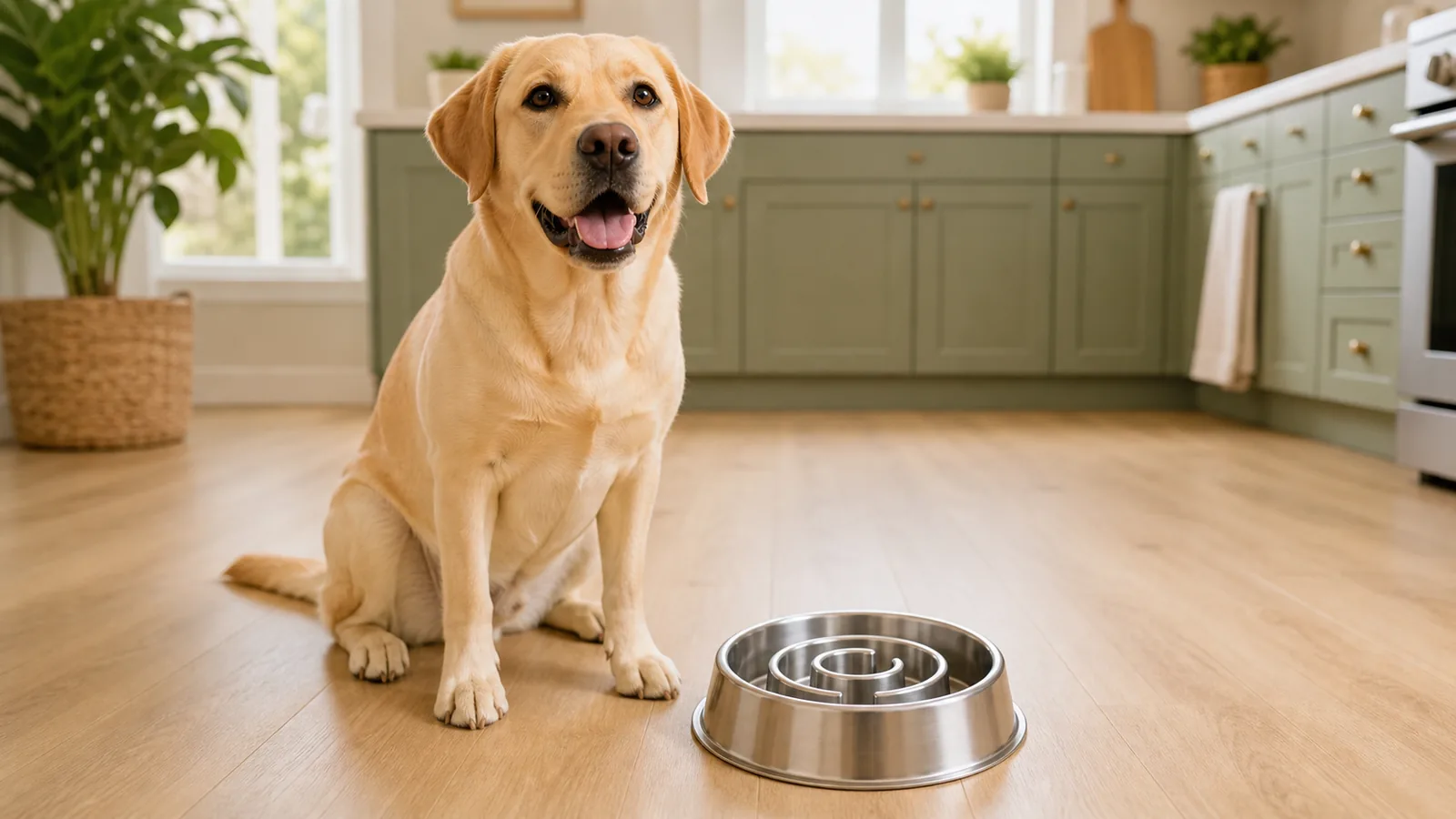
- Labradors and Golden Retrievers: classic fast eaters.
- Great Danes and other deep-chested giants: bloat risk, so floor-level bowls and capacity matter.
- German Shepherds, Huskies, Beagles and Dachshunds: each has its own twist.
- Puppies: smaller mouths, growing needs.
By situation
- Bored dogs: add a snuffle mat alongside the bowl.
- Wet food feeders: use a flatter surface; read slow feeder for wet food.
- Multi-dog homes: feed in separate spots, with a bowl each, so no one has to rush.
Do slow feeders actually work?
Usually, for the problem they're designed for: they make a dog take longer to finish a meal, because ridges limit bite size and force tongue and nose work. How much longer varies a lot by dog, bowl and food. Some dogs take several times longer; clever dogs learn to flip or tip lighter bowls. Manufacturers sometimes advertise precise multipliers; don't rely on those numbers, and judge by your own dog's timing. Time a normal meal for a few days first so you have a baseline. Our do slow feeder dog bowls work article digs into the mechanism and the limits.
Slower eating can mean less gulped air, less gagging and fewer regurgitated meals for dogs who bolt. In deep-chested breeds, fast eating is one of several factors vets discuss in connection with bloat (GDV), so a slow feeder is a sensible precaution, not a guarantee. For the health picture, see are slow feeder bowls good for dogs? and the bloat guide.
How do you start using a slow feeder?
- Same food, same portion. Only the speed changes.
- Spread the food. Don't heap it. Even distribution gets the dog working immediately.
- Introduce it at an ordinary meal, not when your dog is ravenous or stressed.
- Watch the first few meals for frustration, flipping, or chewing on the bowl.
- Adjust difficulty. If your dog gives up, move to an easier pattern or serve half the meal in a plain bowl. If they finish just as fast, try a harder pattern.
- Clean it every day. Food residue in grooves is the quickest way to put a dog off a bowl.
When is a slow feeder bowl the wrong tool?
A maze bowl isn't always the answer, and saying so is the honest part of any buying guide.
- Your dog already eats calmly. You don't need one, though it adds light enrichment.
- The goal is mental stimulation. A snuffle mat or puzzle toy beats a bowl for engagement.
- Your dog is suddenly ravenous or eating much faster than normal. That's a vet conversation first. See why is my dog always hungry and how to stop your dog eating too fast.
- Your dog gets stressed by the bowl. Back off and consider scatter feeding.
- You can't clean it. A slow feeder you can't clean will become a hygiene problem.
Many owners end up using both: the stainless steel slow feeder for everyday meals and a snuffle mat for enrichment and variety.
Slow feeder buying checklist
- Size: capacity matches one full meal for your dog's weight
- Material: stainless steel for hygiene and durability, or BPA-free plastic if you accept more wear
- Pattern: shallow channels for flat-faced breeds, deeper mazes for fast gulpers
- Base: non-slip so an eager eater can't skate it across the floor
- Cleaning: dishwasher-safe, or grooves wide enough to scrub
- Food type: dry kibble suits a bowl; for wet food, see slow feeders for wet food
The verdict
The best slow feeder dog bowl for most dogs is a stainless steel maze bowl: it slows gulping as well as plastic, is easier to keep clean, doesn't warp or crack, and typically costs less over time because you buy it once. Match the maze difficulty and capacity to your dog, spread the food, keep it clean, and watch how your dog responds. If a bowl isn't the right fit, a mat or a puzzle toy might be.
👉 See our top pick: the Stainless Steel Slow Feeder Dog Bowl → 👉 Add enrichment with the Snuffle Mat for Dogs → 👉 Pair it with a Lick Mat for wet food →
Frequently Asked Questions
What is the best slow feeder dog bowl? For most dogs, a stainless steel maze bowl with a non-slip base. It slows eating as effectively as plastic, but it's easier to keep hygienic, won't crack or warp, and lasts longer.
Are stainless steel slow feeders better than plastic? For most homes, yes. The slowing comes from the maze, which both can have, but stainless steel doesn't scratch easily, is dishwasher-safe and is much more durable. Plastic costs less upfront and suits light chewers.
Do slow feeder bowls actually work? Generally yes, for dogs that gulp: the ridges limit bite size and make the dog work for each mouthful. How much slower varies by dog and bowl, so time a normal meal first and compare.
What is the best slow feeder for a Labrador or a Bulldog? Labradors usually do well with a deep maze in steel. Bulldogs and other flat-faced breeds need a wider, shallower pattern they can reach into. See our breed guides for details.
How do I know what size slow feeder to buy? Pick one that holds your dog's full measured meal without food piled above the maze, with channels your dog's muzzle can reach. Big dogs need capacity; small dogs need shallow, narrow channels.
Is a snuffle mat better than a slow feeder bowl? Neither is better outright. A bowl is quicker for everyday meals and wet food; a snuffle mat adds scent work for dry kibble. Plenty of owners use both.
Should I buy a slow feeder if my dog doesn't eat fast? Probably not for speed. If your dog eats calmly, a slow feeder is optional. If eating habits change suddenly, talk to your vet.
What is a slow feeder? A slow feeder is a dog bowl or mat with raised ridges, mazes or pockets that make a dog work for each bite, so a meal takes minutes instead of seconds. It slows eating without changing how much your dog gets.
How long should it take a dog to finish a meal in a slow feeder? Most dogs take several minutes, roughly five to fifteen depending on the pattern and the dog. If your dog finishes as fast as from a plain bowl, move to a harder pattern; if they give up, ease off.
What can I use for wet food instead of a slow feeder bowl? A lick mat works well for wet or soft food because the textured surface makes licking it clean slow. See slow feeders for wet food.
Save this guide