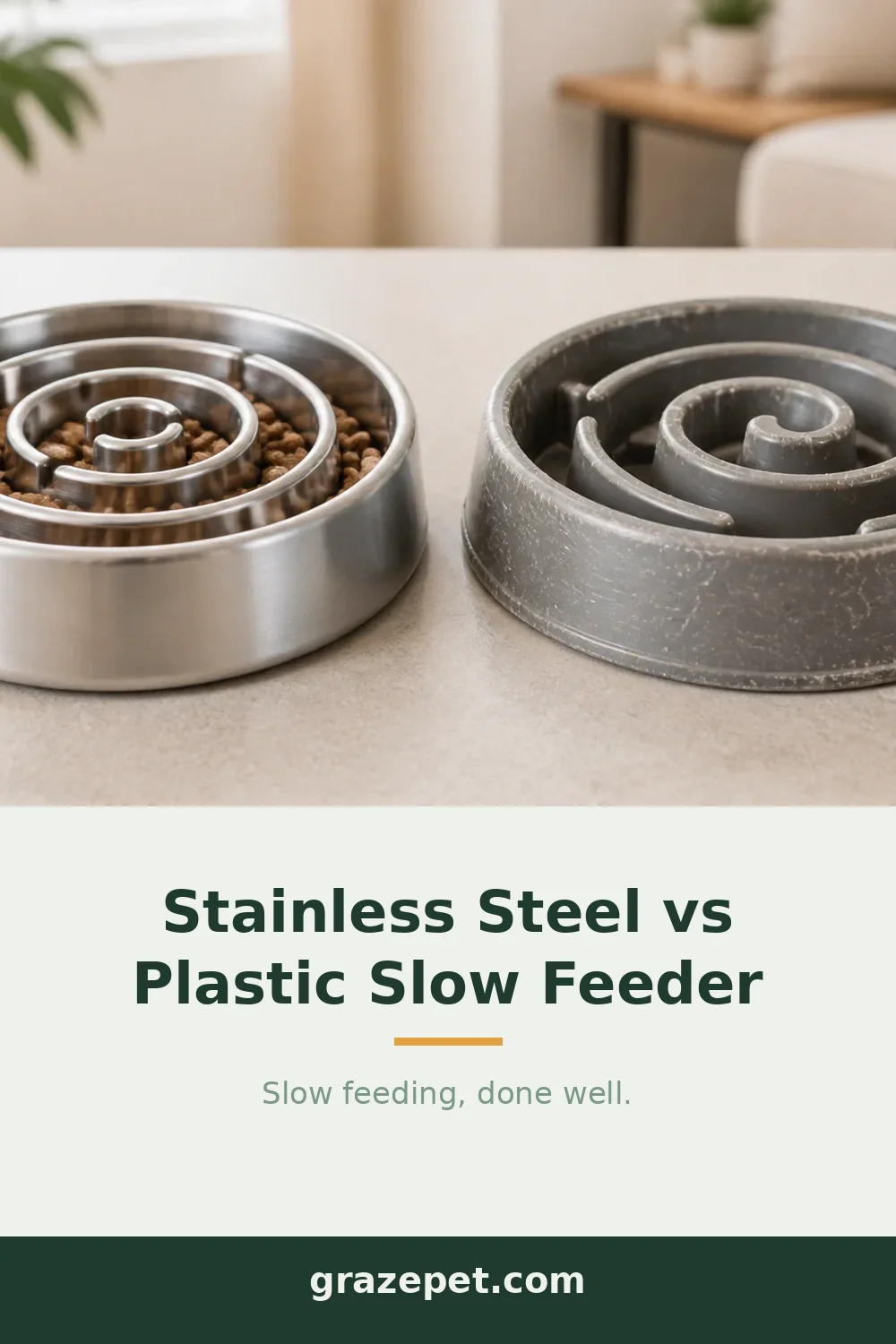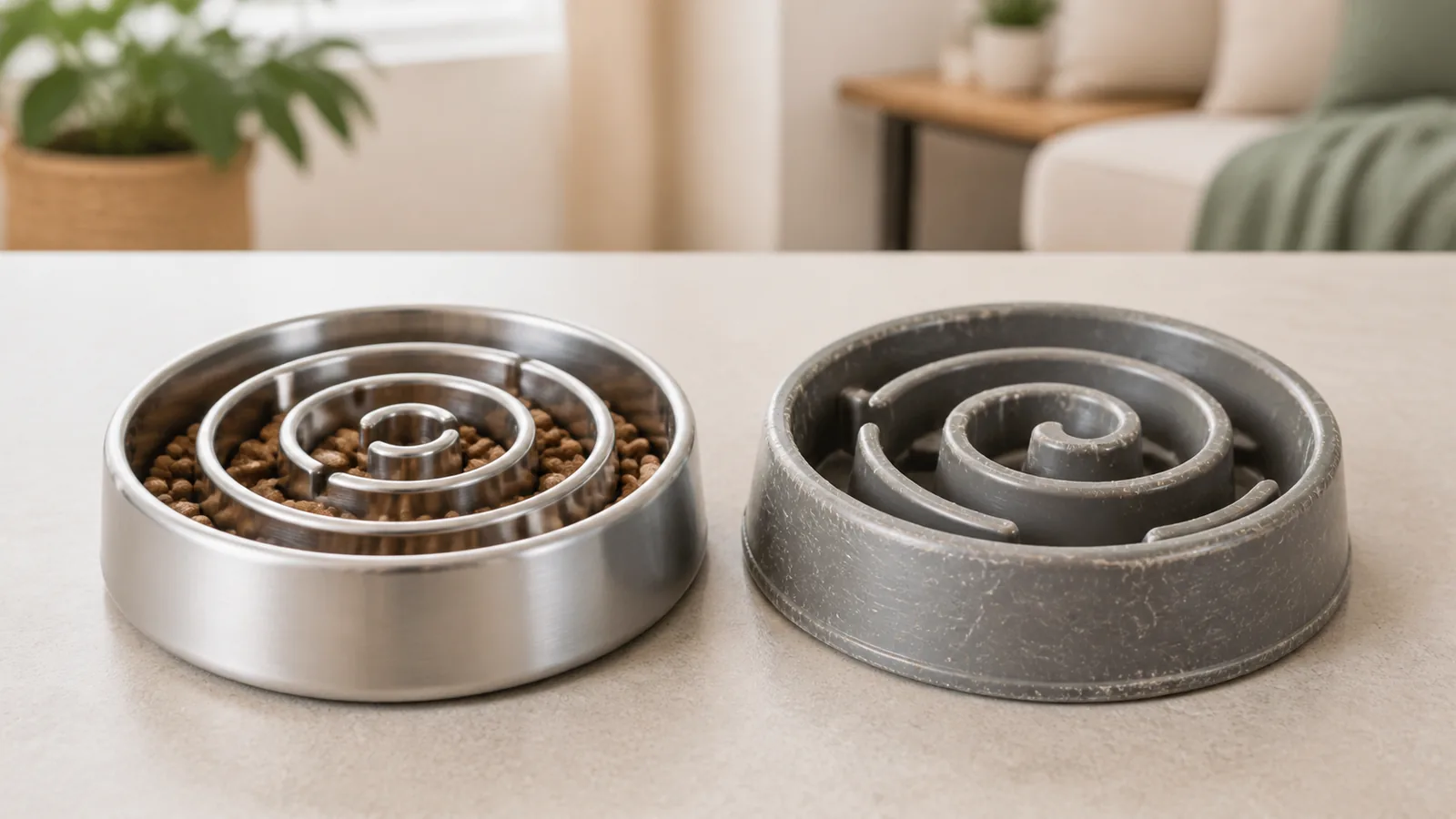
Stainless Steel vs Plastic Slow Feeder Dog Bowls: Which Is Better?
For most dogs, a stainless steel slow feeder is the better long-term choice: it doesn't scratch into bacteria-holding grooves, survives a hot dishwasher, can't be chewed into swallowable pieces, and lasts years. Plastic wins on price, weight and maze complexity — so it still makes sense for short-term use, travel, or dogs who outsmart simple steel mazes.
That's the verdict. The rest of this page is the reasoning, because "steel good, plastic bad" is too blunt to be useful. Plastic has one genuine advantage that most comparison pages skip, and steel has a couple of weaknesses worth knowing before you buy. If you're still deciding whether your dog needs a slow feeder at all, start with whether slow feeder bowls are good for dogs and come back.
How do stainless steel and plastic slow feeders compare at a glance?
| Factor | Plastic slow feeder | Stainless steel slow feeder |
|---|---|---|
| Surface over time | Scratches and dulls with daily use | Stays smooth; scuffs are cosmetic |
| Cleaning | Many warp or craze on hot dishwasher cycles | Handles hot cycles and boiling water |
| Chewing | Can be gnawed into sharp or swallowable pieces | Effectively chew-proof |
| Chemicals | Depends on the plastic; "BPA-free" isn't the whole story | Food-grade steel is inert with dog food |
| Smell | Absorbs fat and odour as it ages | Doesn't hold smells |
| Maze complexity | Deep, intricate mazes are easy to mould | Usually simpler, shallower ridges |
| Weight | Light, though often with a rubber base | Light-to-medium; needs a non-slip base |
| Upfront cost | Lower | Higher |
| Lifespan | Months to a couple of years, depending on dog | Years, often the life of the dog |
Ceramic and silicone come up too, so here's the short version. Ceramic is heavy and stable but chips, and a chipped glaze is as hard to clean as scratched plastic. Silicone folds flat for travel but is soft enough that determined dogs chew it, and it tends to hold greasy residue. Neither is a bad choice for the right dog; neither beats steel for everyday feeding.
Is stainless steel really more hygienic than plastic?
Yes, but the honest answer is more interesting than the marketing.
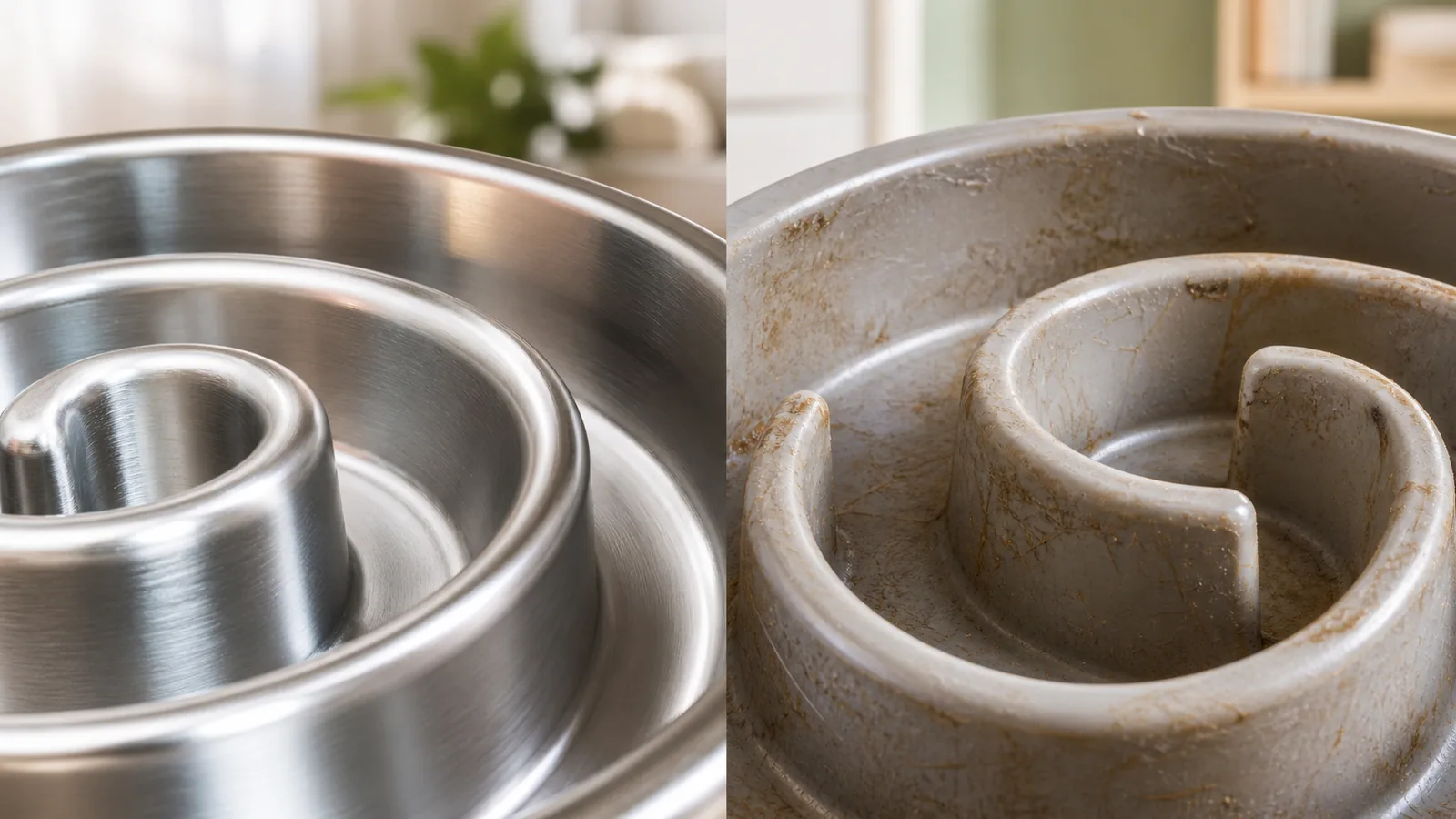
The real difference isn't the material on day one. A brand-new plastic bowl and a brand-new steel bowl are both smooth and both clean up fine. The difference shows up after a few months. Every meal, your dog's teeth and tongue drag kibble across the maze ridges, and on plastic that leaves fine scratches. Those scratches hold fat and food film, and a film of food is exactly where bacteria settle into what's called a biofilm — the slimy layer you can feel on a bowl that "looks clean". Steel takes the same abuse without scoring, so a wash actually reaches the surface.
What does the research say? Less than you'd hope. A small study from Hartpury University in the UK tracked bacteria in plastic, ceramic and stainless steel water bowls over two weeks. It found no statistically significant difference in total bacterial count between materials, though plastic trended highest by day 14 and ceramic hosted the widest range of species. That's six dogs and water bowls, not food bowls, so treat it as a hint rather than proof. The practical takeaway from it, and from basic food-safety logic, is that how often you wash matters more than what the bowl is made of — and steel simply makes thorough washing easier to keep doing.
Can a plastic slow feeder cause chin acne?
It can contribute. Canine chin acne — small red bumps or blackheads on the chin and lips — is commonly associated with plastic bowls in veterinary advice, and switching to steel is a standard first step because it's cheap and easy. But it's an association, not a proven cause. Short-coated breeds, allergies, and plain genetics play a part too. If bumps get infected, swollen or keep coming back after a bowl change, that's a vet visit, not a shopping decision.
Which material survives a chewer or a dishwasher?
This is where the gap is widest.
Chewing. A frustrated dog at a slow feeder often takes it out on the bowl itself — pawing it, picking it up, gnawing the rim. With plastic, that ends in bite marks first and cracked edges later. Sharp plastic edges can cut gums, and swallowed fragments are a potential obstruction risk, which is a genuine emergency. If your dog has ever destroyed a toy in an afternoon, don't give them a plastic slow feeder unsupervised. Steel ends that argument; the worst a dog does is dent it.
Heat. Most dishwashers run their hottest rinse well above what thin plastics like, and many plastic slow feeders tell you to hand-wash or use the top rack only. Ignore that and you'll see warping (a maze that no longer sits flat), clouding, and tiny surface cracks called crazing — which, again, means more places for food film to hide. Steel goes on the bottom rack, can be soaked in very hot water, and comes out the same as it went in. Our full routine, including how to get kibble dust out of tight maze corners, is in how to clean a slow feeder bowl.
Wear signs that mean replace now (plastic):
- You can feel scratches with a fingernail inside the maze.
- The bowl smells after washing, or stays slightly greasy.
- The surface has gone cloudy or chalky.
- Any crack, chip, or missing chunk — no matter how small.
- Chew marks on the rim or ridges.
If you're replacing a plastic slow feeder every six to twelve months because of these, the "cheaper" bowl stopped being cheaper some time ago.
Do plastic slow feeders leach chemicals into dog food?
The risk is low with a decent bowl, but it isn't zero, and it isn't the same for every plastic.
"BPA-free" on a label tells you one chemical isn't in it. It doesn't tell you what replaced it, and it says nothing about the dyes or recycled content in a very cheap bowl with no stated material. Heat, fat, acidic foods and scratched surfaces all increase the chance of a plastic giving something up to the food sitting in it. That's why people who feed wet food in a slow feeder — warm, fatty, pressed into every corner — have more reason to prefer steel than dry-kibble feeders do.
Food-grade stainless steel doesn't react with normal dog food. Look for 304 (also sold as 18/8) stainless, the same grade used for kitchen sinks and cookware. It holds up better against salt and moisture than cheaper grades. A quick check: 304 is generally only weakly magnetic, while cheaper 430 steel is strongly magnetic. It's not a perfect test, but a magnet snapping hard onto a bowl sold as "premium" is worth a second look.
One honest caveat on steel: metal isn't automatically safe just because it's metal. In 2012 Petco recalled a batch of stainless steel pet bowls after US customs detected traces of radioactive cobalt-60 from contaminated scrap metal used by an overseas supplier. Testing later found no health risk, but it's a reminder that the material is only as good as the manufacturer. Buy from a seller who names the steel grade.
Where does plastic actually win?
Three places, and one of them matters.
1. Maze complexity. This is the advantage most steel-selling brands don't mention. Plastic is moulded, so manufacturers can make deep, winding, multi-level mazes. Steel is usually pressed from a sheet, which limits how tall and intricate the ridges can be. For most fast eaters, a steel maze slows meals plenty. But for a dog who clears even a slow feeder in under a minute, a deep plastic maze or a puzzle feeder may simply work better. If that's your dog, read our maze dog bowl guide for how pattern depth changes eating speed.
2. Upfront cost. A plastic slow feeder is usually the cheapest way to find out whether your dog will even accept one. That's a reasonable trial.
3. Weight and packability. For a weekend away, a light plastic bowl or a collapsible silicone one is easier to throw in a bag.
The trade-off is that every one of those wins is short-term. Over a dog's life, the steel bowl tends to be the one you only buy once.
Which should you choose for your dog?
Use this as a quick decision guide:
| Your situation | Better pick | Why |
|---|---|---|
| Everyday meals, long term | Stainless steel | Hygiene and lifespan add up |
| Dog chews bowls or toys | Stainless steel | Plastic fragments are a real risk |
| Recurring chin bumps | Stainless steel (and see a vet) | Removes one easy suspect |
| Feeds wet or raw food | Stainless steel | Easier to sanitise, no fat absorption |
| Extreme gulper, finishes in seconds | Deep plastic maze or puzzle feeder | More slowing per meal |
| Testing whether your dog accepts a slow feeder | Plastic is fine | Low-cost trial |
| Travel or camping | Plastic or silicone | Weight and space |
| Flat-faced breed | Either, if the ridges are shallow and wide | Fit matters more than material |
On that last row: for Pugs, Bulldogs and similar breeds, the maze shape matters more than the metal. Tall, narrow ridges that a long-nosed dog handles easily can frustrate a short muzzle. Our what is a slow feeder dog bowl guide explains the different pattern types if you're unsure what you're looking at.
What mistakes do people make with either material?
- Buying steel without a non-slip base. A light steel bowl on a tiled floor becomes a hockey puck. A rubber ring or silicone base is essential.
- Rinsing instead of washing. Water alone doesn't break down food film on any material. Hot water and dish soap after every meal, or the dishwasher.
- Bleaching steel at full strength. Strong chlorine bleach and long soaks can pit even good stainless steel. Mild soap is enough day to day.
- Keeping a scratched plastic bowl "because it still works". The bowl still slows eating; it's just much harder to get clean.
- Expecting the material to slow eating. It doesn't. Speed comes from the maze pattern. Steel and plastic with the same pattern slow a dog equally.
- Ignoring vomiting or gulping that continues on a slow feeder. Persistent vomiting, a swollen belly, or retching without bringing anything up needs a vet, especially in large, deep-chested dogs.
Our verdict (and our bias)
We sell a stainless steel slow feeder, so weigh this accordingly. We chose steel because the arguments for it — easy hygiene, dishwasher heat, chew resistance, inert food contact — matter every single day, while plastic's wins mostly matter once (the price) or rarely (travel). The one place plastic legitimately beats it is maze depth, and we'd rather tell you that than have you buy the wrong bowl for an extreme gulper.
If you want a steel bowl that paces a typical fast eater and stays clean for years, ours is food-grade, dishwasher-safe, and has a non-slip base. If you'd like to compare a few steel options first, our best stainless steel slow feeder guide covers what to look for.
👉 See the Stainless Steel Slow Feeder Dog Bowl →
Shop our Stainless Steel Slow Feeder Dog Bowl if you decide steel is right for your dog.
Frequently Asked Questions
Is stainless steel really better than plastic for slow feeders? For everyday, long-term use, yes. Stainless steel doesn't scratch into grooves that trap food film, survives hot dishwasher cycles, can't be chewed into fragments, and lasts years. Plastic is cheaper upfront, lighter, and can be moulded into deeper mazes, so it still suits trials, travel, and extreme gulpers.
Can plastic slow feeders cause chin acne in dogs? They can contribute. Scratched plastic holds bacteria-friendly food residue, and chin acne is commonly associated with plastic bowls. It isn't the only cause, though: allergies, genetics and coat type also play a role. Switching to steel is a reasonable first step; persistent or infected bumps need a vet.
Are stainless steel slow feeders dishwasher-safe? Good food-grade stainless steel slow feeders are dishwasher-safe on any rack and handle very hot water. Check whether the non-slip base is removable or rated for the dishwasher, since rubber or silicone bases sometimes have different care instructions than the steel bowl itself.
Do stainless steel slow feeders slow eating as well as plastic ones? With the same maze pattern, yes; the material doesn't change eating speed. In practice, plastic slow feeders are often moulded with deeper, more complex mazes than pressed steel ones, so for a dog who clears a simple maze in under a minute, a deeper design may slow meals more.
What grade of stainless steel is safest for a dog bowl? Look for 304 stainless steel, also sold as 18/8. It is the grade used for kitchen sinks and cookware and resists corrosion from salt and moisture better than cheaper grades like 430. A seller who names the grade is generally more trustworthy than one who just says "stainless".
How often should I replace a plastic slow feeder? Replace it as soon as you see a crack, chip, chew mark, cloudy surface, or scratches you can feel with a fingernail, or if it smells after washing. For many dogs that's within a year. A steel bowl generally only needs replacing if it's badly dented or the base wears out.
Save this guide