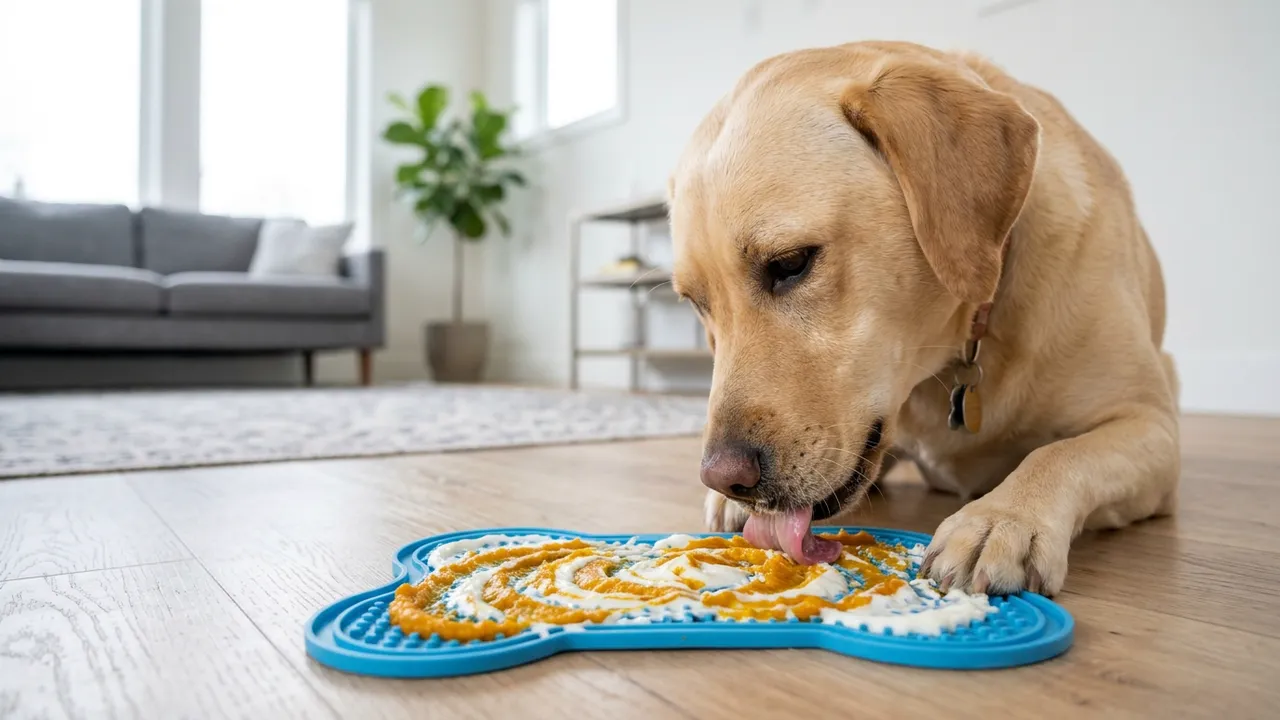
What to Put on a Lick Mat for Dogs (25+ Safe Ideas)
The best things to put on a lick mat are soft, spreadable, dog-safe foods — plain yogurt, mashed pumpkin, wet food, or xylitol-free peanut butter — smeared thin enough that your dog has to work for every lick. Past that, the specific food matters much less than people assume.
Below: the full list by category, what to avoid, a few combinations worth the extra thirty seconds, and the freezing trick that turns a two-minute snack into a proper activity. If you're new to lick mats generally — what they do, why dogs find them calming, how to clean them — start with our lick mats for dogs guide. And if the dog in question is still a puppy, settle the age question first: when puppies can have lick mats.
Texture beats recipe, every time
Search "lick mat recipes" and you'll find eight-ingredient layered parfaits photographed like dessert. They're lovely. Your dog cannot tell the difference between one of those and a tablespoon of their own wet food spread properly into the grooves.
What decides whether a mat holds a dog's attention for one minute or fifteen is texture and thickness — how far the filling gets pushed into the ridges, and whether it's been frozen. So there are only two questions worth asking about any filling: is it safe, and does it spread? Everything below passes both tests, sorted by where you'll probably find it.
Safe lick mat fillings, by category
Everything here should be plain and unseasoned. No added salt, no sugar, no spice blends, nothing prepared for human palates.
Dairy, in moderation
Plain unsweetened yogurt is the most-used filling for good reason: thick, spreads beautifully into a textured surface, and most dogs are enthusiastic about it. Dairy tolerance varies between individual dogs, so start small and see how your dog's stomach handles it before it becomes a habit.
- Plain, unsweetened yogurt
- Plain cottage cheese
- A thin smear of plain cream cheese
- Plain, unsweetened kefir (thinner than yogurt — good for layering under something thicker)
Fruit and vegetables
The category most owners underuse. Mashed or pureed produce spreads well, is low in calories, and gives you variety without leaning on peanut butter every time.
- Mashed banana
- Plain canned pumpkin puree — check the label says pumpkin only, not pumpkin pie filling, which carries added sugar and spices
- Cooked, mashed sweet potato (skin removed)
- Mashed blueberries
- Cooked, mashed carrot
- Steamed and mashed green beans
- Cooked, mashed butternut squash (plain, no butter or seasoning)
- Unsweetened applesauce, or fresh apple mashed with the core and seeds removed
Proteins
- Wet dog food — genuinely the easiest option, and the only one on this page already balanced for your dog
- Plain boiled and mashed chicken or turkey, no seasoning and no bones
- Unsalted, onion-free bone broth, frozen into the ridges
- Xylitol-free peanut butter, thin layer only
- Plain scrambled egg, cooked without butter or salt, mashed fine
- A small amount of tinned sardines in water (no salt added), mashed
Mixtures
A wet base plus something dry adds resistance, which is the entire point. Wet food with a few pieces of kibble pressed into the grooves lasts noticeably longer than wet food alone. Plain cooked rice loosened with pumpkin or unsalted broth works the same way, as does softening your dog's regular kibble in warm water and mashing it to a paste — free, and it counts cleanly as part of a meal rather than an extra.
However you fill it, what goes on the mat comes out of your dog's daily food allowance, not on top of it. A generously loaded mat every afternoon adds up faster than owners expect.
What should never go on a lick mat
Start with xylitol, because it's the one that catches careful owners out. It's a sugar substitute that's genuinely toxic to dogs in small amounts, and it turns up where you wouldn't check: some "natural" peanut butters, some flavoured yogurts, most sugar-free products. Brands reformulate without announcing it, so a jar you've safely used for two years can change. Read the label every time you buy, not just the first time.
The rest is the usual toxicity roll call, and it applies here exactly as it would anywhere else:
- Chocolate, grapes, and raisins — toxic to dogs
- Onion and garlic — toxic in more than trace amounts, which rules out most stock cubes and prepared broths
- Excess salt — skip anything salted, cured, or seasoned for people
- Cooked bones — not really a filling, but worth repeating anywhere dog food is discussed: they splinter
One more, less obvious: don't debut a brand-new food on a mat right before something stressful. If you're loading it to get through a bath or a vet visit, that's the worst possible moment to discover your dog doesn't tolerate cottage cheese. Test anything new on an ordinary day first.
Five combinations worth the extra thirty seconds
- Peanut butter and banana. Mash a little banana into a thin layer of xylitol-free peanut butter. Good texture contrast, and the banana stretches a small amount of peanut butter much further.
- Pumpkin and yogurt, layered. Pumpkin as a base, yogurt over the top. Two thin layers give a dog more to work through than one thick one.
- Wet food loosened with broth. Thin a spoonful of wet food with unsalted bone broth until it's almost runny. It works deeper into the grooves, so it takes longer to get back out.
- Cottage cheese with mashed blueberries. Low effort, easy on the calorie count.
- Kibble crumble. Grind a handful of your dog's usual kibble and stir it through yogurt or wet food. The grit gives the tongue something to fight, and it's the cheapest upgrade here.
Freezing is the whole trick
If you take one thing from this page, take this: freezing a loaded mat is the difference between a snack and an activity. A room-temperature smear of yogurt disappears in about ninety seconds. Frozen solid, the same yogurt can hold a dog's attention for fifteen or twenty minutes, because they have to thaw it as they go. Twenty to thirty minutes in the freezer usually does it; longer does no harm and is worth it in summer, or before a grooming session you know will drag.
Three things matter more than what you filled it with:
- Spread it thin. A blob in the middle is a two-second snack. A thin film across the whole surface is a session.
- Use the ridges, not the flat. Push filling down into the texture with the back of a spoon. That resistance is the product — the mat isn't a plate.
- Layer instead of piling. Two thin layers of different foods outlast one thick layer of a single one.
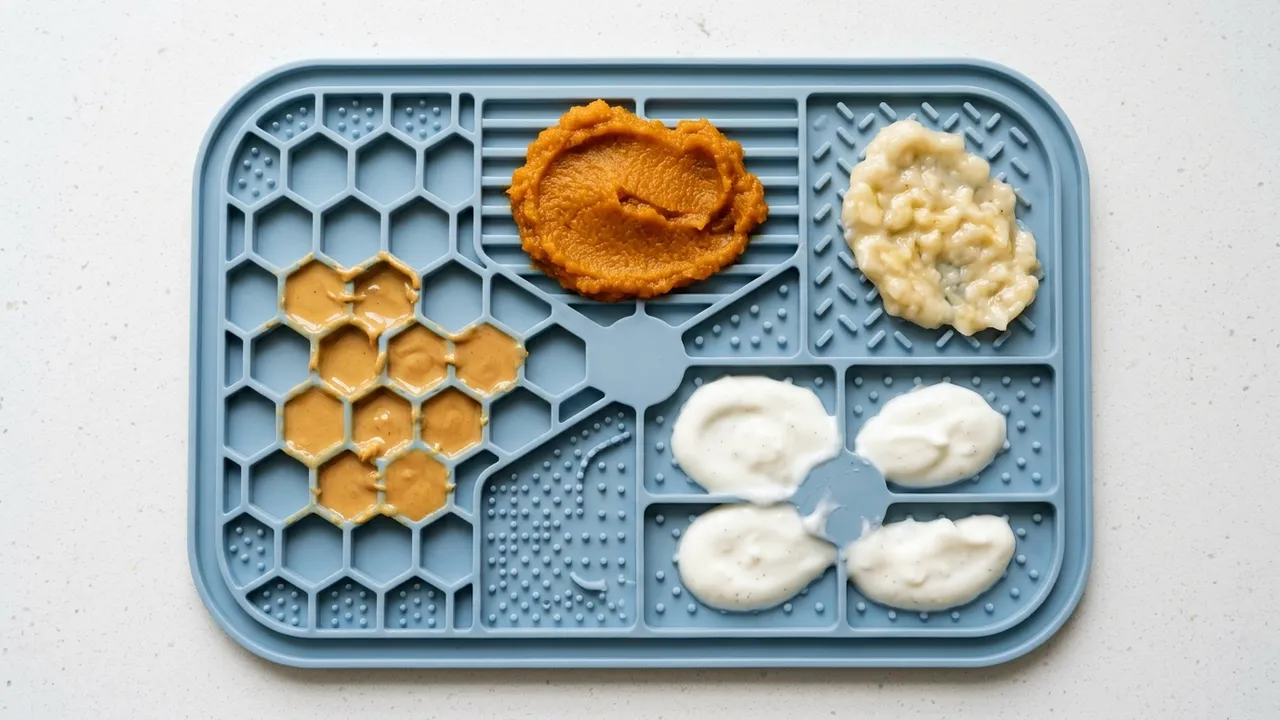
How long each filling lasts, and when to pick it
These are rough, hand-observed ranges rather than lab figures. Dog, mat texture and thickness change them a lot, so treat the table as a way to compare options against each other.
| Filling | Frozen? | Rough lick time | Best for | Watch out for |
|---|---|---|---|---|
| Plain yogurt | Better frozen | Seconds to a couple of minutes fresh, much longer frozen | Everyday use, hot days | Dairy upset in some dogs |
| Canned pumpkin puree | Yes | A few minutes | Layering, sensitive tummies (ask your vet) | Must be 100% pumpkin, not pie filling |
| Wet dog food | Yes | A few minutes fresh, longer frozen | Meals; it counts as food, not an extra | Strong smell in the freezer |
| Peanut butter (xylitol-free) | Yes | Longest fresh of the list because it is sticky | Distraction during a nail trim or bath | Calorie-dense; always check the label for xylitol |
| Mashed banana | Yes | Short fresh | Stretching peanut butter | Sugary, so keep portions small |
| Unsalted bone broth | Yes, in the ridges | Long once frozen | Hot weather, dogs on a diet | Onion/garlic or salt in shop broths |
| Softened kibble paste | Yes | A few minutes | Using the day's food ration | Needs to be thin to spread |
Matching the filling to the job
The same mat does different jobs depending on what you load it with and when you hand it over.
- Calming a stressed dog. Pick something sticky or frozen so it lasts through the stressor: a nail trim, a bath, a thunderstorm, visitors. Our guide to enrichment for anxious dogs covers how to build that into a routine, and a lick mat is a distraction tool, not a treatment for real separation anxiety. If your dog is panicking, ask your vet.
- Slowing a meal. Mash the dog's normal wet food or softened kibble into the grooves. If gulping is the real problem, read how to stop your dog eating too fast for the full picture.
- Crate rest or recovery. Use low-calorie bases such as pumpkin or plain yogurt and keep the portion small. Crate rest enrichment lists other quiet activities for the same situation.
- Rainy-day boredom. Rotate fillings and freeze the mat. It sits alongside the other options in our dog enrichment ideas rather than replacing walks or play.
How much goes on the mat
A lick mat is a small portion by design. A thin film across a mat the size of a side plate is usually a teaspoon or two of filling for a small dog, and a tablespoon or two for a big one. There is no single correct amount, because it depends on your dog's size, age and daily calories, which is why the earlier rule matters: the mat comes out of the day's ration. How much should I feed my dog walks through setting that ration, and your vet can tell you what your particular dog needs, especially if weight is already a concern.
Dogs with a history of pancreatitis, diabetes or kidney disease should not get rich fillings such as peanut butter or cheese without a vet's go-ahead. Dogs with food allergies need the same ingredient care as at any other meal.
Safety habits that apply every time
- Stay nearby. Supervise the first few sessions with any new filling or new mat. Most dogs just lick, but some chew silicone.
- Retire a chewed mat. If you see bite marks or torn edges, stop using it, because swallowed silicone pieces are a blockage risk.
- Wash it properly. Hot soapy water and a brush for the grooves, or the dishwasher if the manufacturer says the mat is dishwasher-safe. Dried peanut butter and yogurt are the usual culprits for a smelly mat.
- Keep puppies on the age guidance. The puppy lick mat guide covers when and how.
A quick, honest note about what we sell
We sell a 2-pack silicone lick mat with suction cups, so we obviously like the idea, and everything above works with any decent mat. The suction cups are the feature worth having: they hold the mat to a smooth tub wall, tile or door so a keen dog can't push it across the room, which matters most for bath-time or nail-trim use.
We also make a snuffle mat, which chases the same goal from a different direction: dry kibble hidden in fleece folds for your dog to sniff out, rather than soft food to lick off. Our how to use a snuffle mat guide shows the setup. Plenty of owners keep both, a lick mat for calming down and a snuffle mat for the "give me a job" hours. Wet and soft foods suit the lick mat, and dry kibble suits the snuffle mat.
Frequently Asked Questions
What can I put on a lick mat besides peanut butter? Plain yogurt, mashed pumpkin, wet dog food, mashed banana, cottage cheese, mashed sweet potato, or unsalted bone broth all work well. The requirement is a soft, spreadable, dog-safe texture — peanut butter is popular but nowhere near the only option, and rotating keeps it more interesting for your dog.
Can I put raw meat on a lick mat? Plain, boiled, unseasoned meat is the simpler choice for most home setups, since raw meat brings bacterial handling considerations and needs immediate, thorough cleanup of the mat and the surface it sat on. If you already feed raw and are comfortable with those precautions, apply the same ones here.
How do I make a DIY frozen lick mat? Spread a thin layer of a safe filling — yogurt, pumpkin, or wet food — across the ridges, then freeze the mat flat for 20 to 30 minutes or longer. That's the whole method, and it's what turns a quick snack into a genuinely long activity.
Is peanut butter safe for dogs on a lick mat? Only if it's xylitol-free. Xylitol is toxic to dogs and appears in some "natural" and sugar-free peanut butters. Check the label every time you buy a jar, including on a brand you've used before, because manufacturers do change formulations without warning.
How much should I put on a lick mat? A thin film across the surface, pushed into the grooves, is plenty. That is typically a teaspoon or two for a small dog and a tablespoon or two for a large one, and it should be deducted from the day's food allowance. Your vet can advise on the right total daily amount for your dog.
How often can my dog have a lick mat? Once a day is common, and it is fine if the filling fits within the day's calories. Rotating fillings stops the mat getting stale and keeps the calories varied. If your dog has a medical condition, such as pancreatitis or diabetes, ask your vet before making it a daily habit.
Can I put dry kibble on a lick mat? Not on its own, because it will not stick. Mash softened kibble into a paste or press a few pieces into a wet base. For loose dry kibble, a snuffle mat suits the job much better.
How do I stop my dog chewing the lick mat? Supervise, offer the mat only when your dog is calm, and use frozen fillings so the licking takes up their attention. If your dog keeps trying to bite and swallow pieces of silicone, stop using the mat and ask your vet or a qualified trainer about safer alternatives.