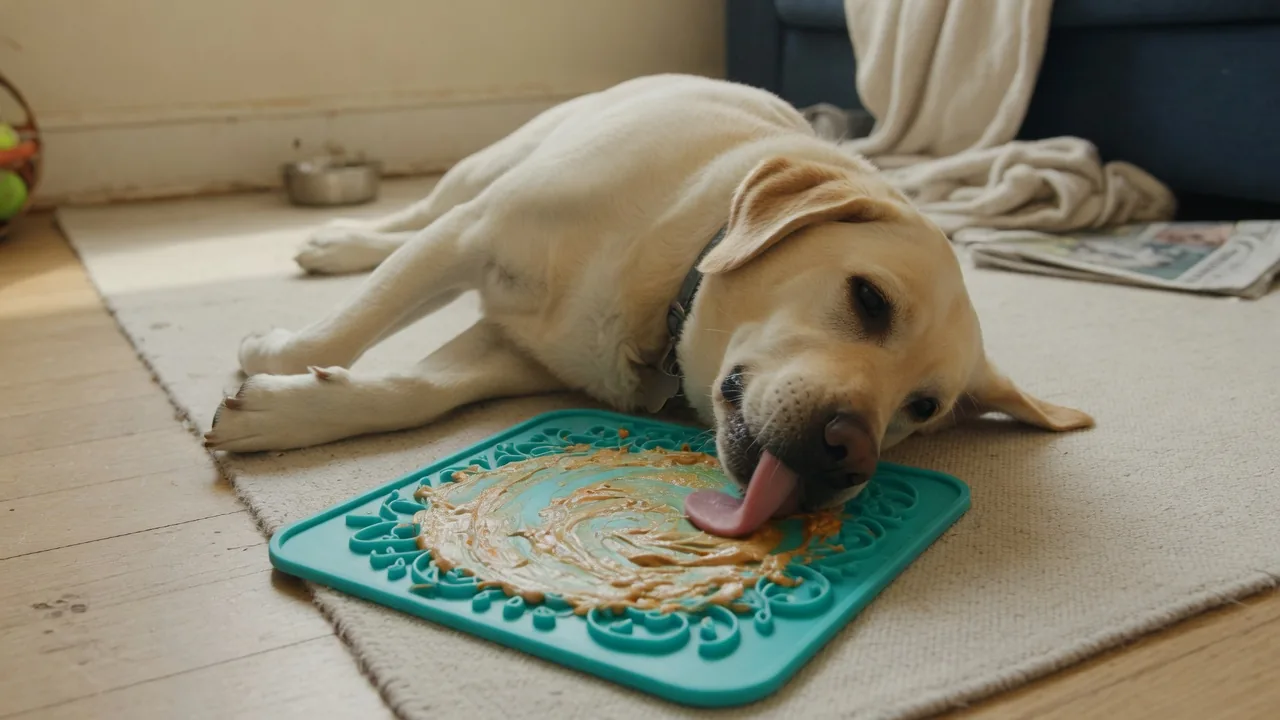
Lick Mats for Dogs: Benefits & How to Use Them
A lick mat for dogs is a flat, textured mat, usually silicone, that you smear with soft food so your dog licks it out of the grooves. It turns a spoonful of food into 5 to 20 minutes of calm, focused licking, which is useful for baths, nail trims, settling down and boredom.
Lick mats are cheap, simple and work for most dogs. They're also easy to use badly: too much peanut butter, a mat left with a chewer, grooves that never quite get clean. This guide covers what a lick mat does and doesn't do, how to pick one, how to use it in the situations people buy them for, and how to keep it safe and hygienic.
A note before we start: we don't sell a lick mat. We sell a snuffle mat, which does a related job, and there's a comparison further down. The rest of this page is just what we'd tell a friend.
What is a lick mat and how does it work?
A lick mat is a thin, flexible pad covered in raised bumps, ridges or small pockets. You spread soft food across it and press it into the texture. Your dog can't bite or scoop the food, so the only way to get it is to lick, a little at a time.
Two things follow from that. The food lasts far longer than it would in a bowl. And the dog spends that whole time doing one slow, repetitive, head-down activity. Many dogs visibly relax while licking. It's widely described by trainers and vets as a self-soothing behaviour, and it's why lick mats get used around stressful moments.
Most mats are food-grade silicone. Some have suction cups on the back so they stick to a bath, tiles or a fridge door.
What are the benefits of a lick mat for dogs?
Distraction during handling. This is where lick mats work best. A dog busy licking at nose height will often stand still for a bath, a brush, ear cleaning or nail trims.
Help settling down. A lick mat gives an over-excited dog a quiet job: after a walk, when visitors arrive, in the evening. It's a calm activity, unlike a tug toy or ball.
A short boredom break. Ten minutes of licking is a decent piece of mental occupation on a dull day.
Something to do on crate rest. Dogs recovering from surgery or injury need low-movement activities. See our guide to crate rest enrichment for how a lick mat fits in.
Slower eating of wet food. Spreading a wet meal on a mat slows it right down. For dry kibble, a slow feeder bowl or snuffle mat does that job better.
Positive associations. Paired carefully with something mildly worrying, like the sound of clippers at a distance, good food on a mat can help a dog feel better about it over time.
Now the limits. A lick mat is a management tool. It doesn't treat separation anxiety, noise phobia or fear of the vet. A very frightened dog usually won't eat at all, which is itself useful information. If your dog's anxiety is more than mild, talk to your vet or a qualified behaviourist; our guide to enrichment for anxious dogs explains where tools like this help and where they stop.
How do you choose a lick mat?
- Material. Look for food-grade silicone, labelled BPA-free. It should feel thick and spring back, not thin and flimsy. Thin mats tear and tempt chewers.
- Texture depth. Shallow bumps suit beginners, puppies and flat-faced dogs. Deeper grooves and pockets make food last longer but are harder to clean.
- Size. Roughly the size of your hand works for a small dog. Large dogs do better with a mat around 8 inches square or bigger, so the food can be spread thin.
- Suction cups. Essential if you want to use it on a wall or bath. They hold well on smooth, wet surfaces and poorly on textured tiles or painted walls. Without suction, a determined dog will pick the mat up.
- Dishwasher-safe. Check before you buy. It makes a real difference to whether the mat gets cleaned properly.
- Rim or no rim. A raised edge keeps runny foods like yogurt from sliding off.
How do you use a lick mat, step by step?
- Pick a spreadable, dog-safe food. Plain yogurt, wet dog food, pumpkin puree or xylitol-free peanut butter are the usual choices. Our full list is in what to put on a lick mat.
- Use less than you think. One to two teaspoons for a small dog, one to two tablespoons for a large one.
- Spread it thin and press it in with the back of a spoon or a spatula. Thin and pushed into the texture lasts longer than a thick layer on top.
- Place it where it can't move. Suction it to a smooth surface, or put it on a non-slip surface on the floor.
- Stay nearby. Watch for the moment your dog switches from licking to chewing.
- Take it away when it's empty. An empty mat is a chew toy.
- Rinse it straight away.
Most sessions last 5 to 15 minutes. Freezing the loaded mat for an hour or more can stretch that to 20 or 30.
When does a lick mat help most?
| Situation | How to set it up | Tip |
|---|---|---|
| Bath time | Suction the mat to the bath wall at nose height before the dog gets in | Reload halfway if needed |
| Nail trims and brushing | Mat on a wall or held by a helper at head height | Start licking first, then begin handling |
| Vet or groomer visits | Bring a pre-loaded mat in a tub or bag | Ask staff first; skip it if your dog is fasted |
| Visitors arriving | Give the mat on the dog's bed as the door opens | Practise on quiet days first |
| Settling in the evening | Mat on a bed or mat in the room you're in | Frozen lasts longer |
| Fireworks or storms | Offer early, before your dog is very scared | A dog too frightened to eat needs more help than a mat |
| Crate rest | Small portions several times a day | Count it within the daily food |
| Hot weather | Frozen yogurt or wet food | Cooling and slow |
One rule covers all of these: introduce the mat at home on a normal day first. A dog who already knows and loves it will use it under mild stress. A dog seeing it for the first time in the bath probably won't.
How much food should go on a lick mat?
Less than most people use, and it counts as part of the day's food.
The usual guideline is that treats and extras stay under about 10% of daily calories. For scale, a tablespoon of peanut butter is roughly 90 to 100 calories. A 20 lb dog may only need around 400 calories a day, so one generous smear is a quarter of the day's food. Plain yogurt or pumpkin puree come in at something like a tenth of that per tablespoon, which is why they're better everyday choices.
The simplest approach is to use part of your dog's normal meal. Take a spoonful of their wet food, or soak a little of their kibble until soft and mash it, and spread that. No extra calories at all.
If your dog is overweight, diabetic, has had pancreatitis or is on a prescription diet, check with your vet before adding rich fillings.
Are lick mats safe for dogs?
Yes for most dogs, with supervision. The real risks are few and specific.
Chewing and swallowing silicone. This is the main one. A dog who bites off and swallows a piece of mat can end up with a gut blockage. Don't leave a lick mat with an unsupervised dog, a power chewer or a teething puppy. Throw away any mat with tears, missing chunks or bite marks.
Xylitol. This sweetener, sometimes labelled birch sugar, is toxic to dogs and appears in some peanut butters and sugar-free products. Read the label every time.
Too many calories or too much fat. Covered above. Rich foods can also upset the stomach.
Resource guarding. Some dogs guard high-value food. Give mats to dogs in separate spaces, and don't let children approach a dog using one.
Dirty mats. Old food in grooves grows bacteria and mould.
Puppies can use lick mats with extra care; the details are in when puppies can have lick mats.
How do you clean a lick mat properly?
This is the part people underestimate. Soft food dries hard inside the texture.
- Rinse immediately under hot water, before anything dries.
- If it has dried, soak it in hot soapy water for 10 to 15 minutes.
- Scrub with a brush. A dish brush or old toothbrush gets into grooves. A sponge doesn't.
- Use the dishwasher's top rack if the mat is rated for it.
- Clean the back and the suction cups, where grime collects unnoticed.
- Air dry completely before storing. A damp mat in a drawer goes mouldy.
Wash after every use. If you notice a white film or lingering smell, soaking in a mix of water and white vinegar and then rinsing well usually clears it. Replace the mat if it stays sticky, smells after washing, or shows black spots in the grooves.
Lick mat vs snuffle mat: which should you get?
They suit different moments.
- A lick mat uses soft food and licking. It's a calm, stationary activity, best for handling, settling and short sessions. It needs hand-washing or a dishwasher, and it isn't for chewers left alone.
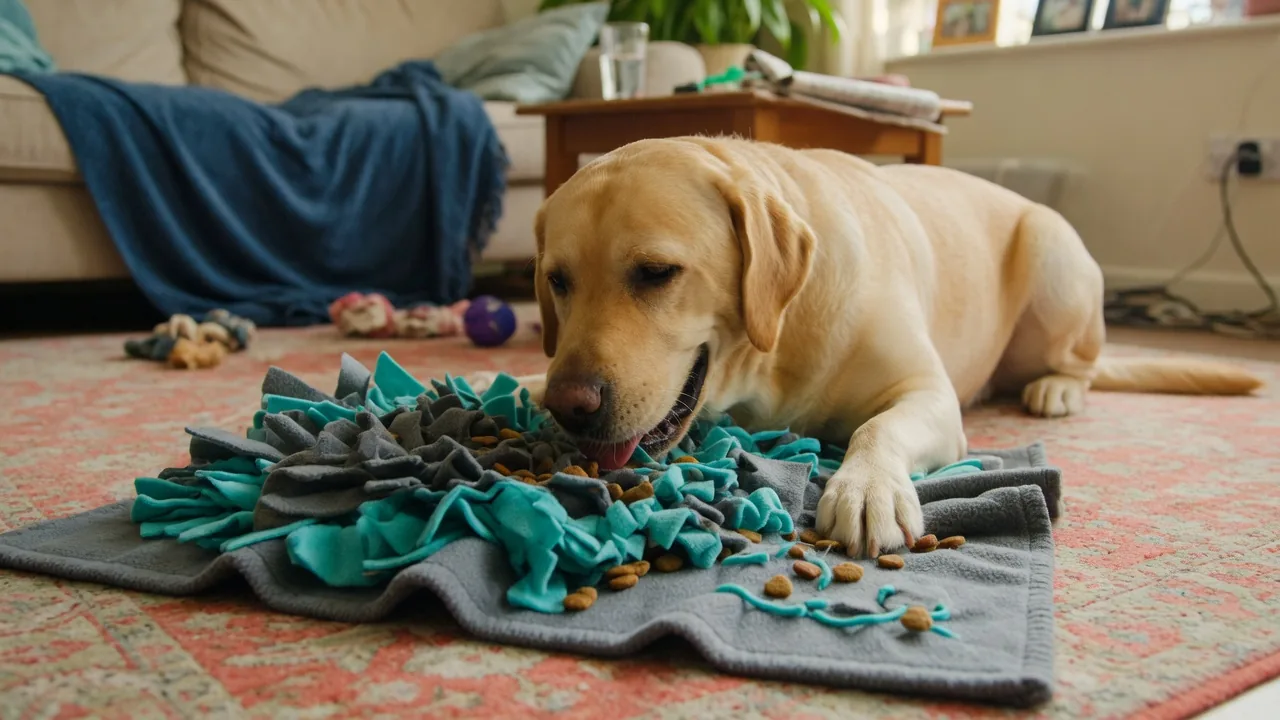
- A snuffle mat hides dry kibble or treats in fleece strips for your dog to sniff out. It's more active and uses the nose, which makes it a good fit for whole meals, fast eaters and dogs who need a job. It goes in the washing machine.
If you mainly need your dog to stand still in the bath, get a lick mat. If you want to feed daily meals in a way that takes 10 to 20 minutes and tires the brain, a snuffle mat suits that better. Plenty of owners use both. Our dog enrichment ideas guide covers how they fit into a routine.
👉 See the Snuffle Mat for Dogs →
On days when you can't get out, pair a lick mat with other indoor dog activities.
Frequently Asked Questions
What are lick mats good for? Lick mats keep a dog calmly occupied with slow, repetitive licking. They work best as a distraction during baths, brushing and nail trims, for helping a dog settle, as a short boredom break and during crate rest. They are a management tool, not a treatment for anxiety disorders.
How long should a dog use a lick mat? Most sessions last 5 to 15 minutes, or 20 to 30 if the mat is frozen first. There's no need to go longer. Take the mat away once it's empty so your dog doesn't start chewing it.
Can I use a lick mat every day? Yes, as long as the food on it is counted within your dog's daily amount and the mat is washed after each use. Using part of their normal wet food, or low-calorie options like plain yogurt or pumpkin, keeps daily use from adding weight.
Are lick mats safe for dogs? Generally yes, with supervision. The main risk is a dog chewing off and swallowing silicone, which can cause a blockage. Don't leave one with a heavy chewer or an unsupervised dog, check labels for xylitol, and throw away damaged mats.
Can I leave my dog alone with a lick mat? It's safer not to, unless you know from many supervised sessions that your dog only licks and never chews. For time alone, a sturdy rubber food toy designed for chewing is usually the better choice.
How do I clean a lick mat? Rinse it under hot water straight after use, scrub the grooves with a brush and dish soap, or put it on the dishwasher's top rack if it's rated for that. Clean the back and suction cups too, and let it dry fully before storing.
Lick mat or snuffle mat — which is better? They do different jobs. A lick mat uses soft food for calm licking and is best for handling and settling. A snuffle mat hides dry food in fleece for sniffing and suits whole meals and fast eaters. It's also machine-washable. Many owners use both.