When Can Puppies Start Using Lick Mats?
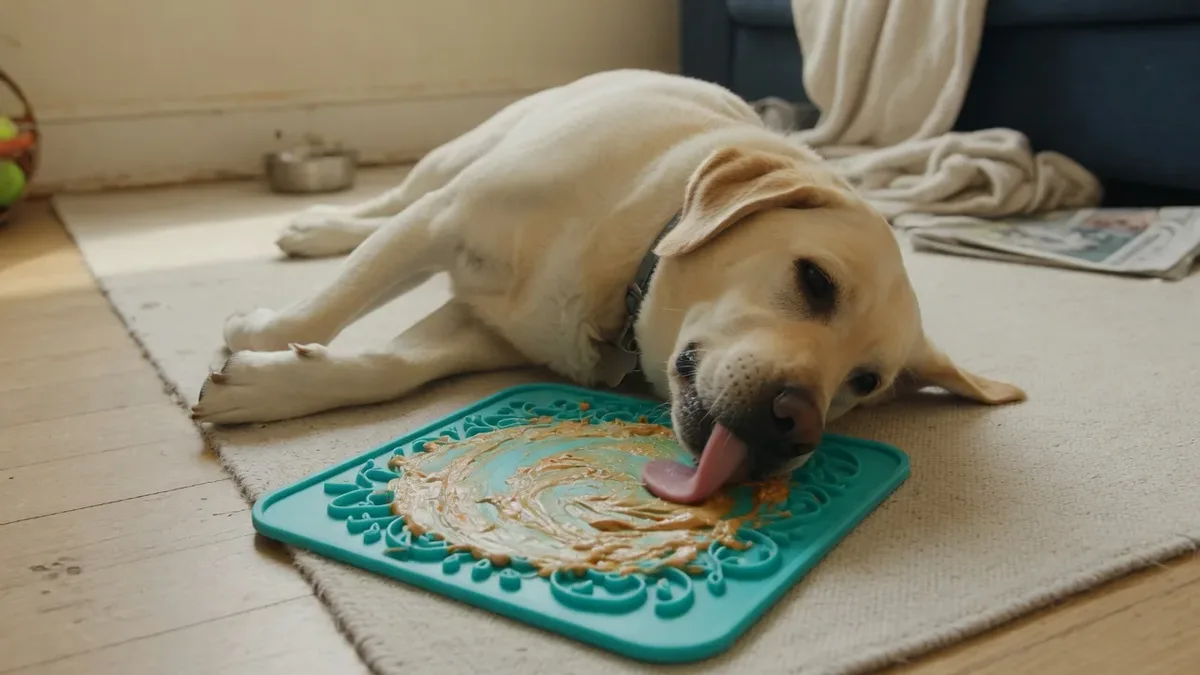
Most puppies can start using a lick mat once they're fully weaned and eating solid food on their own, typically from around 8 weeks old, as long as it is supervised and spread with soft, puppy-safe food. There's no official veterinary minimum age for lick mats. The real test is readiness: a weaned puppy who licks purposefully rather than chewing everything in reach.
Quick checklist before the first session: weaned and eating solid food, settled in at home for a few days, a thin layer of a food they already tolerate, a non-slip surface, you staying for the whole 3 to 5 minutes, and the mat washed and put away afterwards. If your vet has told you to hold back on any food, follow that first.
This guide covers what readiness looks like, what to put on a puppy's mat (and what to leave off), how teething changes things, a step-by-step first session, how to count the food towards your puppy's daily total, and how to clean a mat properly. We don't sell a lick mat, and we say so below, along with what we do sell that suits young puppies.
Is there an official minimum age for lick mats?
No. There is no standardized veterinary age cutoff for lick mats the way there is for first vaccinations. What matters is developmental readiness:
- Fully weaned. Your puppy should be eating solid puppy food independently, not still nursing or mid-transition off milk.
- Settled in. A puppy who has just come home is processing a lot. A new object and a new food on the same day is a lot to ask.
- Purposeful licking. Puppies explore with their mouths. You are looking for a puppy who can lick at a mat for a minute or two rather than only mouthing, shaking or biting it.
For most puppies this lines up with 8 weeks and older, around the time most go to their new homes already established on solid food. A puppy still nursing, or one weaned only days ago, isn't quite ready. If you are unsure where your puppy stands, ask your vet or breeder at the first check-up.
How does age change what a puppy can handle?
Age is a rough guide to what works, not a rulebook. Individual puppies vary a lot, particularly between small and large breeds.
| Age | What to expect | Lick mat approach |
|---|---|---|
| Under 8 weeks | Still weaning or newly weaned | Wait |
| 8–12 weeks | Baby teeth in, curious, short attention | Very thin layer, 2–5 minutes, fully supervised |
| 3–6 months | Teething begins around 3 months as adult teeth push through; chewing peaks | Supervise closely; swap to a chew-appropriate item if the mat gets bitten |
| 6–12 months | Most adult teeth in by about 6 months; chewing can still be strong | Longer sessions, frozen mats become useful |
| 12 months+ | Adult habits | Treat like an adult dog; see what to put on a lick mat |
The usual timeline is baby teeth arriving from about 3 weeks, adult teeth beginning to replace them from about 3 to 4 months, and a full adult set of 42 teeth by around 6 months. That 3 to 6 month window is when a mat is most likely to be chewed instead of licked.
Why do lick mats need extra care with puppies?
Lick mats are generally considered a low-risk enrichment tool, but puppies add a few extra things to think about:
- Teething puppies chew more than they lick. A mat built for gentle licking can get gnawed instead, which raises the risk of small pieces being bitten off and swallowed. This is the main safety concern.
- Small stomachs, small portions. What looks like a thin smear for an adult can be a real share of a puppy's daily calories. Anything on the mat counts towards the daily total.
- Sensitive digestion. Puppies often react to new foods more than adult dogs do, so introduce toppings one at a time and in small amounts.
- Hygiene. Dried-on food in the ridges breeds bacteria. A puppy's immune system is still developing, so a mat that isn't washed properly matters more here.
- Everything is exciting. A mat is also a toy, a bed and a target. Expect it to be dragged, sat on and carried off.
- Small parts. Some mats have suction cups or loose edges that a determined chewer can pull off. Look the mat over before every session and retire it if anything is detaching.
None of this means puppies can't use lick mats. It means supervision and portion awareness matter more for a puppy than for a settled adult dog.
What is safe to put on a puppy's lick mat?
Stick to soft, plain, puppy-safe options and introduce each one gradually:
- Wet puppy food, or puppy kibble softened with warm water and mashed
- Plain, unsweetened yogurt in small amounts, if your puppy tolerates dairy
- Xylitol-free dog-safe peanut butter, thin layer only. Always check the label, since xylitol is toxic to dogs and a puppy's small body means a small amount does more harm
- Plain canned pumpkin (not pie filling) or mashed banana, in small quantities
- Unsalted, onion-free broth, thickened with a spoon of food so it doesn't run
Leave off xylitol, chocolate, grapes, raisins, onion, garlic, and anything salty or seasoned. Skip anything rich: fatty foods are a common cause of upset stomachs in young dogs.
The best puppy lick mat filling is often your puppy's own food. Wet puppy food or softened kibble mashed into a paste keeps the diet balanced and avoids new ingredients. It also means you aren't adding extras on top of a growing puppy's calorie needs, which is a bigger deal for large-breed puppies, where overfeeding is linked to growing too fast. Our puppy feeding schedule covers how often to feed and how meals change as your puppy grows.
When you introduce something brand new, use a small test amount rather than a full mat and watch for loose stool or vomiting over the next day. Don't test a new food on a day with vaccinations, a car trip, or a new home.
How do you introduce a lick mat to a puppy?
- Confirm your puppy is weaned and eating solid food confidently.
- Pick a calm moment, ideally after a toilet break and a bit of play, when your puppy is relaxed but not asleep.
- Start with a very thin layer of a food you already know your puppy tolerates.
- Put the mat on a non-slip surface, such as a floor or a rubber mat, and let your puppy investigate. You can hold the edge at first.
- Stay for the whole session. Watch whether your puppy licks calmly or starts biting the mat itself.
- Keep sessions short, three to five minutes at first.
- Pick the mat up at the end, and don't leave it lying around. It is for supervised sessions.
- Wash it straight away (see below).
If your puppy chews rather than licks, remove the mat, offer a puppy-safe chew item, and try again in a few weeks. Don't turn it into a tug-of-war, which teaches the wrong game.
How do you use a lick mat to help a puppy settle?
Once your puppy licks calmly, a mat can become part of the routine:
- Crate and settle time. A short session on a mat in a quiet spot gives the puppy something to do while they learn to relax. Pair it with the crate only if the crate is already a happy place, and read our guide to crate rest enrichment for ideas.
- Grooming and nail trims. Smear the mat on the wall or floor within reach so the puppy has something pleasant to focus on while you handle paws. Stop if your puppy gets too anxious to eat; it is a distraction, not a cure for fear.
- Vet visits. Take a mat spread with a familiar food to the waiting room. If your puppy eats there, it is a good sign they feel safe.
- Bridge between meals in a puppy who is on three or four meals a day and gets mouthy.
For adult-dog ideas, recipes and the general how-to, see lick mats for dogs. Frozen mats suit older puppies better than very young ones: the cold can soothe sore gums, but a frozen mat that is very hard can also be difficult to lick for a tiny puppy. Start with a chilled or lightly frozen mat and see how your puppy copes.
Lick mats also don't replace exercise, training or sleep. A tired puppy who has had a walk, a play session and a nap is far more likely to settle with a mat than an overtired one.
How do you clean a lick mat for a puppy?
Wash the mat after every session. Dried peanut butter or yogurt in the ridges is hard to remove and a perfect place for bacteria. Rinse it in warm water straight away, scrub the grooves with a brush and dish soap, rinse well, and let it dry fully before the next use. Many silicone mats are dishwasher safe, but check the manufacturer's care label. Replace a mat that is cracked, torn or has pieces missing.
Signs a lick mat isn't the right fit yet
Pull the mat back and try again later if you notice:
- Aggressive chewing or biting rather than licking, especially if small pieces come off the mat
- Swallowed pieces of silicone. If you suspect your puppy has swallowed any, call your vet
- Disinterest or confusion. Some very young puppies haven't developed the motivation yet, and that is normal
- Digestive upset after a new topping, which suggests backing off that food, not lick mats in general
- Guarding. A puppy who growls over the mat needs space and a calm approach. Our guide to food aggression in dogs covers what to do
If your puppy consistently chews rather than licks, it may simply be too early in teething. There is no harm in waiting a few weeks.
What if a lick mat isn't clicking for your puppy?
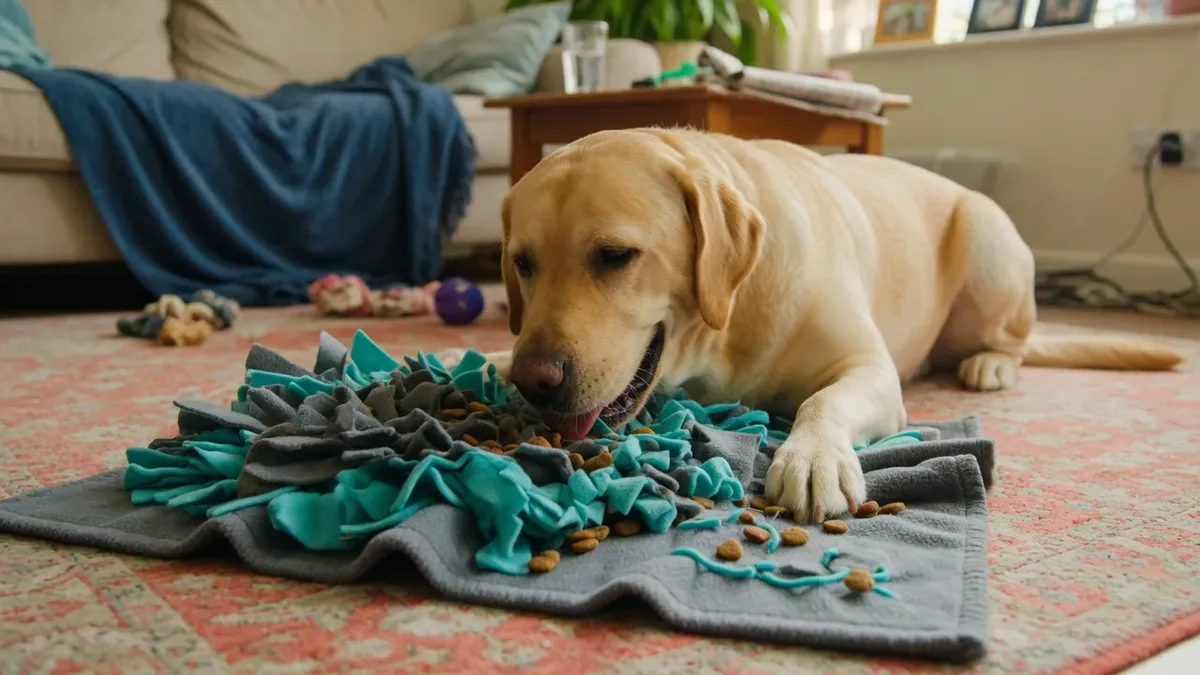
Not every puppy is interested in licking, and to be upfront: we don't sell a lick mat. What we do offer is a snuffle mat, which works a puppy's nose rather than their tongue, hiding small amounts of dry puppy kibble in fleece for your puppy to sniff out. It's a gentle introduction to food-based enrichment, since there is no soft, spreadable food to overdo, and it's easy to load with your puppy's own kibble from their daily allowance.
As with a lick mat, supervise, because puppies chew fleece too. Our guide on how to use a snuffle mat covers the basics. For general guidance on feeding a growing puppy, which matters more than any single enrichment tool, see our puppy feeding schedule guide.
👉 See the Snuffle Mat for Dogs →
The bottom line
There's no strict minimum age for lick mats. What matters is whether your puppy is fully weaned, eating solid food confidently, and past the stage of mouthing everything, which is usually around 8 weeks or older. Start with a thin layer of a familiar, puppy-safe food, supervise every session, count anything on the mat towards your puppy's daily food, and wash the mat each time. If your puppy chews rather than licks, wait a few weeks. It doesn't mean lick mats are wrong forever.
Frequently Asked Questions
At what age can a puppy use a lick mat? There's no official minimum age, but most puppies are ready once they're fully weaned and eating solid food confidently, typically from around 8 weeks old. Readiness matters more than a specific age.
Is it safe to give a teething puppy a lick mat? It can be, but teething puppies, often between about 3 and 6 months, chew rather than lick, which raises the risk of biting off small pieces. Supervise closely, and if your puppy chews more than licks, pull the mat back and try again in a few weeks.
What can I put on a lick mat for a puppy? Soft, puppy-safe foods like wet puppy food, softened kibble, small amounts of plain yogurt, xylitol-free peanut butter, or plain pumpkin. Avoid xylitol, chocolate, grapes, onion, and excess salt, and introduce any new food gradually.
What if my puppy chews the lick mat instead of licking it? This is common during teething. Remove the mat, supervise more closely next time, or wait a few weeks before trying again. A puppy who chews rather than licks isn't ready for unsupervised use.
Can I leave a lick mat with my puppy unsupervised? No. Puppies chew, and silicone pieces can cause a blockage if swallowed. Use the mat for short, supervised sessions, and put it away afterwards.
Does the food on a lick mat count towards my puppy's daily food? Yes. A puppy's calorie needs are small, so anything spread on a mat should come out of the daily allowance, or be a very small extra. Using part of your puppy's regular wet food or kibble is the simplest way to do this.
Can I freeze a lick mat for a puppy? Older puppies can have one, and a chilled mat can feel nice on sore gums. Start lightly frozen, since a rock-hard mat is hard for a tiny puppy to lick, and always supervise.
Save this guide