Why Does My Dog Eat So Fast? (And How to Fix It)
Most dogs eat fast because of instinct, competition with other animals (now or in the past), genuine hunger, or excitement, and often a mix of these. It's usually a habit, not an illness. The exception is a sudden change: a dog who abruptly starts bolting food or seems ravenous should see a vet.
Knowing why your dog does it is more useful than it sounds, because the cause decides the fix. A dog racing a housemate needs a different solution from a dog who's underfed, and neither is helped much by a bowl if the real problem is a medication side effect. This page works through the causes one at a time and helps you identify yours. Not sure your dog is actually fast? See how long it should take a dog to eat first.
What are the main reasons dogs eat so fast?
1. Instinct
Dogs are descended from scavenging, group-feeding animals. For those ancestors, food was irregular and there was always someone else who wanted it, so the animals that ate quickly did better. Dogs can also swallow large pieces with very little chewing; their teeth are built for tearing and crushing, not grinding, and kibble barely needs either. Put simply, eating fast is the default setting. Slow, picky eating is the unusual trait.
2. Competition, present or remembered
This is the most common cause that owners can actually change. If another dog or cat is in the room, or could arrive, your dog is on a clock. It doesn't require actual stealing. The presence of a rival is enough.
The habit also outlasts the situation. Puppies from large litters fed from a shared pan, dogs from shelters or kennels, and former strays often bolt food for years after becoming the only pet in a quiet home.
3. Genuine hunger
Sometimes a dog eats as if starving because the portion really is short for their needs. Common ways this happens: the feeding guide was followed for the wrong weight, activity went up but food didn't, a growing puppy's ration wasn't increased, or the day's food comes as one meal with a 24-hour gap. A dog on a weight-loss plan will also be hungrier, which is expected. Our guide on how much to feed your dog walks through checking the portion.
4. Excitement and learned routine
For many dogs, dinner is the best event of the day, and the build-up — the cupboard, the scoop, the rattle of kibble — winds them up before the bowl lands. Dogs who spin, bark or jump while food is prepared tend to eat at the same pitch. Owners sometimes add to this without meaning to, by hyping the meal or by putting the bowl down mid-frenzy, which rewards the frenzy.
5. Breed and genetics
Some dogs are simply built hungrier. Labradors are the best-studied example: researchers have identified a variant in a gene called POMC, carried by roughly a quarter of Labradors and more commonly in Flat-coated Retrievers, that is associated with greater food motivation and higher body weight. Beagles, Pugs, Golden Retrievers and many other gundogs and hounds have a similar reputation, though without the same genetic evidence. A dog like this isn't badly trained. They're managing a stronger drive than the dog next door.
6. Boredom
If eating is the only interesting thing that happens between walks, a dog pours all their energy into it. This cause usually shows up alongside other signs: chewing, pestering, pacing. It tends to improve when meals themselves become an activity.
7. Food type and bowl
Small, uniform kibble in a smooth, wide bowl is about the easiest thing in the world to inhale. Nothing needs chewing and nothing gets in the way. Dogs moved from wet food or larger kibble to small kibble often speed up noticeably. A very palatable new food can have the same effect for a while.
8. A medical cause or medication
Less common, but the one not to miss. Several conditions increase appetite, and a hungrier dog eats faster:
- Medications, especially steroids such as prednisolone, and some anti-seizure drugs. Increased appetite is a well-known side effect; mention it to your vet rather than stopping the drug.
- Diabetes, often with increased thirst, urination and weight loss.
- Cushing's disease, typically in middle-aged and older dogs, often with a pot belly, thin coat and heavy drinking.
- Intestinal parasites, more likely in puppies and dogs that scavenge.
- Problems absorbing food, such as pancreatic or intestinal disease, where a dog eats a lot yet loses weight and passes large, pale or greasy stools.
These are possibilities for your vet to investigate, not things to diagnose at home. The pattern that matters is change: a dog who has always gulped is probably just a gulper. A dog who started last month is telling you something.
How can you tell which reason applies to your dog?
Use what you can observe.
| What you notice | Most likely cause | First thing to try |
|---|---|---|
| Always eaten fast, since puppyhood; otherwise healthy | Instinct, breed | Slow the meal mechanically |
| Faster when another pet is nearby; looks around while eating | Competition | Feed in separate rooms, door closed |
| Rescue, ex-kennel or big-litter dog | Remembered competition | Predictable routine, private feeding spot |
| Ribs very easy to feel; licks bowl for ages; scavenges | Possibly underfed | Check portion against ideal weight; ask vet |
| Spins, barks, leaps while food is prepared | Excitement | Calm routine; bowl goes down only when calm |
| Destructive or restless between meals | Boredom | Feed from a snuffle mat or puzzle |
| Sped up after a food change | Kibble size or palatability | Slow feeder; consider larger kibble |
| Sudden change, with thirst, weight change, or new medication | Medical | Vet appointment |
A quick test for competition: feed your dog completely alone, door shut, for three or four days. If they slow down even a little, competition is part of the picture.
Does age make a difference?
Puppies are almost always fast. They've come from a litter where speed paid, they're growing, and they're hungry often. It's normal, but it's also the easiest age to build better habits; see puppy eating too fast.
Adult dogs who have always eaten quickly are usually cases of instinct, breed and habit.
Senior dogs more often slow down. So an older dog who speeds up, or becomes newly obsessed with food, deserves a check-up, since several of the medical causes above are more common in later life.
Is it bad if a dog eats too fast?
Mostly it's unpleasant rather than dangerous, but there are real downsides:
- Swallowed air, which leads to burping, gas and discomfort.
- Regurgitation — food coming back up, barely changed, minutes after eating. If this is your main problem, read dog eats too fast and throws up.
- Choking or gagging on unchewed food.
- Tension around the bowl, which in some dogs develops into guarding.
- Bloat (GDV). Fast eating is one of several factors associated with this life-threatening condition, mainly in large, deep-chested breeds. It's a risk factor, not a direct cause. Our dog bloat (GDV) guide explains who is most at risk.
How do you fix fast eating, matched to the cause?
We cover the methods step by step in how to stop your dog eating too fast. The short version, by cause:
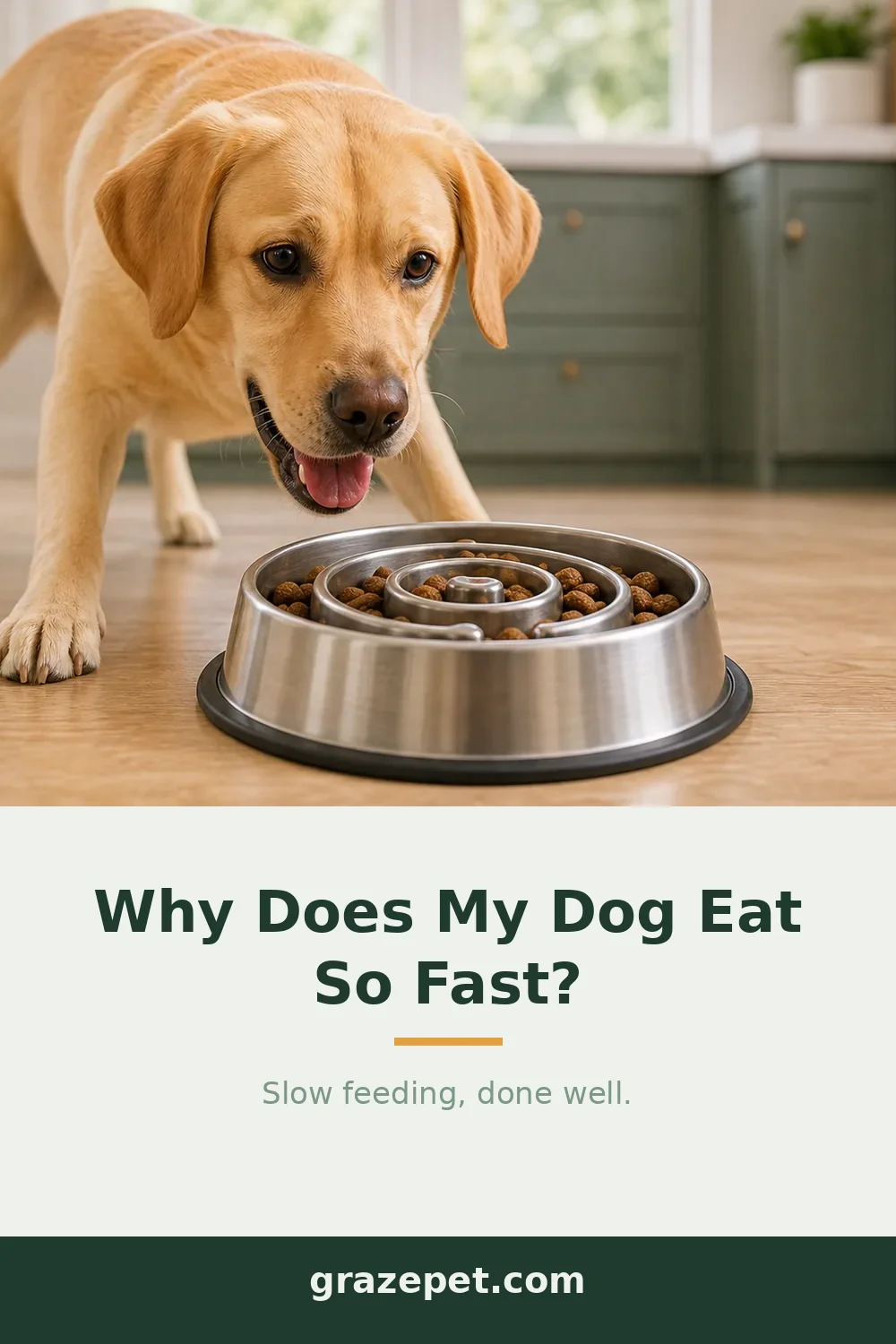
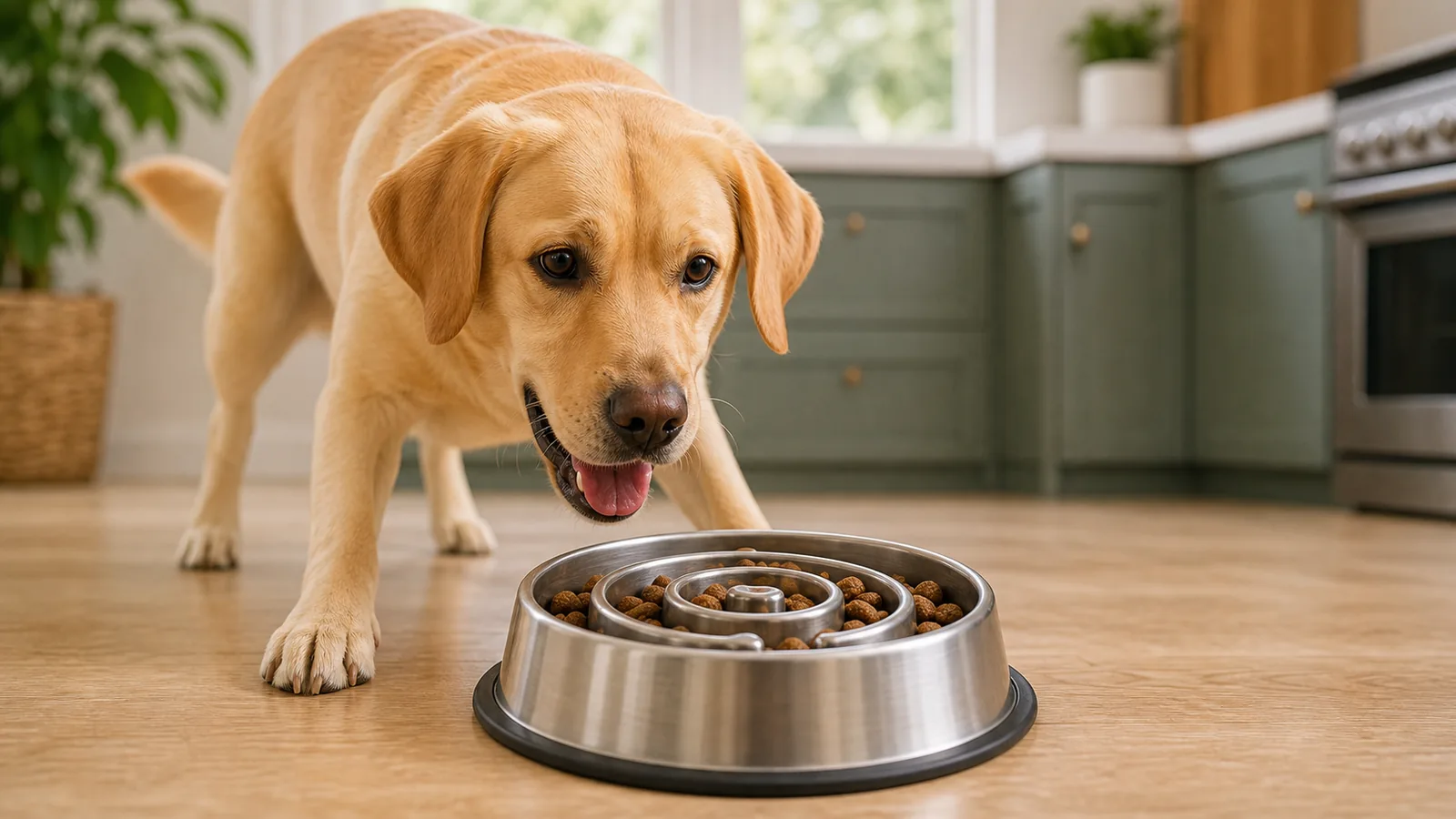
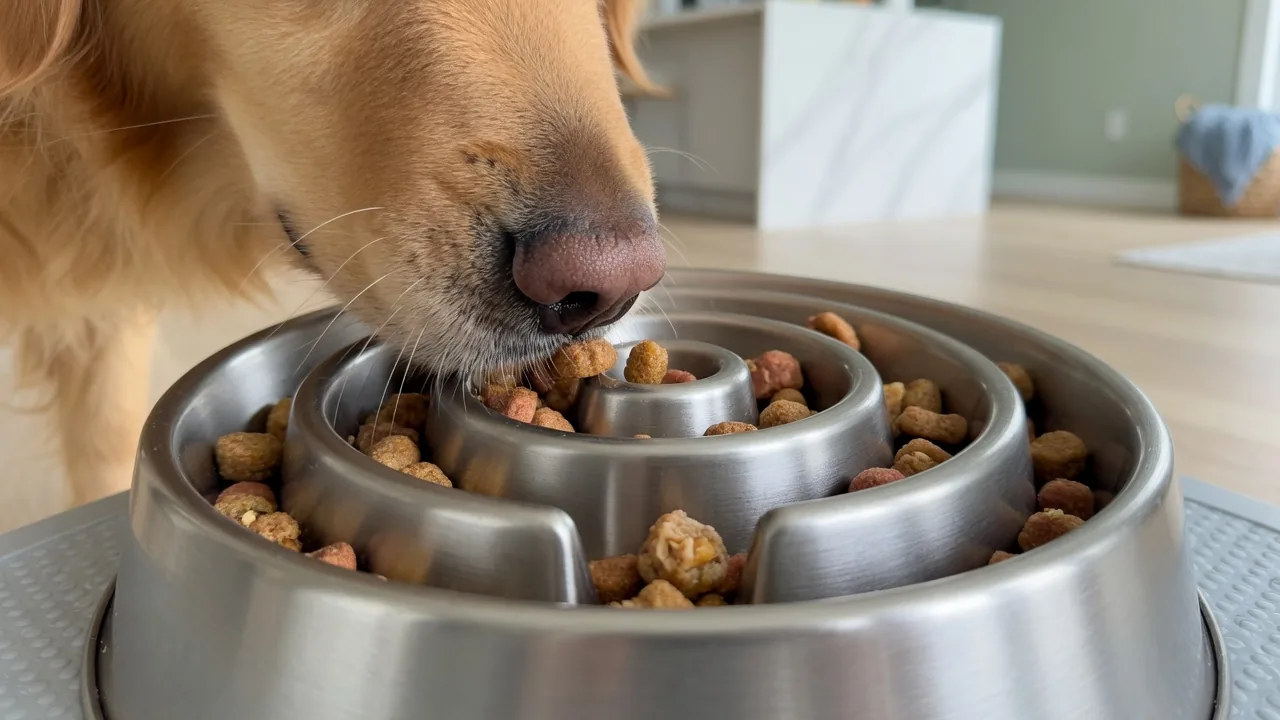
- Instinct, breed, kibble type: you won't change the drive, so change the bowl. A stainless steel slow feeder dog bowl puts ridges in the way so food has to be worked out a little at a time. It needs no training and works at every meal.
- Competition: separate rooms, closed doors, bowls lifted when finished. A slow feeder helps, but distance does the real work.
- Hunger: fix the portion or split it into two or three meals before you do anything else. Slowing an underfed dog is treating the wrong problem.
- Excitement: prepare food calmly, wait for four paws on the floor, then put the bowl down.
- Boredom: feed some meals from a snuffle mat so eating becomes ten minutes of sniffing.
- Medical: vet first. Tools afterwards, if your vet agrees.
One thing not to do: don't hover, take the bowl away mid-meal, or put your hand in the food to "slow them down". It teaches a dog that people near the bowl are a threat, and the next meal goes faster.
When should you see a vet?
Book an appointment if your dog:
- Suddenly eats faster or seems hungry all the time when they didn't before
- Is losing weight despite a good appetite, or gaining without extra food
- Is drinking or urinating much more than usual
- Regularly vomits or regurgitates after meals
- Has started a medication and their appetite has jumped
- Has become aggressive around food
Treat it as an emergency if you see a tight, swollen belly, repeated retching that brings nothing up, drooling, restlessness or collapse after eating. Those are signs of bloat. Go to a vet immediately; don't wait to see if it passes.
The bottom line
Fast eating is usually an ordinary dog being a dog: instinct, competition, hunger or excitement, sometimes amplified by breed. Work out which one is driving yours, because the fix follows from it. And treat any sudden change in appetite or speed as a reason to call the vet, not a reason to buy a bowl.
👉 See the Stainless Steel Slow Feeder Dog Bowl →
Ready to try one? See the best slow feeder dog bowls; gulped air is also a common cause of gas in dogs.
Frequently Asked Questions
Why does my dog eat so fast? Usually because of instinct, competition with other pets (current or in the past), genuine hunger, or excitement about food. Breed plays a part too. For most dogs it's a lifelong habit, not a health problem. A sudden change in eating speed or appetite is different and should be checked by a vet.
Why does my dog eat like they're starving? Either the drive is strong or the portion is short. Check that you're feeding the right amount for your dog's ideal weight and activity, and consider splitting it into two or three meals. If your dog seems ravenous and is also losing weight or drinking more, see a vet.
Is it bad for my dog to eat too fast? It can be. Fast eating means swallowed air, gas, regurgitation and occasional gagging, and it's one of several factors linked to bloat (GDV) in large, deep-chested dogs. For most dogs it's a comfort issue more than a danger, but it's easy to improve.
Do some breeds eat faster than others? Yes. Labradors, Beagles, Pugs, Golden Retrievers and many hounds and gundogs are known for it. In Labradors, a variant in the POMC gene found in roughly a quarter of the breed has been linked to stronger food motivation and higher body weight.
Why has my dog suddenly started eating fast? Look for what changed: a new pet, a new food, less food, a new medication such as steroids, or more exercise. If nothing obvious has changed, or it comes with increased thirst, weight change or vomiting, book a vet visit, as several medical conditions increase appetite.
Will my dog grow out of eating too fast? Sometimes. Many puppies slow a little as adults, particularly once they're fed alone on a predictable schedule. Dogs with a strong food drive usually stay fast for life, so most owners manage it with a slow feeder or snuffle mat instead of waiting for it to pass.
How do I get my dog to eat more slowly? Match the fix to the cause. Use a slow feeder bowl or snuffle mat to pace the meal, feed pets in separate rooms, check the portion is adequate and split it into two or more meals, and keep the pre-meal routine calm. See a vet first if the change was sudden.
Save this guide