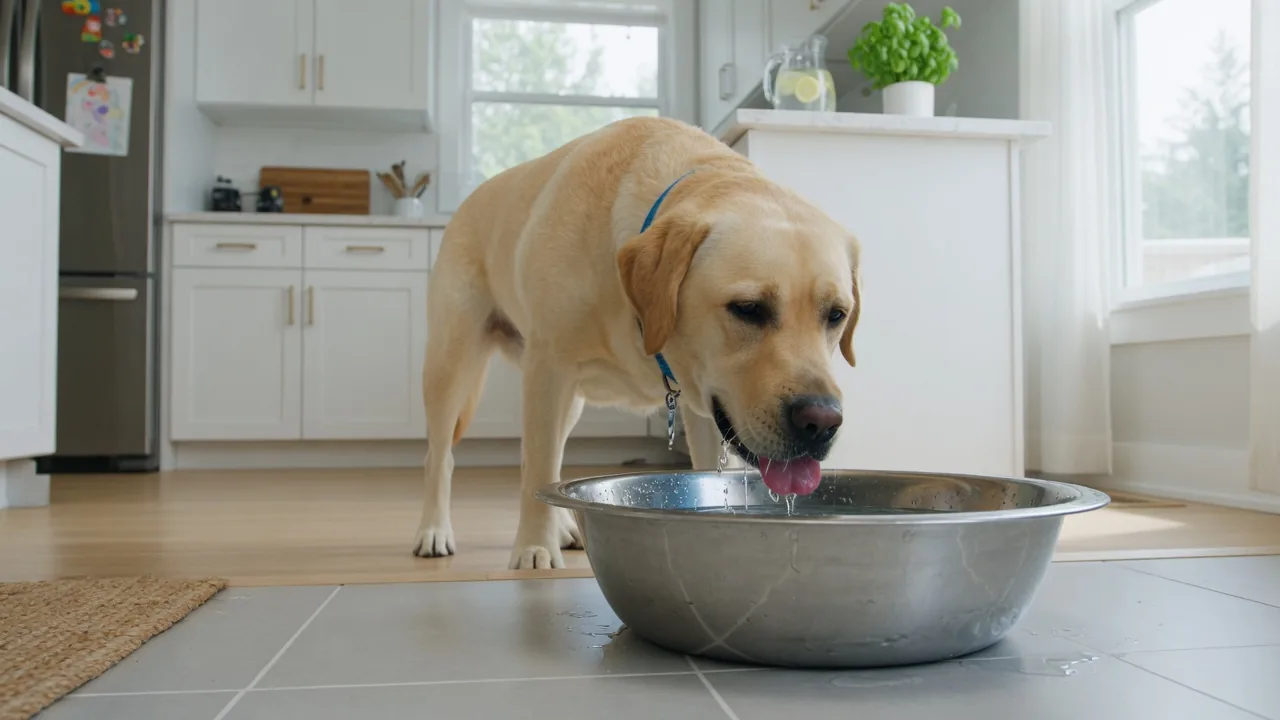
Why Does My Dog Drink Water Too Fast?
Dogs drink water too fast mostly out of plain thirst after exercise or heat, excitement, habit, or competition with other pets. Gulping is usually harmless but can cause coughing, burping and water coming straight back up. Slow it with small, frequent servings and a wide or floating-disc bowl — and see a vet if your dog is suddenly drinking far more than usual.
There are two different questions hiding in this one. How fast your dog drinks is nearly always a behaviour issue you can manage at home. How much your dog drinks is a health question. This guide deals with both, and shows you how to tell which one you've got.
Is your dog drinking too fast, or too much?
| Drinking too fast | Drinking too much | |
|---|---|---|
| What you see | Frantic gulping, splashing, coughing, water vomited back | Bowl emptied more often, more trips outside, accidents indoors |
| Daily total | Normal | Clearly above their usual |
| How long it's been going on | Often lifelong, or tied to exercise and heat | New, or creeping up over weeks |
| Typical causes | Thirst after activity, excitement, habit, competition | Heat, diet change, medication — or a medical condition |
| What to do | Manage the pace (below) | Measure intake and call your vet |
Some dogs do both, which is why measuring is worth ten minutes of your time.
How much water should a dog drink in a day?
The usual rule of thumb is roughly 40–60 ml of water per kilogram of body weight per day — about one fluid ounce per pound. On that basis:
| Dog's weight | Rough daily water intake |
|---|---|
| 5 kg (11 lb) | 200–300 ml |
| 10 kg (22 lb) | 400–600 ml |
| 20 kg (44 lb) | 0.8–1.2 litres |
| 30 kg (66 lb) | 1.2–1.8 litres |
| 40 kg (88 lb) | 1.6–2.4 litres |
Treat those as a guide, not a target. Dogs on dry kibble drink more than dogs on wet food, which is mostly water already. Hot weather, exercise, nursing and salty treats all push intake up, and that's normal.
Veterinary references generally regard intake consistently above about 100 ml per kg per day as excessive and worth investigating. The more useful signal, though, is change: a dog who has always drunk a litre a day and is now drinking two has told you something, wherever that falls on a chart.
To measure: fill the bowl with a known amount in the morning using a measuring jug, top up with measured amounts through the day, and subtract what's left after 24 hours. Do it for three days, and keep other pets on a separate bowl. Take the numbers to your vet if they're high or rising.
Why do dogs gulp water instead of sipping?
Real thirst. A dog back from a run or a hot afternoon has lost fluid through panting and wants it back at once. This is the most common cause and the least worrying.
The way dogs drink. A dog doesn't suck water up. It curls its tongue backwards into a ladle, flicks a column of water upward and snaps its jaws shut on it. It's a messy, air-filled method at the best of times, and at speed it takes in a good deal of air.
Excitement and habit. Dogs that do everything at full pace — eat, greet, play — tend to drink that way too.
Competition. In a multi-pet home with one bowl, some dogs learn to get theirs before anyone else does.
Restricted access. A dog that has gone hours without water (an empty bowl, a long car journey, a crate without water) will overdo it when it appears. So will dogs whose water has been rationed in the past.
Dry mouth from food. A big drink straight after a bowl of dry kibble is common.
Increased thirst from a medical cause. If the amount has risen, the gulping is a symptom, not a habit. See the vet section below.
What are the risks of drinking water too fast?
For most dogs, a wet floor and the odd cough. But a few things are worth knowing.
- Coughing and spluttering. Water heads the wrong way and the dog coughs it clear. Flat-faced breeds and dogs with airway problems are more prone to this; if your dog coughs or gags at nearly every drink, mention it to your vet.
- Bringing water back up. A large volume hitting the stomach fast, often with air, can come straight back within a minute or two. Occasional episodes after exercise are common. Regular ones aren't.
- Swallowed air. The same burping, hiccups and gassiness that fast eating causes. We cover that side in dog hiccups after eating.
- Bloat (GDV) in at-risk dogs. Bloat is an emergency in which the stomach fills and can twist, seen mostly in large, deep-chested breeds. Its causes aren't fully understood. Many vets advise against letting at-risk dogs take in very large amounts of water in one go around meals and hard exercise as a precaution. Know the signs: dog bloat and GDV symptoms.
- Water intoxication — rare, but serious. This comes from swallowing a huge volume in a short time, almost always during water play: retrieving from a lake again and again, biting at a hose or sprinkler. It dilutes the body's sodium. Signs include wobbliness, lethargy, bloating, vomiting, drooling, pale gums and glazed eyes, and it can progress to seizures. It needs an emergency vet. Ordinary drinking from a bowl is very unlikely to cause it.
How do you slow down a dog that drinks too fast?
The aim is to change the pace, never to reduce the daily total. Don't restrict a dog's water unless a vet has specifically told you to.
1. Small amounts, more often — especially after exercise. When your dog comes in hot and panting, offer a few centimetres of water in the bowl. Let them drink it, wait a couple of minutes while their breathing settles, then offer more. Repeat until they lose interest. For the rest of the day, keep fresh water available as normal.
2. Keep the bowl from ever being empty. Dogs that never run out don't learn to binge. Check it morning, midday and evening, and carry water on walks so your dog isn't arriving home desperate.
3. Offer water during exercise, not just after. Short drinks every fifteen to twenty minutes on a long or hot outing beat one enormous drink at the end.
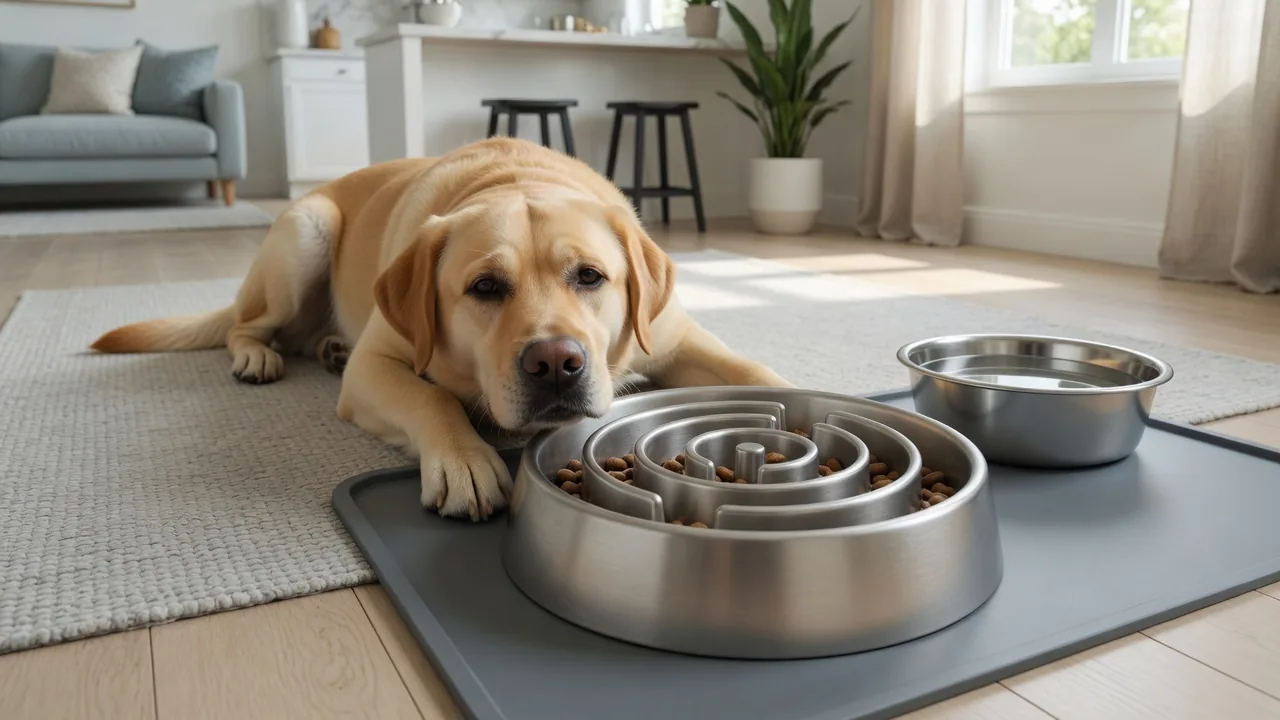
4. Change the bowl. A wide, shallow dish makes a dog lap rather than plunge. Purpose-made slow-drinking bowls use a floating disc that lets only a little water through at a time. They work well for sloppy, frantic drinkers and keep ears and beards dry as a bonus.
5. Put an obstacle in the bowl. A large, clean, smooth object the dog has to drink around works on the same principle — it must be far too big to swallow or pick up, and easy to wash. A slow feeder bowl used for water does a similar job.
6. Add a few ice cubes. They slow the lapping and make a dog pause. Ice is fine for healthy dogs; the old rumour that it causes bloat isn't supported. Use sensible sizes for small dogs and skip it for dogs with dental problems, who may crack a tooth chewing them.
7. Give every pet their own water. Two or three bowls in different rooms remove the race.
8. Calm first, then water. For dogs who gulp out of sheer excitement, ask for a sit and a breath before the bowl goes down, the same as at mealtimes.
9. Get more water in through food. Adding water to kibble, or feeding some wet food, spreads fluid intake across the day so your dog arrives at the bowl less thirsty. Our kibble vs wet food comparison covers the trade-offs.
What if your dog gulps food as well as water?
They usually do. The dog who inhales water tends to inhale dinner, and the two add up to a lot of swallowed air — plus the classic sequence of fast meal, huge drink, everything back on the floor.
Slowing the meal helps the water problem too, because a dog that has eaten calmly is less frantic at the water bowl afterwards. A stainless steel slow feeder breaks the meal into channels so it can't be swallowed in a few scoops. If your dog throws up after eating and drinking quickly, read dog eats too fast and throws up.
And for the dog who does everything at a hundred miles an hour, it helps to build some slow activities into the day. Ten minutes of sniffing out kibble in a snuffle mat is about as far from gulping as a dog gets.
When should you call the vet about your dog's drinking?
We're not vets, and this isn't a diagnosis. But increased thirst is one of the more useful early warning signs in dogs, so take it seriously.
Book an appointment if:
- Your dog is drinking noticeably more than they used to, for more than a day or two, without an obvious reason such as heat
- Increased drinking comes with more urination, accidents indoors, weight loss, a bigger or smaller appetite, lethargy or a dull coat
- Your dog vomits after drinking regularly
- Your dog coughs, gags or seems to struggle at most drinks
- Your dog has started a new medication and the thirst has changed — some drugs, steroids among them, are known to increase it
Conditions vets commonly check for when a dog drinks excessively include diabetes, kidney disease, hormonal disorders such as Cushing's disease, urinary and other infections, and — in unspayed females — a womb infection, which is urgent. Most are far easier to manage when caught early. Bring your three-day measurements.
Go to an emergency vet immediately if your dog has a swollen, tight belly, retches without producing anything, collapses, has a seizure, or becomes wobbly and vacant after a lot of water play.
The bottom line
A dog that drinks too fast is usually a thirsty or excitable dog, and pacing the water — small servings after exercise, a bowl that slows lapping, no competition — sorts it out. Keep the total freely available. If the amount has gone up, measure it for a few days and let your vet decide what it means.
👉 See the Stainless Steel Slow Feeder Dog Bowl →
Frequently Asked Questions
Why does my dog drink water so fast? Usually because they are very thirsty after exercise or heat, excited, in the habit of gulping, or competing with another pet. Dogs also drink by flicking water up with the tongue, which is naturally messy and takes in air. A sudden increase in thirst is different and needs a vet.
Is it bad for a dog to gulp water quickly? It is usually harmless, but it can cause coughing, burping and vomiting the water back up. In large, deep-chested dogs, vets often advise avoiding very large drinks around meals and hard exercise as a precaution against bloat. Slowing the pace is sensible; restricting water is not.
How do I stop my dog from gulping water? Offer small amounts with short pauses after exercise, keep the bowl from running empty, give water during long walks, and use a wide shallow bowl or a slow-drinking bowl with a floating disc. Ice cubes and separate bowls for each pet also help.
Why does my dog throw up after drinking water? Most often because a large volume of water and swallowed air hit the stomach too quickly, especially after exercise. Offering smaller amounts usually stops it. If your dog vomits after drinking regularly, or has other symptoms, see your vet.
How much water should my dog drink a day? A common guideline is about 40 to 60 ml per kilogram of body weight per day, or roughly one fluid ounce per pound, more in hot weather or on dry food. Intake consistently above about 100 ml per kilogram a day should be checked by a vet.
Should I limit my dog's water if they drink too fast? No. Dogs should have access to fresh water through the day. Control the pace by offering smaller servings more often and using a slow-drinking bowl, and only limit the total amount if your vet has specifically instructed you to.
Can dogs have ice cubes in their water? Yes, for healthy dogs. Ice cubes can slow down a fast drinker and help on hot days, and they do not cause bloat. Use small cubes for small dogs and avoid them for dogs with dental problems that might crack a tooth.