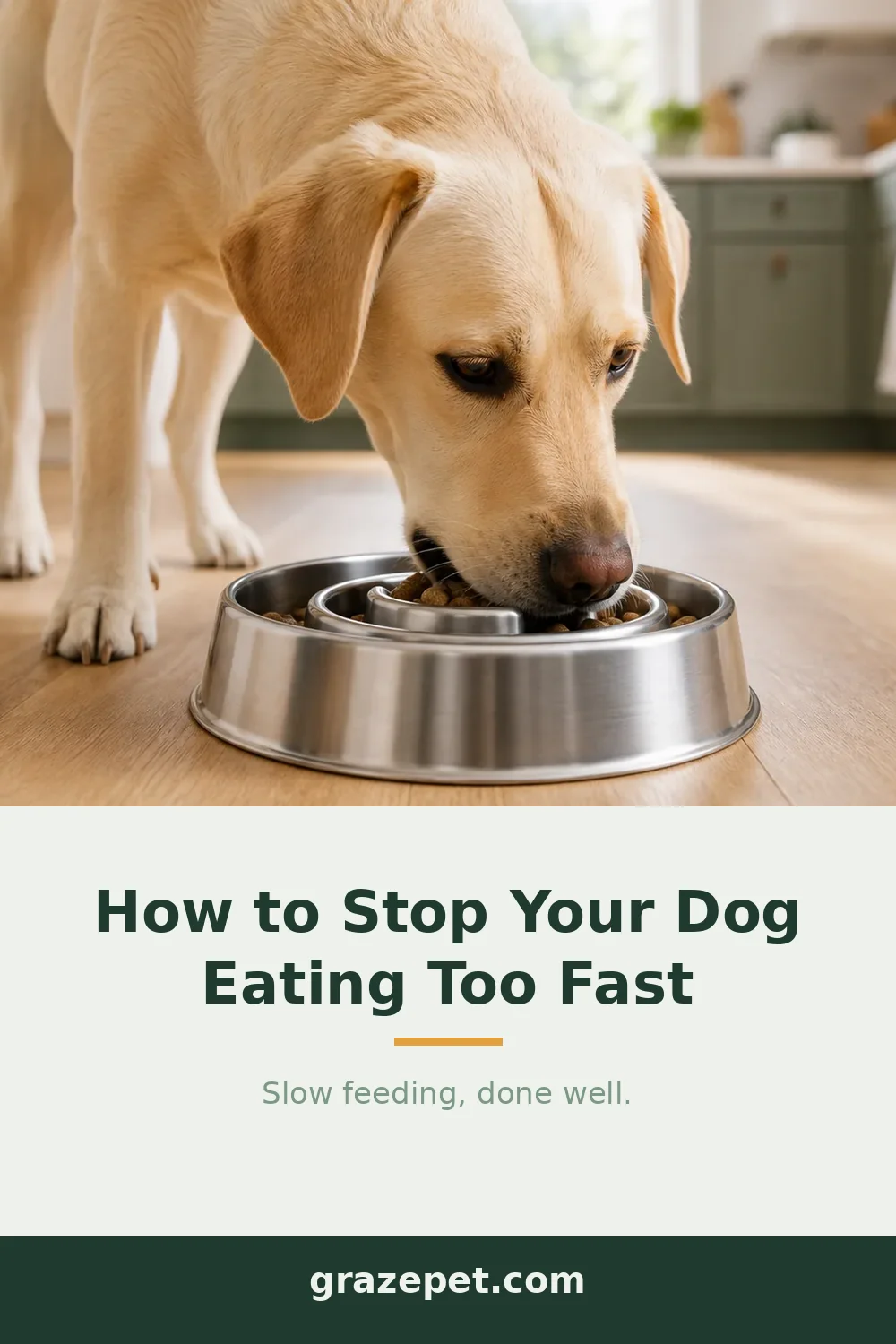
How to Stop Your Dog Eating Too Fast: 7 Proven Ways
To stop a dog eating too fast, add physical resistance to every meal — a slow feeder bowl, snuffle mat, or scatter feeding — then remove the reasons to rush: split the daily food into two or three meals, feed competing dogs apart, and keep mealtimes calm. Most dogs slow down noticeably within the first week.
That's the short version. The longer version matters because the "best" fix depends on your dog: a gulping Labrador in a three-dog house needs a different setup from a nervous rescue that eats like the bowl might vanish. Below you'll find the seven methods ranked by how reliably they work, a two-week plan to put them together, and the mistakes that quietly undo the progress.
If you're still wondering why your dog inhales dinner, that's covered in why does my dog eat so fast. If you aren't sure the pace even counts as a problem, check the benchmarks in how long it should take a dog to eat. This page is about fixing it.
First: is it a habit or a symptom?
Before you buy anything, spend ten seconds on one question: is this new?
A dog that has always eaten fast is almost always showing a habit — instinct, a competitive past, or simple enthusiasm. That's a management problem, and everything on this page applies.
A dog that suddenly started eating ravenously, is scavenging more than usual, losing weight despite eating, or drinking far more water than before is a different situation. Conditions affecting appetite and metabolism can show up exactly like this, so book a vet check before treating it as a behaviour issue. A slow feeder will slow a sick dog down too, but it won't fix the reason they're hungry.
The same goes if fast eating is regularly followed by bringing food back up. Our guide to a dog that eats too fast and throws up explains the difference between regurgitation and vomiting and when that becomes a vet visit.
The 7 methods, ranked
Ranked by how reliably they slow eating across most dogs, with the least effort from you over months rather than days.
1. A slow feeder bowl (most reliable for everyday meals)
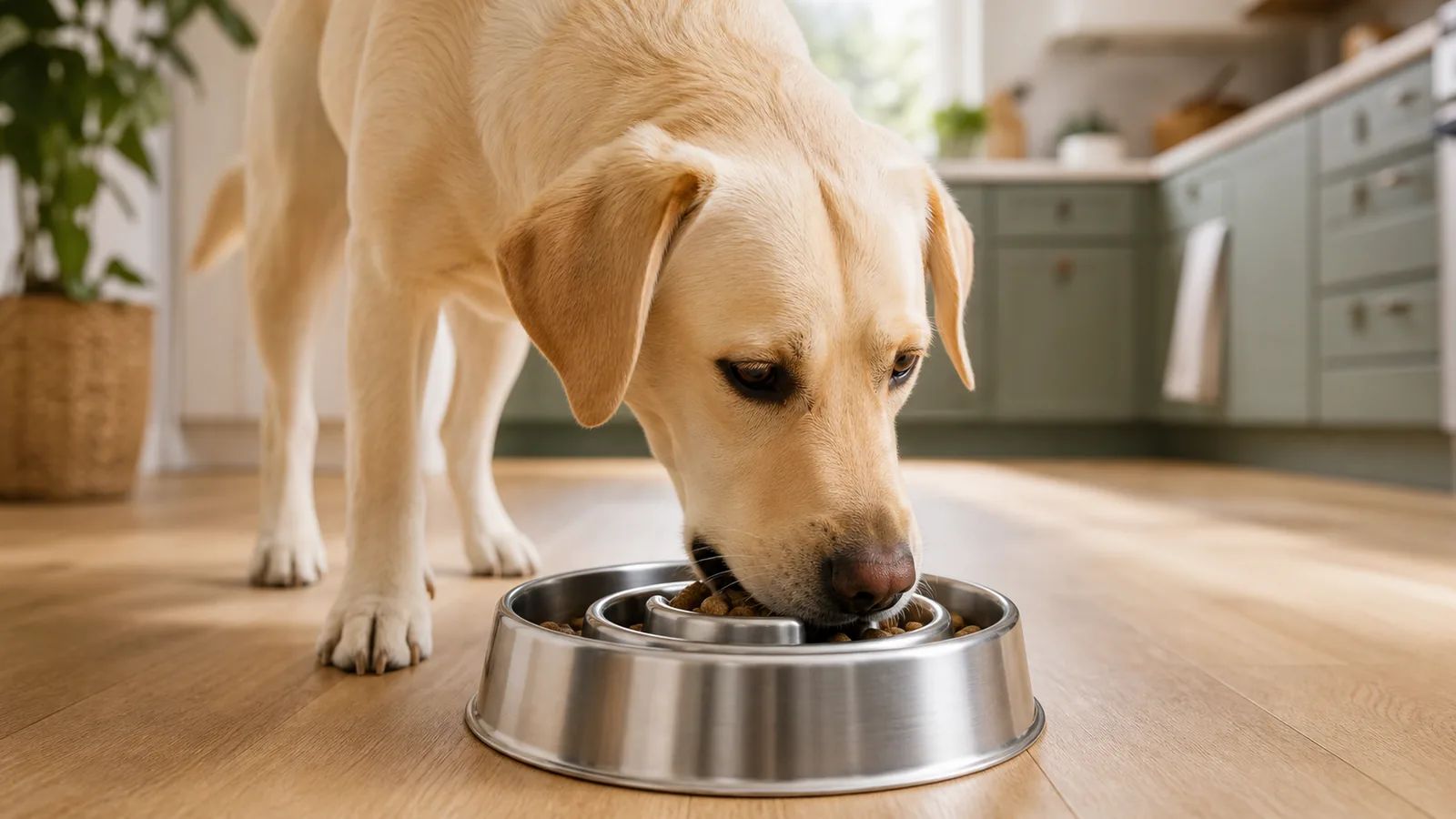
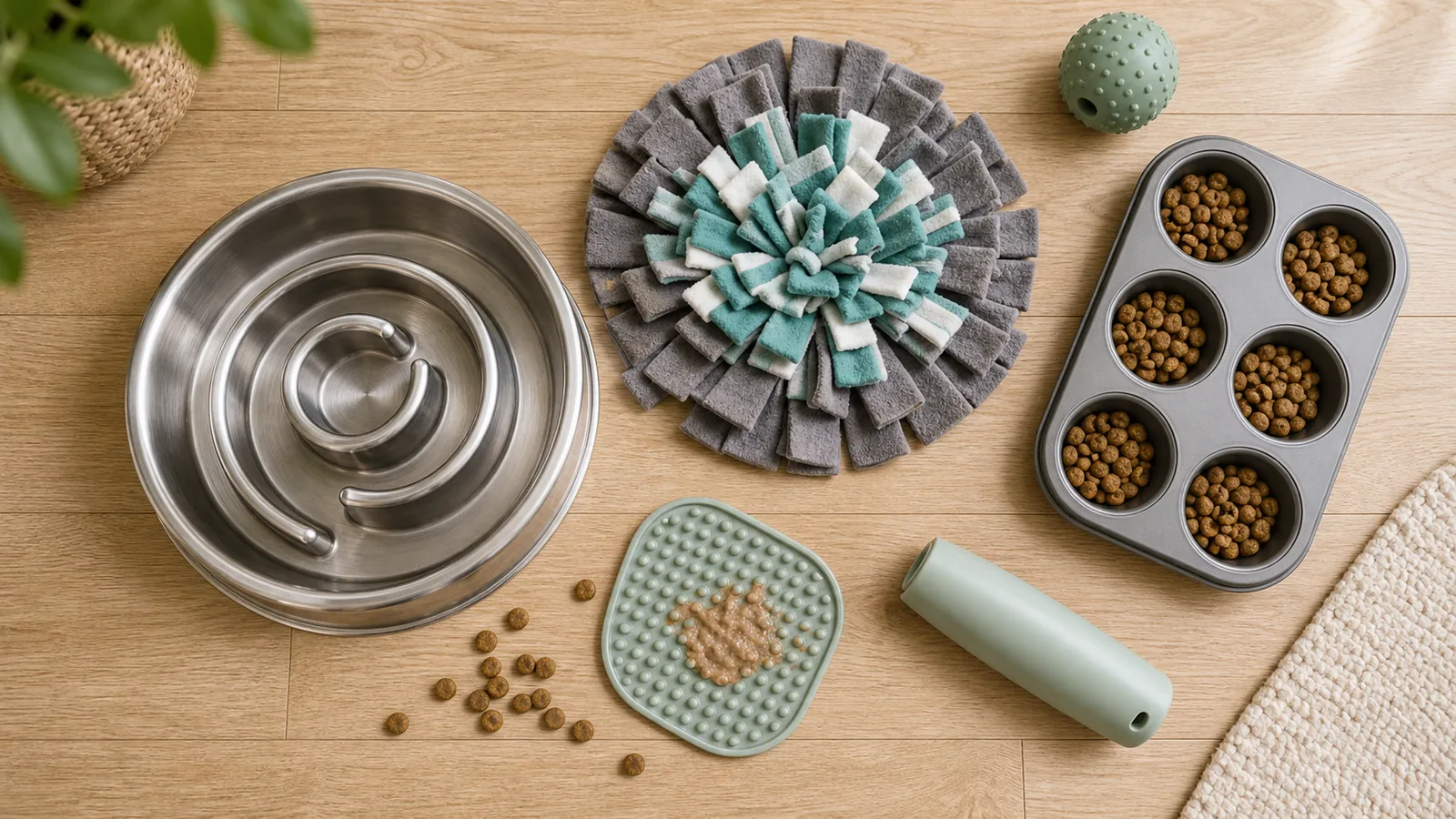
A slow feeder has ridges or a maze moulded into the base, so your dog has to nose and lick food out of channels instead of scooping a mouthful. It works at every meal without you doing anything differently, which is why it sits at the top: consistency beats cleverness.
Three things decide whether it actually works for your dog:
- Pattern depth matches the kibble. Deep, narrow channels with tiny kibble give the most slowing. Shallow ridges with large kibble barely slow anything.
- Size matches the meal. The meal should sit inside the pattern, not heaped above it. If food sits on top of the ridges, the bowl is too small.
- It doesn't slide. A bowl that skates across the floor turns a puzzle into a chase. A non-slip base or a weighted bowl keeps the challenge where it belongs.
We make a stainless steel slow feeder because steel holds up to daily use and doesn't scratch the way plastic does; the trade-offs are laid out in stainless steel vs plastic slow feeders. For an honest look at what the evidence does and doesn't say, see do slow feeder dog bowls work.
2. A snuffle mat (best for the most determined gulpers)
A snuffle mat hides kibble in fleece strips, so the dog has to sniff out pieces one or a few at a time. For many dogs it slows eating more than any bowl, because there's no way to get a mouthful at once. It also adds sniffing, which tires dogs mentally. The limits: dry food only, and it needs washing regularly. Our snuffle mat for dogs goes in the washing machine.
3. Scatter feeding
Toss the meal across a clean patch of lawn or a hard floor. It's free and surprisingly effective, because the dog has to locate each piece. Downsides: weather, ants, and the occasional piece that turns up under the sofa a week later.
4. Split the meal across a muffin tin
Divide kibble between the cups of a metal muffin tin, or put a tennis ball in a few cups to make it harder. The dog must move between cups. It's a solid stopgap; the DIY slow feeder vs buying guide covers this and other home builds in detail.
5. More, smaller meals
A dog that waits 23 hours for one large meal arrives at the bowl starving. Splitting the same daily amount into two or three meals often reduces the urgency, although it does nothing to stop a dog from swallowing each portion whole. Pair it with one of the methods above. The question of how many meals is right for your dog is covered in how often should I feed my dog.
6. Hand-feeding part of the meal
Feed a portion of the meal a few pieces at a time from your hand, asking for a sit or eye contact in between. It's slow, but it does two useful things: it physically limits intake, and it builds a calmer association with food around people. Particularly useful for anxious rescues and puppies.
7. Remove competition
If there's another dog — or a cat, or a toddler — near the bowl, some dogs eat as if racing. Feed dogs in separate rooms or crates, with doors closed, and pick up bowls once each dog has finished. This one alone can transform a multi-dog household.
Which method should you choose?
| Your situation | Start with | Add if needed |
|---|---|---|
| Single dog, eats kibble, just fast | Slow feeder bowl | Scatter feed one meal a week for variety |
| Extreme gulper, finishes in seconds | Snuffle mat | Slow feeder for the second meal |
| Multi-dog home | Separate feeding spaces | Slow feeder for the fastest dog |
| Eats wet or raw food | Slow feeder with open, wipeable channels | Lick mat for part of the meal |
| Anxious or recently adopted dog | Hand-feeding a portion | Slow feeder in a quiet spot |
| Flat-faced breed (Pug, Bulldog) | Shallow, wide slow feeder | Snuffle mat for kibble |
| Small budget, want to test first | Muffin tin or scatter feeding | Buy a slow feeder if it helps |
Wet food behaves differently in a maze bowl, so if that's your dog's diet, read slow feeders for wet food before you buy.
A two-week plan that actually sticks
Most failures come from introducing a new bowl, watching the dog get frustrated once, and giving up. This routine avoids that.
Days 1–3: make it easy. Put the full meal in the slow feeder, but sprinkle a few pieces on top so early success is guaranteed. Stay nearby. If your dog paws at the bowl or walks off, scatter the rest on the floor and try again next meal. You want "this is fun," not "this is a trap."
Days 4–7: normal meals, same spot. Serve the full meal in the slow feeder at your usual times. Feed in a quiet place, away from other pets and foot traffic. Time a couple of meals with your phone so you have a before-and-after figure.
Days 8–14: layer a second method. If the dog is still faster than you'd like, add a second tool for one meal a day — a snuffle mat in the evening is a common combination. Keep competition removed throughout.
After two weeks: compare meal times. If the bowl has made little difference, the usual culprit is a mismatch between kibble size and pattern depth, so a different pattern is worth trying before giving up on the approach.
What doesn't work (or makes things worse)
Taking the bowl away mid-meal. It teaches the dog that food disappears, which is the exact belief that drives gulping. Many trainers see this create resource guarding.
Feeding beside the other dogs "so they learn." They learn to eat faster.
Adding water to kibble and calling it slowed. Soaked kibble can be easier to swallow quickly, not harder.
Pressing on with a bowl your dog hates. If, after a week of easy introductions, your dog is still stressed by a particular bowl, switch patterns. Frustration at mealtimes is not the goal.
Assuming a raised bowl helps. Elevated feeders have their own debate, especially around bloat in large breeds — see raised dog bowls and bloat risk before you buy one for this purpose.
Why slowing down is worth the effort
The practical benefits are the ones owners notice first: fewer post-meal coughs and burps, less gas, fewer piles of undigested kibble on the carpet, and a dog that seems more settled after eating. Snuffle mats and scatter feeding add mental work, which is a real bonus for bored dogs.
The bigger concern for large, deep-chested breeds is gastric dilatation-volvulus (bloat). Research into its risk factors is mixed: some studies of large and giant breeds have associated fast eating with higher risk, while others haven't found a clear link, and no bowl has been shown to prevent it. Treat a slow feeder as one sensible habit among several — not a guarantee. Our bloat (GDV) symptoms and prevention guide covers the warning signs every owner of a big dog should know.
When to call the vet
Call your vet promptly if fast eating comes with any of these:
- Sudden increase in appetite, weight loss, or much more drinking
- Regular vomiting or regurgitation, not a one-off
- Coughing or gagging during meals
- Diarrhoea or obvious discomfort after eating
Treat it as an emergency if your dog has a swollen or tight belly, retches without bringing anything up, drools heavily, or is restless and distressed after a meal. These are classic signs of bloat, and time matters.
Compare the options in our best slow feeder dog bowls roundup, and see dog gas remedies if swallowed air is causing gas.
Frequently Asked Questions
How do I get my dog to eat slower? Add resistance to every meal — a slow feeder bowl, snuffle mat, or scatter feeding — and remove the reasons to rush by splitting food into two or three meals and feeding other pets separately. Combining a tool with a calmer routine works better than either alone.
Is it bad if my dog eats too fast? It can be. Fast eating is linked with gulped air, gas, coughing, and bringing food back up. Some studies have also associated fast eating with bloat risk in large deep-chested breeds, though the evidence is mixed. Slowing meals is a low-risk way to reduce the everyday problems.
How long does it take for a slow feeder to work? Most dogs eat noticeably slower from the first few meals. Give it one to two weeks before judging: some dogs need a few days to learn the bowl, and you may need a different pattern if the kibble is too large for the channels.
Can I stop my dog eating too fast without buying anything? Yes. Scatter feeding, a muffin tin, hand-feeding part of the meal, and feeding competing dogs apart all work at no cost. They take more effort to keep up every day, which is why many owners eventually move to a slow feeder for routine meals.
Will my dog grow out of eating fast? Some puppies settle as they mature and learn food is reliable, but many adult dogs keep the habit for life, especially in multi-dog homes or after a history of food scarcity. Management, rather than waiting, is the dependable approach.
Should I feed my dogs separately if one eats too fast? Yes, if one dog rushes or steals from another. Feeding in separate rooms or crates removes the competition that drives gulping and prevents squabbles. Pick up bowls as soon as each dog finishes so nobody learns to patrol the others' food.
Save this guide