Gassy Dog Remedies That Actually Help
The dog gas remedies that work are the boring ones: slow down a fast eater, stop table scraps and rich treats, change foods gradually over 7–10 days, feed smaller meals, and keep your dog moving. Gas that is sudden, severe, or comes with vomiting, diarrhoea, weight loss or a swollen belly needs a vet, not a home remedy.
Every dog passes some gas. It becomes a problem worth solving when it's frequent, room-clearing, or new. The useful first step is working out which kind of gas you're dealing with, because the fix for swallowed air is completely different from the fix for a food that doesn't agree with your dog.
What causes gas in dogs?
There are two main sources, and many gassy dogs have a bit of both.
Swallowed air (aerophagia). Dogs that bolt their food take in air with every mouthful. Some of it comes back up as burps; the rest travels through and exits the other end. Fast eaters, dogs competing with another pet at mealtime, dogs fed straight after hard exercise while still panting, and flat-faced breeds such as bulldogs and pugs all swallow more air than average.
Fermentation in the gut. Food that isn't fully digested in the small intestine reaches the large intestine, where bacteria ferment it and produce gas. Usual suspects:
- A sudden change of food
- Table scraps, especially fatty, spicy or dairy-based ones (many adult dogs don't digest lactose well)
- Ingredients that ferment readily: beans, peas, soy, and some high-fibre vegetables such as broccoli and cabbage
- Scavenging — bins, compost, things found on walks
- A food that simply doesn't suit that individual dog, including true food intolerances
- Too many treats or chews on top of meals
Less often, persistent gas is a sign of something medical: intestinal parasites, an infection, inflammatory bowel disease, or a problem with the pancreas. That's why gas that doesn't respond to sensible changes belongs with your vet.
Being overweight and under-exercised makes all of the above worse. Sedentary dogs tend to be gassier dogs.
Which kind of gas does your dog have?
Use the pattern to pick your first move.
| What you notice | Most likely cause | First thing to try |
|---|---|---|
| Burping and gas soon after meals; dog eats in under a minute | Swallowed air | Slow feeder, smaller meals |
| Gas began within days of a new food or treat | Diet change | Go back, then transition slowly |
| Worse after scraps, dairy, chews or bin raids | Dietary indiscretion | Cut extras for two weeks |
| Constant, very smelly gas on the same food for months | Food may not suit the dog | Talk to your vet about a diet trial |
| Gas plus soft stools, diarrhoea or mucus | Gut upset, parasites or intolerance | Vet check, bring a stool sample |
| Gas plus weight loss, poor coat, big appetite | Possible digestive disease | Vet visit |
| Flat-faced breed, snorts while eating, gassy all the time | Air swallowing due to anatomy | Shallow, wide slow feeder; small meals |
| Tight swollen belly, retching with nothing coming up, restless | Possible bloat (GDV) | Emergency vet immediately |
8 dog gas remedies worth trying
Change one or two things at a time. If you change everything at once you'll never know what worked.
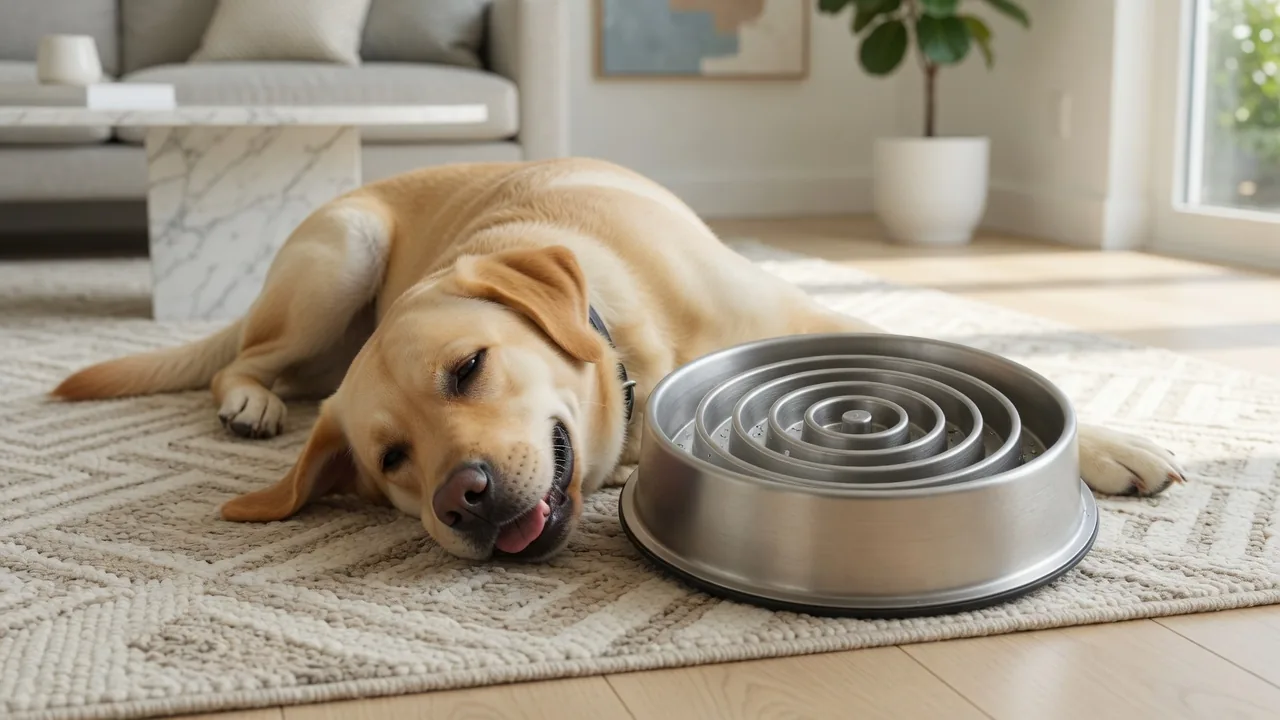
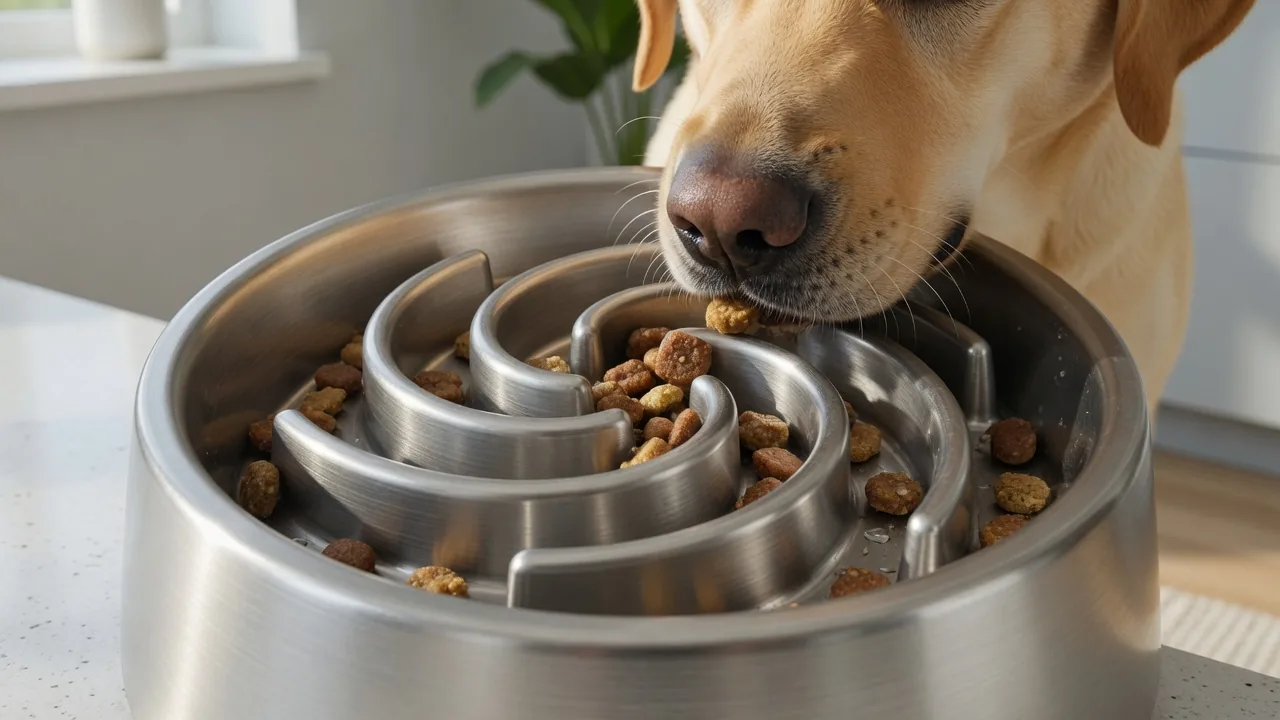
1. Slow down the eating. For the after-dinner burper, this is the highest-impact fix and the one most owners skip. Less gulping means less air swallowed. A stainless steel slow feeder spreads the meal through a raised pattern so your dog takes small mouthfuls instead of scoops. Other ways to pace a meal are in how to stop your dog eating too fast.
2. Feed smaller meals, more often. Split the same daily amount into two or three meals. A smaller volume is easier to digest and stretches the stomach less. If you're not sure what schedule suits your dog's age, see how often to feed your dog.
3. Stop the scraps and audit the treats. This is tedious and it works. For two weeks: no table food, no dairy, no new chews, and nobody in the house sneaking bits under the table. A common guideline is to keep treats to around 10% of daily calories at most. If the gas eases, add things back one at a time to find the culprit.
4. Change foods slowly. If a new food started the trouble, go back to the old one until things settle, then switch over 7–10 days: roughly a quarter new food for the first few days, half for the next few, three-quarters after that, then all new. Sensitive dogs may need two weeks.
5. Reconsider the food itself — with your vet. If your dog has been gassy for months on the same diet, the food may not suit them. Dogs vary, and a recipe one dog thrives on gives another wind. Your vet may suggest a highly digestible or limited-ingredient diet, or a proper elimination trial if an intolerance is suspected. Our guides to dog food for sensitive stomachs and dog food for allergies explain what to look for, but pick the actual diet with professional input.
6. Walk after meals — gently. A relaxed ten- to fifteen-minute stroll around half an hour after eating helps the gut move things along, and it gets the gas out outdoors rather than on the sofa. Keep it gentle. Hard running on a full stomach isn't advised, particularly for large, deep-chested dogs.
7. Lock down the scavenging. A lidded bin, a closed compost heap, and a "leave it" cue on walks remove a surprising amount of mystery gas.
8. Ask your vet about probiotics or gas-relief products. Dog-specific probiotics are widely used for digestive upsets, and some vets suggest products containing ingredients such as simethicone, activated charcoal or yucca for flatulence. Evidence for them is mixed and dogs differ, so treat these as "ask first" options. Don't give human medicines or supplements without your vet's say-so: doses differ, and some human products contain sweeteners such as xylitol that are toxic to dogs.
Why does slow feeding help with gas specifically?
Because a chunk of what comes out went in as air.
Watch a fast eater closely. The mouth opens wide, drops into the food, and each swallow takes down kibble plus whatever air was scooped in with it. Do that forty times in thirty seconds and the stomach holds a meal's worth of food and a fair volume of air. The burps come first. The rest arrives a few hours later.
A slow feeder interrupts the scoop (for wet food, a lick mat does the same job). The dog has to lick and nudge pieces out of channels, the mouth stays more closed, and each swallow is smaller.
Be clear about the limits, though. A slow feeder addresses swallowed air. It does nothing about fermentation. If your dog eats at a calm pace and is still gassy, or the gas is the eye-watering sulphurous kind that appears hours after meals, the bowl isn't the answer — the diet is where to look.
Flat-faced dogs are a special case. Their anatomy means they swallow air even when they aren't rushing, so they often stay somewhat gassy whatever you do. A shallow, wide-channel feeder and small meals usually help; a deep, narrow maze makes things worse because they struggle to breathe while reaching in.
What shouldn't you do for a gassy dog?
- Don't switch foods repeatedly. Hopping between brands every week keeps the gut permanently unsettled. Pick a plan and give it at least two to three weeks.
- Don't give human antacids, anti-gas tablets or laxatives without veterinary advice.
- Don't add a pile of supplements at once. Pumpkin, yoghurt, probiotics and a new topper all started on the same day tell you nothing — and dairy may make it worse.
- Don't fast your dog or cut meals to "rest the stomach" unless your vet tells you to.
- Don't assume it's just the breed. Some breeds are gassier, but a sudden change in any dog deserves attention.
When does dog gas need a vet?
We're not vets, and this isn't a diagnosis. Book an appointment if:
- Gas is suddenly much worse, or has gone on for more than a couple of weeks despite the changes above
- It comes with diarrhoea, vomiting, blood or mucus in the stool
- Your dog is losing weight, has lost their appetite, or seems to be in pain — hunched posture, stretching into a "prayer" position, not wanting their belly touched
- You hear very loud gut noises along with a dog who seems off-colour
Go to an emergency vet immediately if your dog has a swollen, tight belly, is retching without bringing anything up, is drooling, pacing or collapsing. Those are signs of bloat, which can kill within hours. The full list is in our guide to dog bloat and GDV symptoms.
A simple two-week plan for a gassy dog
- Days 1–3: Note when the gas happens (straight after meals, or hours later) and time one meal. Cut every scrap and extra. Secure the bin.
- Days 1–14: Feed the usual food, split into two or three meals, in a slow feeder if your dog eats quickly. Add a gentle walk after dinner.
- Day 7: Check in. Burping and after-meal gas down? You were mostly dealing with swallowed air — keep going.
- Day 14: If nothing has changed, the cause is likely dietary or medical. Take your notes to your vet and discuss a diet trial and a stool check.
That written record — what your dog eats, when the gas appears, what the stools look like — is the most useful thing you can bring to the appointment.
Gassy dog checklist
- Is your dog gulping? Use a slow feeder and smaller meals
- Cut table scraps, dairy and fatty treats for two weeks
- Did the food change recently? Transition over 7–10 days
- Walk 10–15 minutes after meals, not hard exercise
- Keep a note of when the gas happens relative to meals
- If gas is severe or comes with vomiting, diarrhoea or a swollen belly, call your vet
The bottom line
Most dog gas comes down to what goes in and how fast. Fix the speed with a slow feeder and smaller meals, fix the inputs by cutting extras and changing food gradually, and add a daily walk. Give it two weeks. If the gas is still there, or it ever arrives with other symptoms, that's your vet's territory.
👉 See the Stainless Steel Slow Feeder Dog Bowl →
Frequently Asked Questions
What home remedy helps with dog gas? Start with slowing down fast eating, splitting food into smaller meals, cutting all table scraps and extra treats for two weeks, and adding a gentle walk after meals. If you recently changed food, go back and transition over 7 to 10 days. See a vet if nothing improves.
Does eating fast cause gas in dogs? Yes. Dogs that gulp their food swallow air with it, and that air leaves as burps and flatulence. Slowing the meal with a slow feeder bowl, smaller portions or separate feeding areas in multi-dog homes reduces how much air is swallowed.
Can a slow feeder bowl help with dog gas? It helps with gas caused by swallowed air, which is common in fast eaters. It will not help gas caused by fermentation in the gut, such as a food intolerance, a sudden diet change or scavenging, so a calm eater with bad gas needs a diet review instead.
What foods make dogs gassy? Common triggers are dairy, fatty or spicy table scraps, beans, peas, soy, some high-fibre vegetables such as broccoli and cabbage, and spoiled food from bins. Any sudden change of diet can also cause gas, even when the new food is a good one.
Can I give my dog human gas medicine? Not without asking your vet. Some vets do recommend specific products for flatulence, but doses differ for dogs and some human medicines and supplements contain ingredients such as xylitol that are toxic to them. Always check first.
Why does my dog's gas smell so bad? Strong-smelling gas usually comes from fermentation of poorly digested food in the large intestine rather than from swallowed air. Rich scraps, some protein sources and foods that do not suit your dog are typical causes. Persistent foul gas is worth discussing with your vet.
When is dog gas a sign of something serious? When it is sudden or persistent and comes with vomiting, diarrhoea, blood in the stool, weight loss, loss of appetite or pain. A swollen, tight belly with unproductive retching and restlessness can mean bloat, which is an emergency needing immediate veterinary care.
How do I get rid of gas in my dog fast? There is no instant fix, but a short walk, a calm meal and no scraps help most dogs within a day. Longer term, slow down eating and keep the diet consistent. If gas is severe or paired with other symptoms, call your vet.
Why is my dog suddenly so gassy? Sudden gas usually follows a diet change, table scraps, a new treat or eating something off the ground. See your vet if it lasts more than a few days or comes with vomiting, diarrhoea or a swollen belly. See also best dog food for allergies if a food reaction is possible.