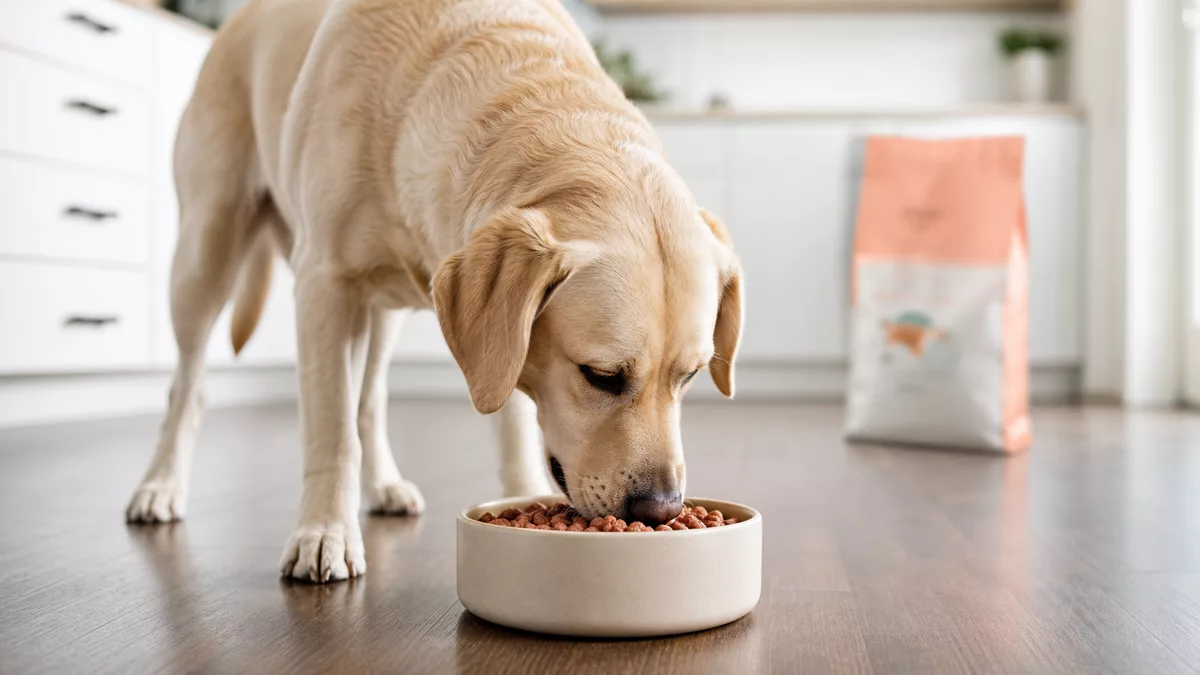
Best Dog Food for Sensitive Stomach
The best dog food for a sensitive stomach is a complete, highly digestible recipe with a short ingredient list, one main animal protein, moderate fat, and a gentle fibre source such as beet pulp, pumpkin or rice. Change one thing at a time, switch over 7–10 days, and judge the result after three to four weeks.
There's no single best brand, and anyone who names one for every dog is selling something. What works depends on what's actually upsetting your dog: fat, a particular protein, too many extras, or the speed they eat at. This guide shows you how to read a label, which type of food fits which symptoms, and how to tell a diet problem from one that needs a vet. We don't make dog food. The links to Amazon are affiliate links, disclosed below.
What does "sensitive stomach" actually mean?
It isn't a diagnosis. It's a label owners and pet food companies use for a dog who regularly has one or more of these: soft or inconsistent stools, occasional vomiting, a lot of gas, loud gut noises, or going off their food.
The common causes, roughly in order of how often they turn out to be the answer:
- Too many extras. Treats, chews, table scraps and the cat's food. This is the most overlooked cause.
- Abrupt food changes, including switching flavours within the same brand.
- Too much fat for that dog, from a rich food or fatty leftovers.
- A food intolerance, where a specific ingredient disagrees with the dog without any immune reaction.
- Eating too fast, which causes regurgitation and swallowed air and is easily mistaken for a food problem.
- A true food allergy, which is less common and usually shows up with itchy skin or ear trouble as well. That has its own guide: best dog food for allergies.
- A medical condition such as parasites, pancreatitis or chronic intestinal disease.
That last one matters. Food is a sensible first thing to adjust for a mild, long-running, otherwise-well dog. It is not a substitute for a diagnosis.
When should you see a vet before changing food?
Skip the food shopping and call your vet if your dog has:
- Blood in vomit or stool, or black, tarry stools
- Vomiting or diarrhoea lasting more than a day or two, or repeated in one day
- Weight loss, lethargy, or loss of appetite
- A painful or swollen belly, or a hunched "praying" posture
- Symptoms that started suddenly in a dog who was previously fine
- Any stomach upset in a young puppy, a senior, or a dog with another health condition
A swollen, tight abdomen with unproductive retching is an emergency. Go immediately.
What should you look for on the label?
| Look for | Why it helps |
|---|---|
| "Complete and balanced" statement (AAFCO in the US, FEDIAF in Europe) for your dog's life stage | Confirms it's a full diet, not a topper or treat |
| One clearly named main animal protein (e.g. "salmon", "turkey") | Easier to identify what your dog does and doesn't tolerate |
| A short ingredient list | Fewer variables if problems continue |
| Moderate fat | Fat is slow to digest and a common trigger; avoid the richest recipes |
| A gentle fibre source: beet pulp, pumpkin, psyllium, oats, rice | Helps firm up stools and feeds gut bacteria |
| Prebiotics (chicory root, FOS, MOS) and sometimes probiotics | May support gut health; evidence is modest but reasonable |
| Feeding-trial or digestibility information from the maker | A sign the company tests its food |
Less important than the marketing suggests:
- "Grain-free." Most dogs digest cooked grains like rice and oats well, and grain allergy is uncommon. Grain-free recipes replace grain with peas, lentils or potato, which give some dogs more gas. The US FDA has also investigated a possible link between certain grain-free, legume-heavy diets and a heart condition (DCM); no cause has been proven, but there's no digestive reason to choose grain-free by default.
- "Sensitive" on the front of the bag. It's a marketing term with no legal definition. Read the back.
- "No fillers" and "human grade." These don't tell you how digestible the food is.
- Exotic proteins. Kangaroo or venison only help if your dog reacts to common proteins. Save them in case your vet needs a genuinely new protein for a diet trial later.
Fat percentages on the bag are hard to compare between wet and dry food because of the water content. If your dog has had pancreatitis or your vet has advised low fat, ask them for a specific target and product; don't estimate it from the label.
Which type of food suits which problem?
| Your dog's main pattern | Type to try first | Notes |
|---|---|---|
| Soft stools, otherwise well | Highly digestible "sensitive digestion" recipe with rice or oats and added fibre | The standard first step |
| Gas and loud gut noises | Same, and avoid legume-heavy recipes | See dog gas remedies |
| Upset after rich food or scraps | Moderate- or lower-fat recipe; cut extras | Ask a vet if episodes are severe |
| Trouble on one protein (e.g. chicken) | Limited-ingredient recipe with a different single protein | Check the full list: chicken fat and "poultry meal" hide in many foods |
| Itchy skin or ears plus gut signs | Vet-guided elimination trial | Likely allergy; over-the-counter foods aren't reliable for this |
| Brings food back up minutes after eating | Same food, slower meals | Often speed, not ingredients |
| Nothing over the counter has worked | Veterinary gastrointestinal or hydrolysed diet | Prescription diets are formulated and tested for this |
Dry or wet? Either can work. Wet food is easier for some dogs and adds water; dry is cheaper and simpler to portion. Pick one format and hold it steady during a trial. Our kibble vs wet food guide compares them.
Puppies need a food labelled for growth (and for large-breed growth if they'll be big). An adult sensitive-stomach food won't meet a puppy's needs. Puppies with digestive upset should see a vet early, since parasites are common at that age.
Seniors who develop a newly sensitive stomach should be checked before you change food. New digestive symptoms in an older dog are more likely to have a medical cause.
👉 Browse sensitive-stomach dog foods on Amazon →
(As an Amazon Associate we earn from qualifying purchases — see our disclosure. The link goes to a search page, not a specific product; use the label checklist above to choose.)
How do you switch food without making things worse?
A fast switch is the most common reason a perfectly good food "doesn't agree" with a dog.
| Days | Old food | New food |
|---|---|---|
| 1–3 | 75% | 25% |
| 4–6 | 50% | 50% |
| 7–9 | 25% | 75% |
| 10 onward | 0% | 100% |
For a dog with a history of stomach trouble, stretch that to two or three weeks, and hold at any stage where stools soften until they firm up again.
Then run it as a fair test:
- Change only the food. Same feeding times, same amount of exercise.
- Stop all extras for the trial, or use pieces of the new food as treats. One dental chew can undo the experiment.
- Keep a simple diary: stool quality, vomiting, gas, appetite. Memory is unreliable over a month.
- Give it three to four weeks on the new food alone before judging, unless your dog gets clearly worse.
- Don't change again too soon. Hopping between foods every week is itself a cause of upset.
What about a bland diet? Plain boiled chicken and white rice for two or three days is a common short-term measure for a mild upset in an adult dog, and vets often suggest it. It isn't nutritionally complete, so it's not a long-term diet, and it's not appropriate if your dog is unwell in the ways listed in the vet section above.
Does how you feed matter as much as what you feed?
Often, yes. Before you blame the recipe, check the routine.
- Split the day's food into two or three meals. Smaller meals are easier on the gut than one large one.
- Measure portions. Overfeeding causes soft stools all by itself. See how much to feed your dog.
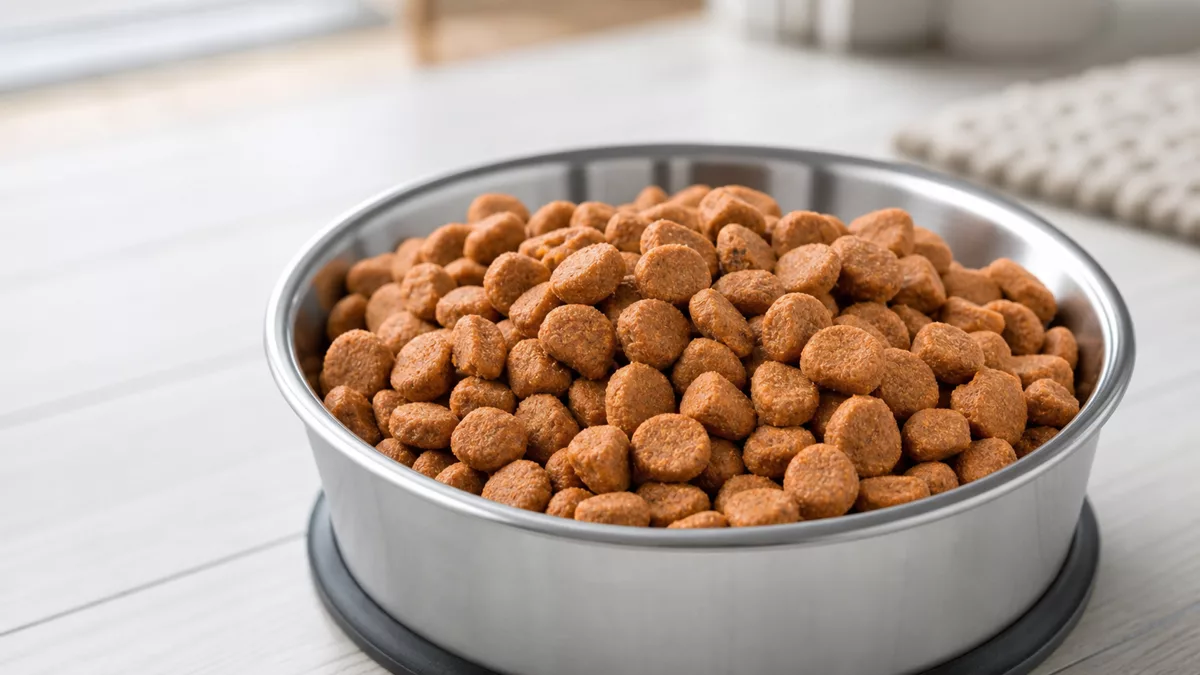
- Slow down a gulper. A dog who inhales a meal and brings it back up a few minutes later, looking much as it went down, is regurgitating. That's usually about speed. A stainless steel slow feeder bowl stretches the meal out, and it's worth trying before you replace a food your dog otherwise does well on. More on this in dog eats too fast and throws up.
- Keep bowls clean. Wash food bowls after every meal, especially with wet food.
- Store food properly. Keep kibble in its original bag, sealed, somewhere cool and dry, and check the date. Fats in stale food go rancid.
- Hold off hard exercise straight after meals.
- Be careful with toppers. They're extra variables. If you use them, add one at a time; our dog food toppers guide covers the gentler options.
What are the common mistakes?
- Switching food overnight.
- Changing food and treats and feeding times all at once, so you can't tell what helped.
- Assuming grain is the problem.
- Choosing by the front of the bag.
- Using a long-term home-cooked diet without a veterinary nutritionist's recipe.
- Treating months of diarrhoea or vomiting as "just a sensitive stomach".
- Giving human stomach medicines without veterinary advice. Some are dangerous for dogs.
The bottom line
Look for a complete, digestible food with a short ingredient list, one main protein, moderate fat and a sensible fibre source. Switch slowly, cut the extras, and give it a few weeks. Fix the feeding routine at the same time, particularly if your dog eats fast. And if the symptoms are severe, sudden or persistent, the next step is a vet, not another bag.
👉 Browse sensitive-stomach dog foods on Amazon →
Frequently Asked Questions
What is the best dog food for a dog with a sensitive stomach? A complete and balanced, highly digestible food with a short ingredient list, one clearly named animal protein, moderate fat and a gentle fibre source such as beet pulp, pumpkin or rice. No single brand suits every dog. Introduce it over 7–10 days and assess after three to four weeks.
Is grain-free food better for a sensitive stomach? Not usually. Most dogs digest cooked rice and oats well, and grain allergy is uncommon. Grain-free foods replace grain with peas, lentils or potato, which can increase gas in some dogs. There's no digestive reason to choose grain-free unless your vet has identified a specific problem with a grain.
How long does it take to switch dog food for a sensitive stomach? At least 7–10 days, gradually increasing the proportion of new food. For a dog with a history of digestive upset, two to three weeks is safer. If stools soften at any stage, stay at that ratio until they firm up before increasing again.
How long before I know if a new food is working? Give it three to four weeks on the new food alone, with no other treats or extras, unless your dog gets noticeably worse. Stool quality often improves within the first couple of weeks. Suspected food allergies need a longer, vet-supervised trial.
Is chicken and rice good for a dog with an upset stomach? Plain boiled chicken and white rice is a common short-term option for a mild upset in an otherwise healthy adult dog, typically for two or three days. It isn't nutritionally complete, so it shouldn't be fed long term, and it isn't a substitute for a vet visit if symptoms are severe or persistent.
Can eating too fast cause stomach problems in dogs? Yes. Dogs that gulp food swallow air and may regurgitate the meal within minutes, which can look like a food intolerance. If the food comes back up undigested shortly after eating, try slowing meals with a slow feeder bowl or smaller, more frequent portions before changing the diet.
When should I see a vet instead of just changing food? See a vet if there's blood in stool or vomit, symptoms last more than a day or two, your dog is losing weight, lethargic or in pain, or the problem began suddenly. Puppies, seniors and dogs with other conditions should be seen early. A swollen belly with retching is an emergency.