Kibble vs Wet Food for Dogs
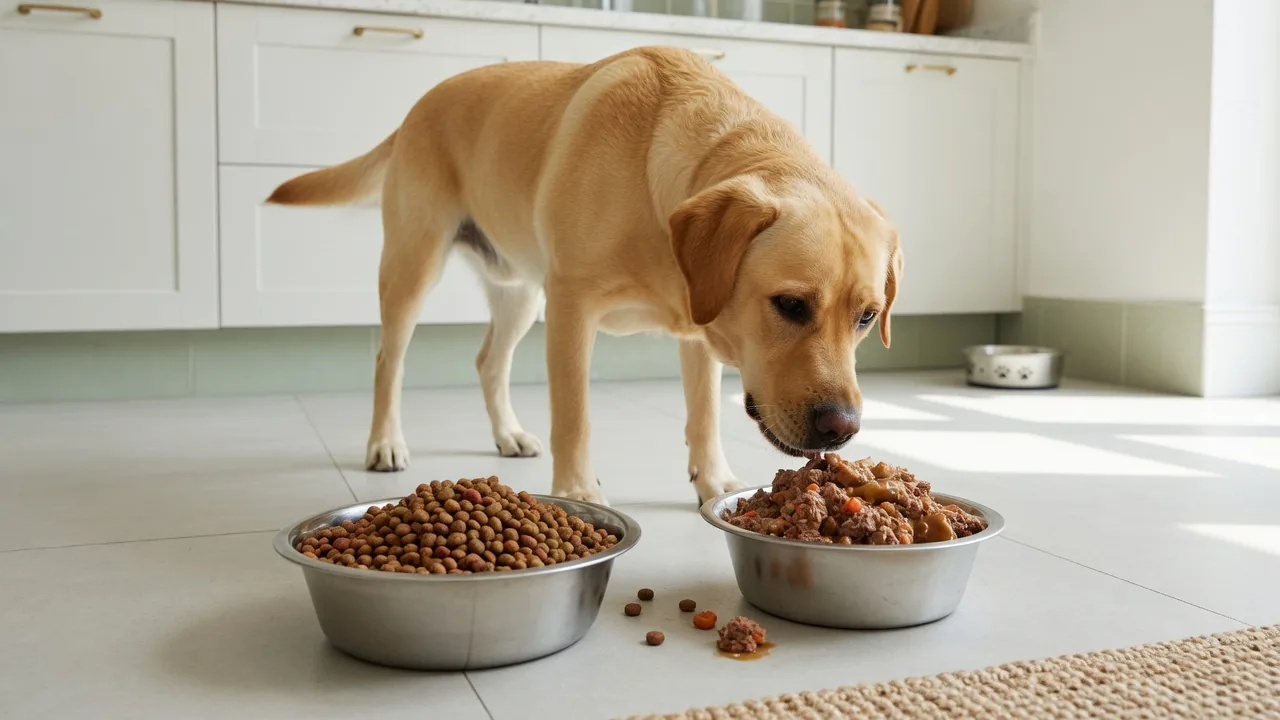
There's no universal winner between kibble and wet food — kibble wins on cost, convenience, and shelf life, while wet food wins on hydration (roughly 70–85% moisture vs about 10% for kibble) and appeal to picky eaters, so the right choice depends on your dog's needs, your budget, and your routine. This guide breaks down the differences that actually matter, who each format suits, how to mix them, and how to switch without upsetting your dog's stomach.
What are the core differences between kibble and wet food?
Kibble is dry, extruded or baked food that is usually around 10% moisture. Wet food is canned or pouched and usually sits somewhere in the 70–85% range. Most practical differences follow from that one number.
| Factor | Kibble | Wet food |
|---|---|---|
| Moisture | Around 10% | Roughly 70–85% |
| Cost per day | Usually lower | Usually higher, especially for large dogs |
| Calorie density | High: small volume, many calories | Low per volume, so portions look bigger |
| Storage | Months in a sealed bag at room temperature | Unopened cans are shelf-stable; opened food needs the fridge and a short use-by window (check the label) |
| Palatability | Fine for most dogs | Stronger smell and softer texture, often wins over picky eaters |
| Chewing demand | Needs some chewing | Easy for dogs with sore mouths or missing teeth |
| Mess and smell | Low | Higher: sticky bowls, stronger odour |
| Travel and portioning | Easy | Cans and pouches are heavier and bulkier |
Two things are worth knowing about that table. First, "moisture" isn't a quality score. Wet food looks watery because it is, and the numbers on the label compare differently once you strip out water (more on that below). Second, nutrition is not the dividing line. A complete and balanced kibble and a complete and balanced wet food can both meet a healthy dog's needs. What matters is that the label says the food is "complete and balanced" for your dog's life stage, not whether it came in a bag or a can.
Which is cheaper, kibble or wet food?
Almost always kibble, and the gap grows with the size of your dog. Wet food is mostly water, so you pay for water, can and shipping, and a large dog needs several cans a day to hit its calories. Rather than comparing price per can against price per bag, compare cost per 100 calories:
- Find the calorie content on the label (look for kcal per kg, per cup or per can).
- Divide the price of the pack by the total kcal in the pack.
- Multiply by 100.
Do this for the products you're actually considering and the answer is usually obvious. It also exposes the common trap that a cheap-looking can feeds a 5 kg dog for a day but a 30 kg dog for an afternoon.
Wet food is more affordable when it is a topper, not the main meal. A spoonful on top of kibble makes the bowl smell and taste better for pennies per meal; see dog food toppers for ideas.
When does kibble make the most sense?
- Budget matters. Kibble is generally the economical choice per calorie.
- Convenience. No fridge space, easy to measure, easy to travel with and easy to store for months.
- Free-feeding or food-dispensing toys. Dry food sits out safely for longer, and it is the format that works in maze bowls, snuffle mats and puzzle toys.
- Dogs who already eat well. If your dog finishes a measured portion with enthusiasm, there's often no reason to change formats.
- Training. Kibble can double as small training rewards. Count them toward the daily total.
When does wet food make the most sense?
- Picky eaters. The aroma and soft texture are hard to resist. If a dog skips meals, rule out illness with your vet first, then try wet food or a topper.
- Dogs who don't drink much. Wet food adds water to the day. It doesn't replace fresh drinking water, but some owners value the extra fluid. If your dog's drinking suddenly changes, call a vet.
- Dental or chewing problems. Missing teeth, sore gums or a small jaw may make kibble hard to eat. Always confirm the cause with your vet.
- Older dogs with falling appetite. Strong-smelling food can restart a flagging appetite. Our senior dog feeding guide goes through the rest of the age-related picture.
- Weight plans. Because wet food is less calorie-dense per spoonful, a full-looking bowl can hold fewer calories. That can help some dogs feel satisfied during a vet-guided weight plan, but the maths only works if you actually measure.
Does kibble clean a dog's teeth?
Partly, and that "partly" is the honest answer. Crunching dry food has a mild mechanical effect, but ordinary kibble is not a replacement for dental care and the idea that wet food rots teeth while kibble cleans them is oversimplified. Dental disease depends on much more: genetics, breed, age, chewing habits and, above all, what is done about plaque.
If teeth are a priority, brushing, vet-approved dental chews and professional cleanings do more than the food format. Ask your vet to check your dog's teeth at routine visits, whichever food you choose.
Can you mix kibble and wet food?
Yes, and it's one of the most practical options. Common ways to do it:
- Topper. A spoonful of wet food mixed through kibble. Reduce the kibble a little to compensate.
- Split meals. Kibble in the morning, wet food in the evening.
- Moistened kibble. Warm water on kibble for ten minutes gives a soft meal at kibble prices, which helps some older dogs and slow drinkers.
The one rule: count the calories. Check the label on each food, work out your dog's daily need (our how much should I feed my dog guide explains how), and reduce one food when you add the other. Mixing is the number-one way owners accidentally overfeed. A tablespoon of wet food seems like nothing until it's three tablespoons, twice a day.
If you mix brands, bear in mind that a sensitive dog may react to any change. Introduce additions slowly, as covered below.
How do kibble and wet food compare on eating speed?
Here's what the kibble-vs-wet debate usually skips: both formats can be gulped, just in different ways. Dogs on kibble often inhale mouthfuls; dogs on wet food can slurp a soft meal in seconds. Either way, fast eating is linked to gulped air, gagging, regurgitation and a messy aftermath, and in deep-chested breeds eating speed is one of the factors discussed in connection with bloat.
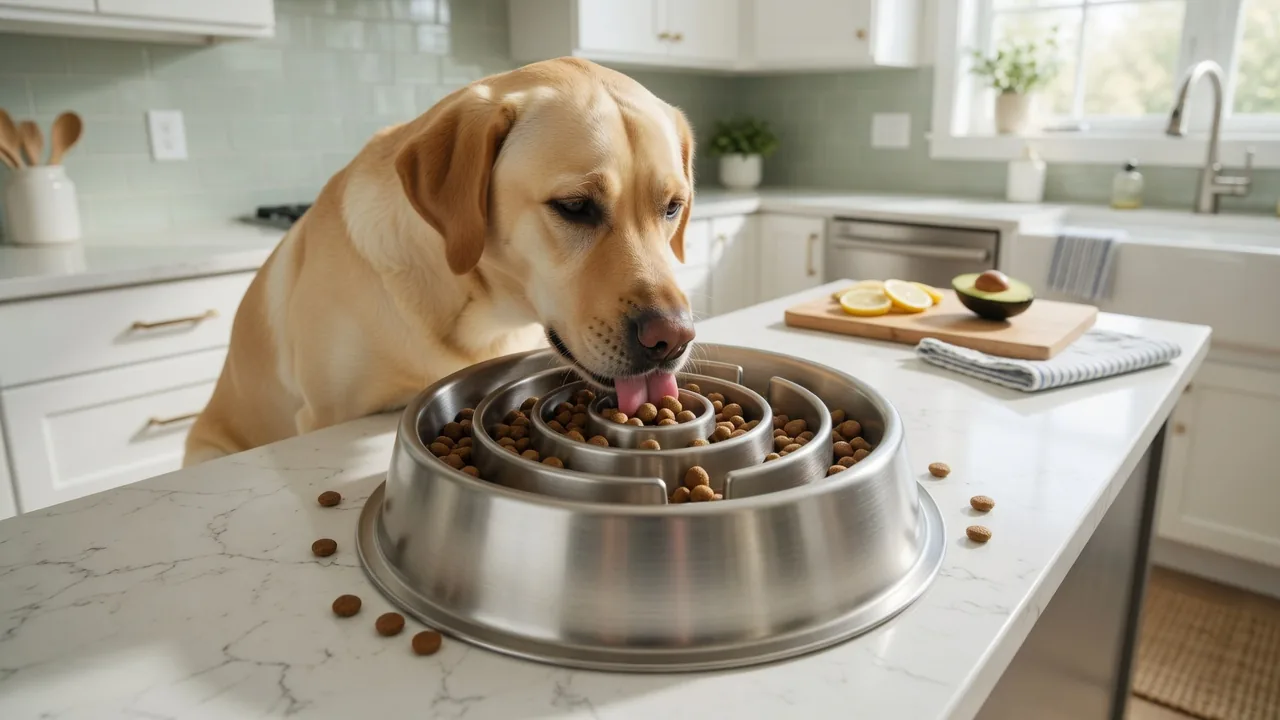
- Kibble: a stainless steel slow feeder forces the dog to work pieces out of a maze instead of scooping. A snuffle mat adds scent work and lets you scatter a meal for foraging.
- Wet food: a deep maze can clog with soft food. Spread it thinly across the ridges or use a flatter, lick-friendly surface, and read our full guide on using a slow feeder for wet food. Don't put wet food on a fabric snuffle mat; it sticks and is hard to wash out.
Our Stainless Steel Slow Feeder Dog Bowl works well with dry kibble, thanks to a raised maze that keeps pieces from just sliding about. For wet food, spread it thin and stay with the bowl while your dog adjusts.
If your dog bolts food whatever the format, see why your dog eats so fast and how to stop your dog eating too fast.
How do you switch between kibble and wet food safely?
Switch over 5–7 days, longer (up to 10 days or more) for sensitive stomachs, by mixing increasing amounts of the new food into the old:
| Days | Old food | New food |
|---|---|---|
| 1–2 | 75% | 25% |
| 3–4 | 50% | 50% |
| 5–6 | 25% | 75% |
| 7 | 0% | 100% |
Notes for the switch:
- Measure by calories, not by scoops. A cup of kibble and a cup of wet food are not equivalent.
- Watch the stool. Soft stool for a day or two is common. A switch from kibble to wet food often changes stool consistency simply because moisture changes.
- Stop and call your vet if there is repeated vomiting, diarrhoea lasting more than a day or two, refusal to eat, blood in the stool, or lethargy. If your dog has a history of tummy trouble, check best dog food for a sensitive stomach and, for suspected intolerances, best dog food for allergies.
- Keep opened wet food cold. Refrigerate it covered, use it within the time on the label, and don't leave it sitting in the bowl for hours in warm weather.
Common mistakes with kibble and wet food
- Feeding wet food on top of a full kibble portion. It adds calories without subtracting any.
- Judging by the label's "protein %" alone. Wet food's percentages are measured with water included. Compare on a dry-matter basis, or just compare complete recipes by calories.
- Free-feeding wet food. Out for hours, it spoils and attracts pests.
- Switching foods overnight. The classic cause of an upset stomach.
- Assuming a picky eater wants a different food. Sometimes the cause is stress, illness, too many treats or too-frequent topper changes.
- Ignoring eating speed. A great food gulped in thirty seconds is still a gulped meal.
The bottom line
Kibble vs wet food isn't a contest, it's a fit question. Kibble tends to win on cost, convenience, storage and compatibility with slow feeders and snuffle mats; wet food tends to win on moisture, aroma and ease of eating. Many dogs do well on either, and plenty of owners mix both. Choose a complete and balanced food for your dog's life stage, count the calories, switch gradually, and keep an eye on how fast it disappears. That last part often matters more to comfort and digestion than the format itself.
👉 See the Stainless Steel Slow Feeder Dog Bowl →
Frequently Asked Questions
Is wet food or kibble better for dogs? Neither is universally better. A complete and balanced version of either can meet a healthy dog's nutritional needs. Kibble is usually cheaper and more convenient; wet food usually offers more moisture and appeal to picky eaters.
Can I mix kibble and wet food? Yes, many owners do. Count the calories from both foods and reduce one when you add the other, or the mix can quietly add up to more than your dog needs. Ask your vet if you're unsure how to balance them.
Does kibble clean my dog's teeth? It has a mild scraping effect at best, and it isn't a substitute for brushing, dental chews your vet approves of, or professional cleanings. Ask your vet to check your dog's teeth at routine visits.
Which type of food works better with a slow feeder bowl? Dry kibble works best in maze-style slow feeders, since the pieces stay separate in the ridges. Wet food can still work if you spread it thinly; see our guide to using a slow feeder with wet food for techniques.
Is wet food better for dogs who don't drink much water? Wet food does add fluid to the day, but it doesn't replace fresh water, which should always be available. If your dog suddenly drinks much less or much more than usual, speak to your vet.
How long can opened wet dog food stay out or in the fridge? Follow the label, but as a rule, covered, refrigerated and used within a few days is the norm, and wet food shouldn't sit in the bowl for hours, especially in warm weather. Throw it out if it smells off.
How do I switch my dog from kibble to wet food? Mix the new food into the old over 5–7 days, increasing the new share every day or two, and longer for sensitive dogs. Measure by calories, and call your vet if vomiting, diarrhoea or refusal to eat lasts more than a day or two.