Senior Dog Feeding Guide
Senior dog feeding is mostly about three things: keeping weight steady as energy needs drop, protecting muscle with enough good-quality protein, and making meals physically comfortable. The exact food, portion and any supplements belong to your vet, but you can change how and where your dog eats today.
Ageing doesn't switch on a "senior diet" overnight. It's a slow drift: a bit less activity, a bit less lean muscle, perhaps sore teeth or stiff joints. A feeding plan that suited your dog at five can quietly stop suiting them at ten. Below is what usually changes, what to watch, and what is worth raising with your vet. This guide is about the senior years specifically; for generic portion maths see how much should I feed my dog, and for non-food activity see senior dog enrichment.
When is a dog considered senior?
There is no single age, because size drives ageing speed:
| Size | Often considered senior from | Notes |
|---|---|---|
| Small | around 10-12 years | Often live longest |
| Medium | around 8-10 years | |
| Large and giant | around 6-8 years | Age faster; changes can start earlier |
These are rules of thumb. A fit 9-year-old and a stiff, overweight 7-year-old can be at different life stages. Many vets begin senior check-ups, often with bloodwork, somewhere in this window, and that is the right time to ask about diet.
What actually changes in an older dog's nutrition?
Energy needs usually fall. Most seniors move less, and many burn fewer calories at rest. Keep feeding the same cup and the weight creeps up, which loads already ageing joints. How much less is individual, so adjust by weight trend and with your vet rather than by a fixed percentage.
Muscle matters more than weight. Older dogs tend to lose lean muscle gradually, a process called sarcopenia, and veterinary nutrition sources note that seniors may need protein at least as high as younger adults, not less. The old idea that all older dogs should eat low-protein food applies mainly to specific conditions, such as certain kidney problems, that a vet has diagnosed. Don't cut protein on your own.
Digestion can get touchier. Sudden food changes and rich treats are more likely to cause an upset, so switch gradually over about a week or more.
Teeth and mouth. Dental disease is common in older dogs, and a sore mouth changes how a dog eats long before they stop eating.
Appetite and smell. Reduced smell and taste, or nausea from an underlying condition, can make a senior pickier. That is a medical question as often as a dietary one.
How do I know if my senior dog is the right weight?
Bathroom scales and food charts only go so far. Use a body condition check at home, every couple of weeks:
- Ribs. You should feel them under a thin fat layer with light pressure, without pressing hard.
- Waist. From above, there should be a visible tuck behind the ribs.
- Side view. The belly should tuck up toward the back legs, not hang level or sag.
- Spine and hips. Look for prominent bones or thinning muscle over the back and thighs. Fat dogs can still be losing muscle.
Weigh monthly and write the number down. A slow gain of a pound or two a month in a medium dog is easy to miss in daily life and obvious on a chart. Ask your vet to show you the standard body condition scoring charts at the next visit.
Should a senior dog eat senior dog food?
Maybe. "Senior" is a marketing term rather than a strict standard, so formulas vary: some have fewer calories, some have added joint ingredients, and some simply have different marketing. Judge the food by the guaranteed analysis and calorie content, and by how your dog does on it.
Questions worth taking to your vet:
- Does my dog need fewer calories, or just a better portion routine?
- Is protein adequate for muscle maintenance?
- Does my dog's bloodwork suggest a therapeutic diet?
- Are joint supplements worth trying for this dog? (Results vary, and some are not well proven.)
If your dog is healthy, weighs what they should and is doing well on an adult food, switching isn't mandatory.
Dry, wet or softened: which works for older mouths?
If chewing hurts, the answer is usually a change in texture, not amount.
| Option | Helps with | Watch for |
|---|---|---|
| Softened kibble (warm water, 10-15 minutes) | Sore teeth, picky eaters | Make fresh each time; wet food spoils fast |
| Wet food | Low appetite, dental pain, extra water | Higher calories per bite; dental plaque |
| Kibble plus a spoonful of wet food | Interest, aroma | Count the extra calories |
| Mixing warm broth into dry food | Fussy dogs | Use onion-free, low-salt broth |
Our kibble vs wet food guide covers the general trade-offs. Whatever you pick, take the extra food out of the daily allowance.
How often should a senior dog eat?
Two meals a day suits most seniors. Some do better on three smaller ones, particularly if they vomit bile on an empty stomach in the morning, feel full and sluggish after big meals, or are on medication that should be given with food. Large, deep-chested older dogs are often better on smaller, more frequent meals too; ask your vet. Our how often should I feed my dog guide goes through the options. Keep the times consistent: older dogs like routine, and predictable meals reduce anxious begging.
How can I make mealtime physically easier?
Small changes can make a big difference to a stiff or wobbly dog:
- Stable footing. Slippery floors make eating stressful. A non-slip mat under the bowl, or rugs near the feeding spot, helps.
- A bowl that stays put. A bowl that slides under a dog's weight makes a shaky dog wobble. Heavy stainless steel with a non-slip base is steadier than lightweight plastic.
- Height. Dogs with neck or joint pain sometimes eat more comfortably from a slightly raised bowl, but raising it isn't automatically safe for every dog: for deep-chested breeds it has been debated as a possible bloat factor. Read our elevated dog bowl height guide and ask your vet before raising.
- Shallow, wide bowls for dogs with flat faces or sore necks.
- Water in more than one place, close to where the dog rests.
Is a slow feeder a good idea for an older dog?
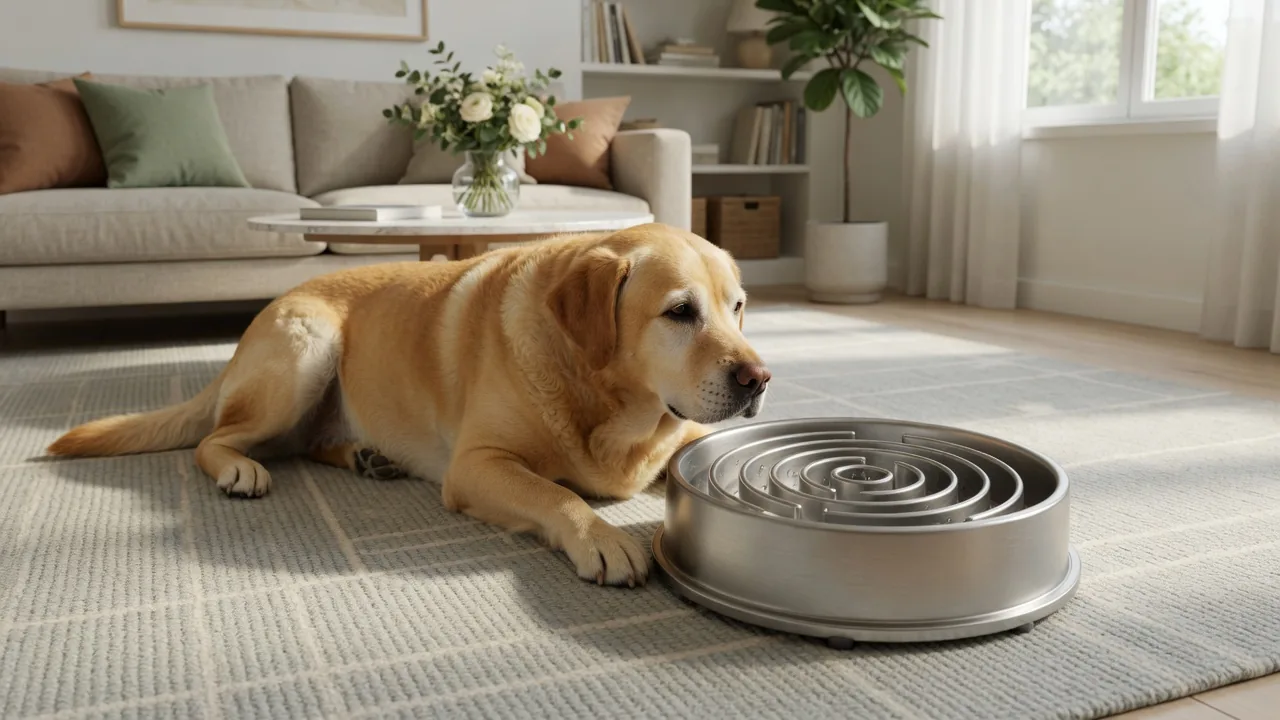
It depends on the dog. If your senior still gulps, a slow feeder can help with gas, regurgitation and the burping that follows fast meals. Use a gentle design with wide channels, since a complicated maze can frustrate a dog with sore teeth or a stiff neck. A stainless steel slow feeder is steady and easy to wash. Introduce it with a normal meal and watch whether your dog eats more comfortably or becomes frustrated.
Skip it, or choose something simpler, if your dog has painful teeth, a weak appetite (making eating harder is the wrong move) or trouble reaching food. See how long it should take a dog to eat for realistic meal-time targets.
How do I keep a senior dog interested in food?
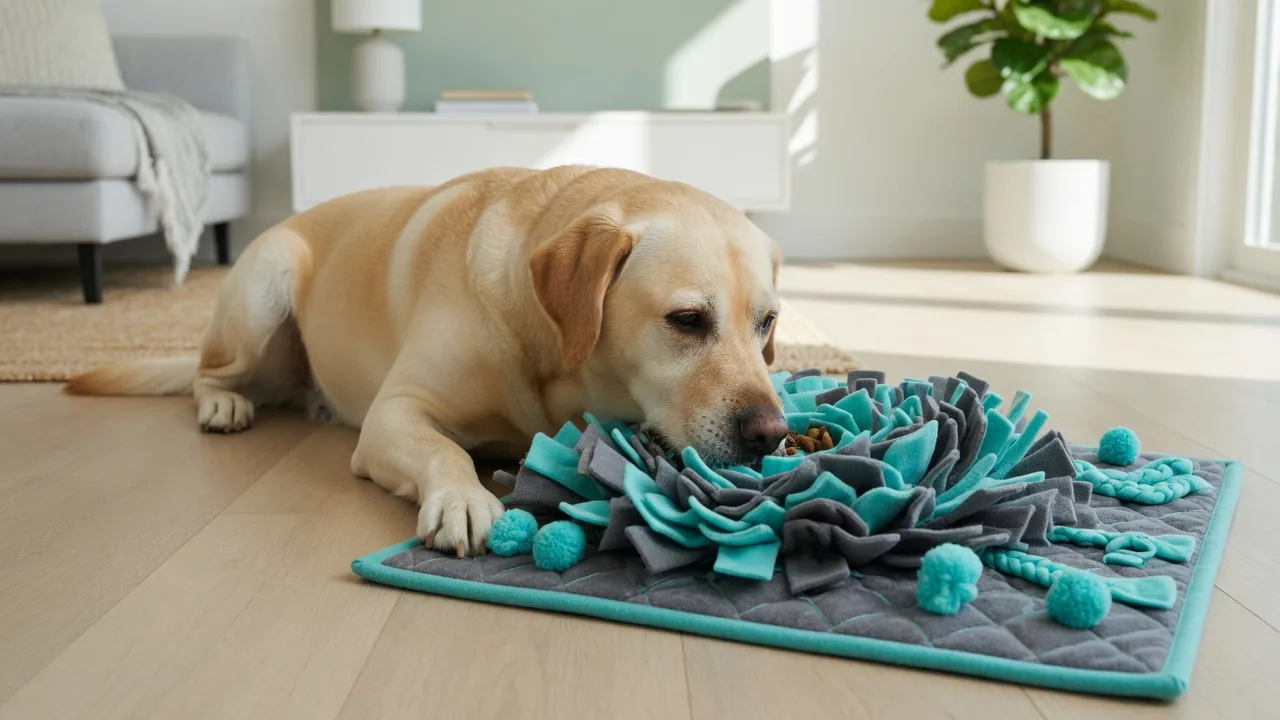
Mental engagement matters as physical activity declines, but keep it low-impact. A snuffle mat lets a dog sniff out kibble at floor level, with no jumping or twisting. It also suits dogs with weakening vision, since scent does the work. Start with an easy layout and extra-visible kibble, and stop if your dog seems tired. A dog that has lost enthusiasm for food may find the smell helpful, but a dog that suddenly refuses food needs a vet, not a puzzle.
What should I never do when feeding a senior dog?
- Cut food drastically to slim a dog quickly. Sudden restriction can cost muscle and cause problems.
- Cut protein without a diagnosis that calls for it.
- Add human leftovers, which are often fatty, salty or seasoned.
- Assume weight loss is "just old age."
- Start supplements without checking for interactions with your dog's medication.
- Change several things at once, so you can't tell which one caused the problem.
When should I call the vet instead of changing the diet?
Book a visit if your senior dog shows any of these:
- Unexplained weight loss or gain
- Refusing food for more than a day
- Vomiting or diarrhoea that lasts more than a day, or happens repeatedly
- Much more drinking or urinating than usual
- Dropping food, chewing on one side, drooling or pawing at the mouth
- Coughing, panting or breathlessness at mealtimes
- Swollen belly, retching with nothing coming up, or sudden distress (an emergency)
These can point to dental, kidney, endocrine, heart or digestive problems that diet changes alone won't fix.
Common senior problems and what usually helps
| What you notice | Possible reasons | What to try at home | Vet visit? |
|---|---|---|---|
| Gaining weight | Less activity, same portions | Re-measure meals; count treats; see how much to feed | If gain is fast or with other changes |
| Losing weight or muscle | Dental pain, illness, low protein, poor appetite | Warm or soften food; don't wait it out | Yes, early |
| Eating slowly or dropping food | Sore teeth, stiff neck | Softened food, shallow bowl, stable footing | Yes, check the mouth |
| Picky or half-hearted eating | Reduced smell, nausea, medication | Warm the food; try a smell-rich topper | If it lasts a day or two |
| Gulping, then burping or gas | Old habit, air swallowing | Slower meals; see dog gas remedies | If vomiting persists |
| Asking for food constantly | Habit, boredom, some medical causes | Slow the meal; see why is my dog always hungry | Yes, if sudden and extreme |
How to switch your senior dog's food safely
Older digestive systems are less forgiving, so make changes slowly. A typical schedule over about 7 to 10 days is shown below, and some dogs need longer.
| Days | Old food | New food |
|---|---|---|
| 1 to 3 | about 75% | about 25% |
| 4 to 6 | about 50% | about 50% |
| 7 to 9 | about 25% | about 75% |
| 10 | none | 100% |
If you see loose stools, vomiting or refusal, slow down or go back a step and tell your vet. Switching to a prescribed diet should follow your vet's instructions instead of this general schedule.
Water, medication and mealtimes
- Water. Keep fresh water easy to reach, and tell your vet if your dog starts drinking or urinating much more than usual, because that can be a sign of several conditions.
- Medication with food. Some tablets are given with food. A spoonful of wet food or a smear on a lick mat can help the dose go down. Ask your vet or pharmacist before hiding any medication, because some must not be given with certain foods.
- Routine. Older dogs often like predictable times. A regular schedule is easier on digestion and helps you spot changes in appetite.
- Eating alone. Some seniors are anxious about competing for food. A quiet spot away from other pets helps.
Easy lower-effort ways to add variety to meals
Appetite and interest can fade with age, so variety matters, as long as it fits within the day's calories. Three low-effort options, from the same meal allowance:
- A lick mat loaded with softened food or plain pumpkin can be done lying down. See what to put on a lick mat for safe fillings.
- A snuffle mat for a portion of kibble, with a few pieces left on top at first.
- A gentle slow feeder for a dog who still gulps.
For the activity side beyond meals, including sniff walks and low-impact games, see our senior dog enrichment guide. For general schedule questions, how often should I feed my dog goes through meal timing.
A monthly senior feeding check
Once a month, spend ten minutes on this list. Write the answers down so you can show your vet.
- Weigh your dog and note the number.
- Feel the ribs and look at the waist and muscle over the hips.
- Check the mouth for bad breath, red gums, loose or broken teeth, and drooling.
- Note how fast and how willingly your dog eats, and whether food gets dropped.
- Note water intake, stools and any vomiting.
- Review treats and extras, and subtract them from the meal allowance.
This record turns vague worry into useful information when you call the clinic.
The bottom line
Watch the weight and the muscle, keep protein adequate, soften or moisten food if teeth hurt, and make the bowl and floor easy for ageing bodies. Leave the decisions about therapeutic diets, supplements and exact portions to your vet, who can read the bloodwork. Small, comfortable changes tend to do more than a dramatic overhaul.
👉 See the Stainless Steel Slow Feeder Dog Bowl → 👉 See the Lick Mat for Dogs →
If an older dog develops itchy skin or digestive trouble, see the best dog food for allergies for how to run a proper diet trial.
Frequently Asked Questions
At what age is a dog considered a senior? It depends on size: often around 10-12 for small breeds, 8-10 for medium breeds and 6-8 for large and giant breeds. Your vet can judge from your dog's actual health, not just the birthday.
Should I feed my senior dog less? Many seniors need fewer calories because they move less, but they usually still need good-quality protein to keep muscle. Adjust by body condition and weight trend, and agree any big change with your vet first.
Do senior dogs need a special diet? Not always. A healthy senior at a good weight can do well on a quality adult food. Senior formulas vary a lot, so compare calories and protein. Dogs with kidney, heart or other conditions may need a prescribed diet.
How many times a day should I feed a senior dog? Two meals suits most. Some do better with three smaller meals, especially if they vomit on an empty stomach or feel uncomfortable after big meals. Ask your vet before changing the schedule.
Why is my senior dog eating less? It can be normal ageing, but dental pain, nausea or illness are common causes. Warm or soften food and see your vet if it lasts more than a day or two or comes with weight loss.
Do senior dogs need a different bowl? Not necessarily, but a stable, non-slip bowl on a grippy surface helps unsteady dogs. Raised bowls are a vet question for deep-chested dogs. A slow feeder helps only if the dog still gulps.
How do I get my senior dog to eat when they have no appetite? Warm the food slightly to release the smell, try softening kibble or adding a spoonful of wet food, and keep mealtimes calm. If your dog refuses food for more than a day, or has other signs such as vomiting, see your vet, because loss of appetite is often a medical sign.
Should I add supplements to my senior dog's diet? Some owners use joint or other supplements, but results vary and some can interact with medication. Ask your vet which, if any, suit your dog.
Can senior dogs eat the same treats as before? Often yes, but softer and smaller treats are easier on sore teeth, and calories still count. Ask your vet if your dog has a medical condition.
How much water should a senior dog drink? It varies with size, food type and weather. What matters is a change: if your dog suddenly drinks or urinates much more than usual, tell your vet.