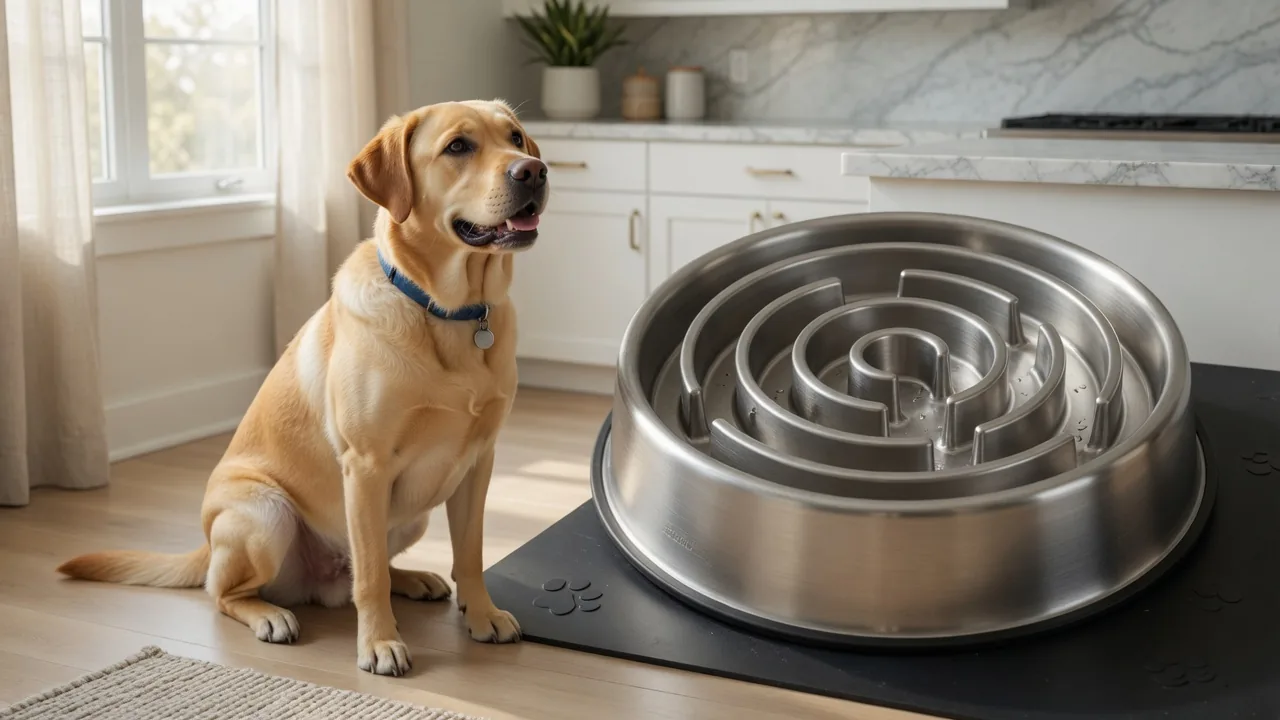
Why Is My Dog Always Hungry?
Most dogs that seem always hungry are healthy: they're food-driven by breed, have learned that begging works, or are bored. Less often the cause is underfeeding, medication or illness. The key check is weight. Hungry with a stable, healthy weight is usually behaviour. Hungry while losing weight, or newly ravenous, needs a vet.
Dogs are scavengers by design. An animal that evolved to eat whenever food turned up doesn't come with a reliable "I've had enough" switch, and looking hopeful at every meal is normal dog behaviour. So the useful question isn't "why does my dog want food?" It's "is this the normal wanting, or has something changed?" This guide helps you answer that.
Is your dog actually hungry, or just asking for food?
Three quick checks sort most cases.
1. Is it new? A dog who has always been food-obsessed is showing you their personality. A dog whose appetite jumped over days or weeks is showing you a change, and changes need explaining.
2. What's their body condition? Put your hands on your dog's ribcage.
- Ribs easy to feel under a thin covering, a visible waist from above, a tummy that tucks up from the side: ideal.
- Ribs, spine and hip bones obvious to the eye, no fat cover: underweight.
- Ribs hard to find under padding, no waist: overweight.
Vets score this on a 9-point body condition scale, where 4 to 5 is ideal. An always-hungry dog at an ideal or heavy weight is not short of calories, whatever their eyes say.
3. What does the "hunger" look like? Begging at your mealtimes, appearing when the fridge opens, and staring after dinner is food-seeking. Raiding bins, eating non-food items, stealing food they never used to steal, or frantic eating is a stronger signal that something has shifted.
What are the common reasons a dog is always hungry?
| Cause | Typical clues | What to do |
|---|---|---|
| Breed and genetics | Lifelong food obsession; Labs, beagles, pugs, retrievers | Manage it; it won't go away |
| Learned begging | Happens around people and kitchens; someone gives in sometimes | Stop all rewards, everyone, consistently |
| Boredom | Worse on quiet days; other attention-seeking too | Add mental work and feed from puzzles |
| Eating too fast | Meal gone in under a minute, then looking for more | Slow the meal down |
| Underfeeding | Thin body condition; growing, very active, pregnant or nursing | Recheck portions with your vet |
| Low-satiety diet | Small volume of rich food; a recent food change | Discuss food choice with your vet |
| After neutering | Appetite up, weight creeping up in the following months | Adjust portions, monitor weight |
| Medication | Started steroids or some seizure drugs recently | Tell your vet; don't stop medication |
| Illness | New hunger plus weight loss, thirst or stool changes | Vet visit |
Breed and genetics
Some dogs are built hungry. Researchers at the University of Cambridge found that about a quarter of Labradors carry a mutation in the POMC gene that makes them feel hungrier between meals while burning fewer calories at rest. It's the best-studied example, but strong food drive runs through many breeds, including beagles, pugs, dachshunds and golden retrievers. For these dogs, wanting food all the time is their baseline.
Learned begging
If begging has ever produced food, it will continue. Worse, food that arrives only sometimes makes the habit stronger, the same way an occasional payout keeps people at a slot machine. One family member who slips the dog a crust undoes everyone else's effort.
Boredom
Food is the most interesting thing in many dogs' days. A dog with little else to do will ask for it often. The signs overlap with other restless behaviour; see signs your dog is bored.
Eating too fast
A meal that's gone in 30 seconds is over before the dog has registered it. Dogs who gulp often go straight back to searching. Slower meals seem to leave many dogs more settled, though this is owner experience more than hard science. The reasons behind gulping are in why does my dog eat so fast.
Underfeeding
It's less common than overfeeding, but it happens. The feeding guide on the bag is a starting estimate. Growing puppies, working and sporting dogs, and pregnant or nursing females can need far more than an average adult. Dogs in cold weather burn more too. If your dog is hungry and lean, work through how much to feed your dog and check with your vet.
Diet
Foods differ in calorie density, protein and fibre. A very calorie-dense food means a small portion, which some dogs find unsatisfying. A switch to a "light" food can also leave a dog hungrier at first. Change foods gradually over a week or so, and talk to your vet before switching for appetite reasons.
After neutering
Spaying or neutering tends to lower a dog's energy needs and can increase appetite. Many dogs need somewhat less food afterwards, at the very time they're asking for more. Your vet can advise on how much to adjust.
Which medical problems cause constant hunger?
Vets call a real increase in appetite polyphagia. The main causes:
- Diabetes mellitus. Hunger with weight loss, heavy drinking and frequent urination.
- Cushing's disease. Mostly middle-aged and older dogs. Hunger, thirst, a pot belly, panting, thinning coat.
- Exocrine pancreatic insufficiency (EPI). The dog can't digest food properly. Ravenous hunger, weight loss, large pale greasy stools. German Shepherds are especially prone.
- Intestinal parasites. More common in puppies. Poor weight gain, pot belly, sometimes diarrhoea.
- Other gut diseases that reduce absorption of nutrients.
- Medications. Steroids such as prednisone and some anti-seizure drugs commonly increase appetite. Never stop a prescribed drug without your vet's advice.
One correction to a common claim: an underactive thyroid, the usual thyroid problem in dogs, typically causes weight gain without extra appetite. An overactive thyroid does raise appetite but is rare in dogs.
In older dogs, cognitive decline can also lead to asking for meals they've already eaten.
When should you see a vet about a hungry dog?
Book an appointment if the hunger comes with any of these:
- it's new or has clearly increased
- weight loss, or failing to gain weight as a puppy
- drinking and urinating more
- vomiting, diarrhoea, or bulky, pale or greasy stools
- a pot-bellied look, hair loss or heavy panting
- low energy
- eating non-food items such as soil, fabric or stones
- new food stealing or guarding in a dog who never did it
Take notes with you: what and how much you feed, treats, any weight change, and how long it's been going on. A vet will usually start with an exam, a weight check and blood and urine tests. We're not vets, and nothing here is a diagnosis.
How do you help a healthy dog feel fuller?
If the vet check is clear and body condition is good, your dog doesn't need more food. They need the same food to go further.
- Weigh the food. Use kitchen scales for a week. Scoops vary more than people expect, and you'll know exactly what your dog gets.
- Count everything. Treats, chews, table scraps and what the children drop. Treats are commonly advised to stay under about 10% of daily calories.
- Split the ration. Two or three meals spread hunger more evenly than one.
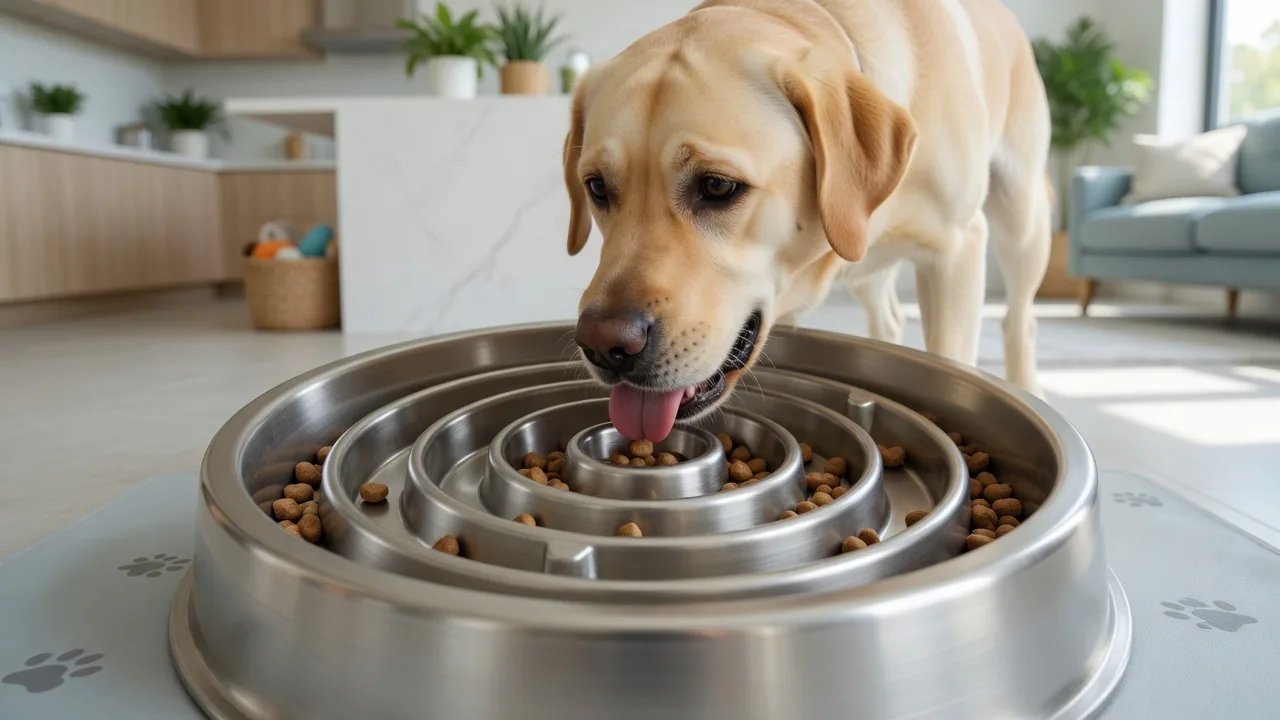
- Slow the meal. A stainless steel slow feeder dog bowl turns a 30-second meal into several minutes of eating.
- Make them search for it. Scatter a meal in a snuffle mat. Ten to fifteen minutes of sniffing out kibble occupies a dog in a way a bowl doesn't.
- Add volume, not calories. A splash of warm water on kibble, or a spoonful of plain cooked green beans or carrot, bulks out a meal. Ask your vet first if your dog has a medical condition, and see our guide to dog food toppers.
- Pay with dinner. Take training rewards out of the daily ration.
- Ask your vet about food choice. Some diets are formulated with more fibre and protein to help dogs feel satisfied.
How do you stop the begging?
- Never feed from the table or the worktop. Not once.
- Get everyone to agree, including visitors and grandparents.
- Give your dog a job at your mealtimes. A bed or mat to settle on, with a chew or a lick mat.
- Feed the dog before you eat.
- Expect it to get worse first. When begging stops working, most dogs try harder for a few days before giving up. If you give in at that point, you teach them persistence.
- Don't answer every request with food. Sometimes "I'm hungry" means "I'm bored." Offer a game, a short training session or a walk. Our dog enrichment ideas guide has plenty of options.
What mistakes make it worse?
Feeding more because they ask. With a food-driven dog, you'll never reach the point where they stop asking. You'll just have a heavier dog who still asks.
Free-feeding a food-obsessed dog. Leaving food out works for some dogs. For this type it leads to overeating.
Cutting food sharply without advice. If your dog needs to lose weight, get a target and plan from your vet.
Switching foods repeatedly. Each change can upset the stomach and makes it harder to see what's going on.
Assuming it's "just a Lab thing" when it's new. Breed explains lifelong hunger. It doesn't explain a change.
The bottom line
Check three things: is the hunger new, is your dog's weight healthy, and are there other symptoms? Lifelong food drive at a healthy weight is normal, and you manage it with measured portions, slower meals and no rewards for begging. New or increased hunger, or hunger with weight loss or thirst, goes to the vet first.
👉 See the Stainless Steel Slow Feeder Dog Bowl → 👉 See the Snuffle Mat for Dogs →
If it's a puppy, check the puppy feeding schedule to confirm meal counts and spacing for their age.
Frequently Asked Questions
Why does my dog act hungry all the time even after eating? Usually because of breed food drive, learned begging, boredom or eating so fast the meal barely registers. If your dog's weight is healthy and the behaviour is lifelong, it's most likely normal. If it's new or comes with weight loss, see your vet.
Is it normal for a dog to always want food? Yes, for many dogs. Dogs are natural scavengers, and breeds such as Labradors, beagles and pugs are especially food-driven. Constant interest in food at a stable, healthy weight is usually a personality trait and not a sign of underfeeding.
How do I know if I'm feeding my dog enough? Check body condition, not appetite. You should feel the ribs easily under a thin layer and see a waist from above. If ribs and hips are visibly prominent, your dog may need more food. If you can't find the ribs, they're getting too much.
What illnesses make a dog hungry all the time? Diabetes, Cushing's disease, exocrine pancreatic insufficiency, intestinal parasites and other gut diseases can all increase appetite, as can steroid and some anti-seizure medications. These usually come with other signs such as weight loss, increased thirst or stool changes.
Why is my older dog suddenly hungry all the time? A sudden increase in appetite in an older dog should be checked by a vet. Common causes at that age include diabetes, Cushing's disease and medication side effects, and some senior dogs with cognitive decline forget they've eaten.
Can a slow feeder bowl help a dog that's always hungry? It can help a healthy dog. A slow feeder makes the same portion last several minutes, which many owners find leaves their dog more settled after meals. It doesn't reduce appetite caused by illness, medication or real underfeeding.
Should I feed my dog more if they always seem hungry? Not on appetite alone. If your dog is at a healthy weight, more food leads to weight gain without ending the begging. If your dog is thin, growing or very active, review the portion with your vet.