Are Snuffle Mats Good for Dogs?
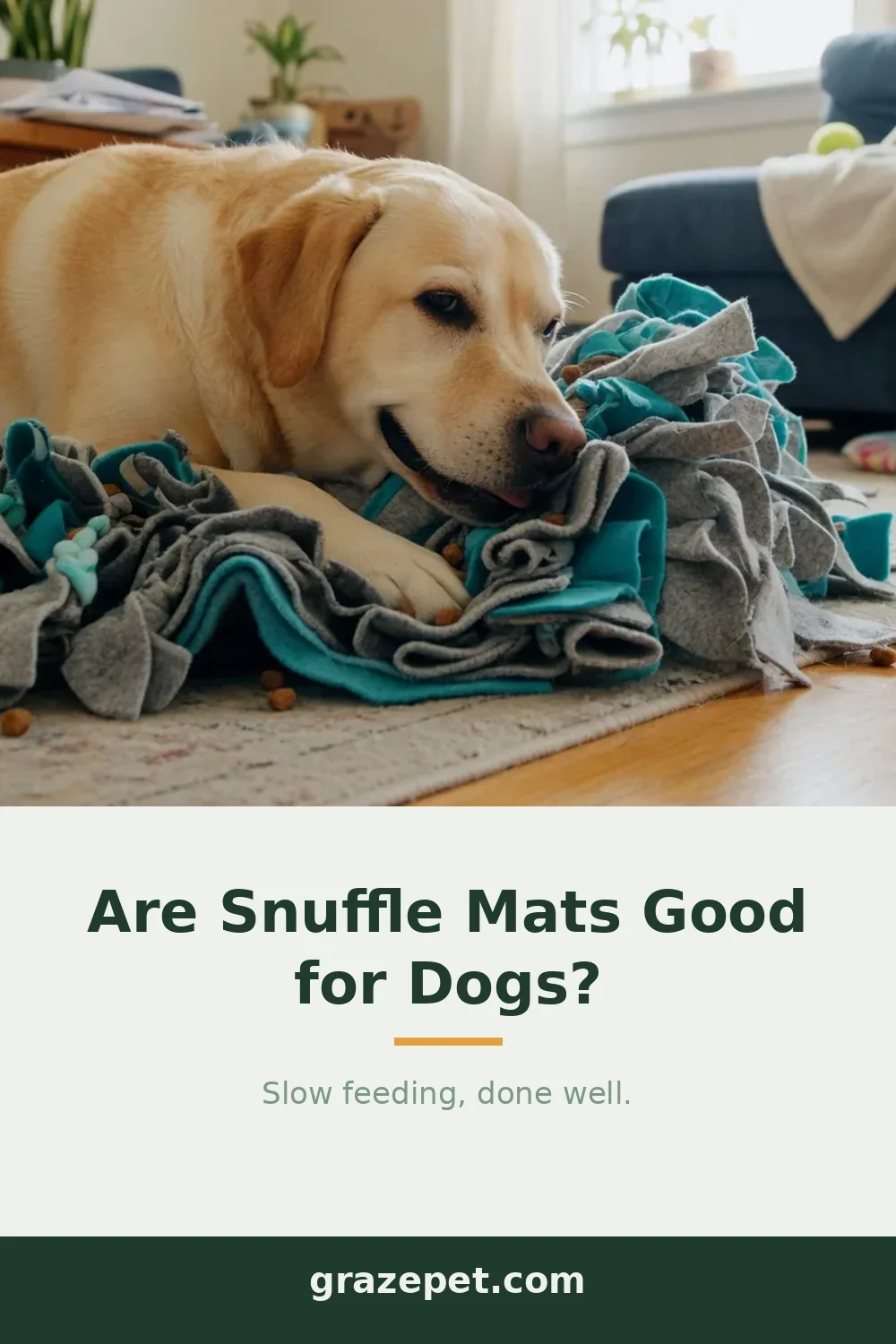
Yes, snuffle mats are good for most dogs. They slow down eating, give dogs an outlet for sniffing and foraging, and occupy them calmly for several minutes. The main risks are dogs chewing and swallowing the fabric, a mat that isn't washed often enough, and guarding in multi-dog homes, all of which are manageable.
That's the verdict. The rest of this page is the reasoning: what a snuffle mat really does, which claims about them are overblown, where the genuine risks are, and which dogs get the most or least from one. If you already own a mat and want technique, go to how to use a snuffle mat.
A disclosure before we go on: we sell a snuffle mat, so we have an interest in the answer being yes. We've tried to write this the way we'd want it written if we didn't.
What does a snuffle mat actually do?
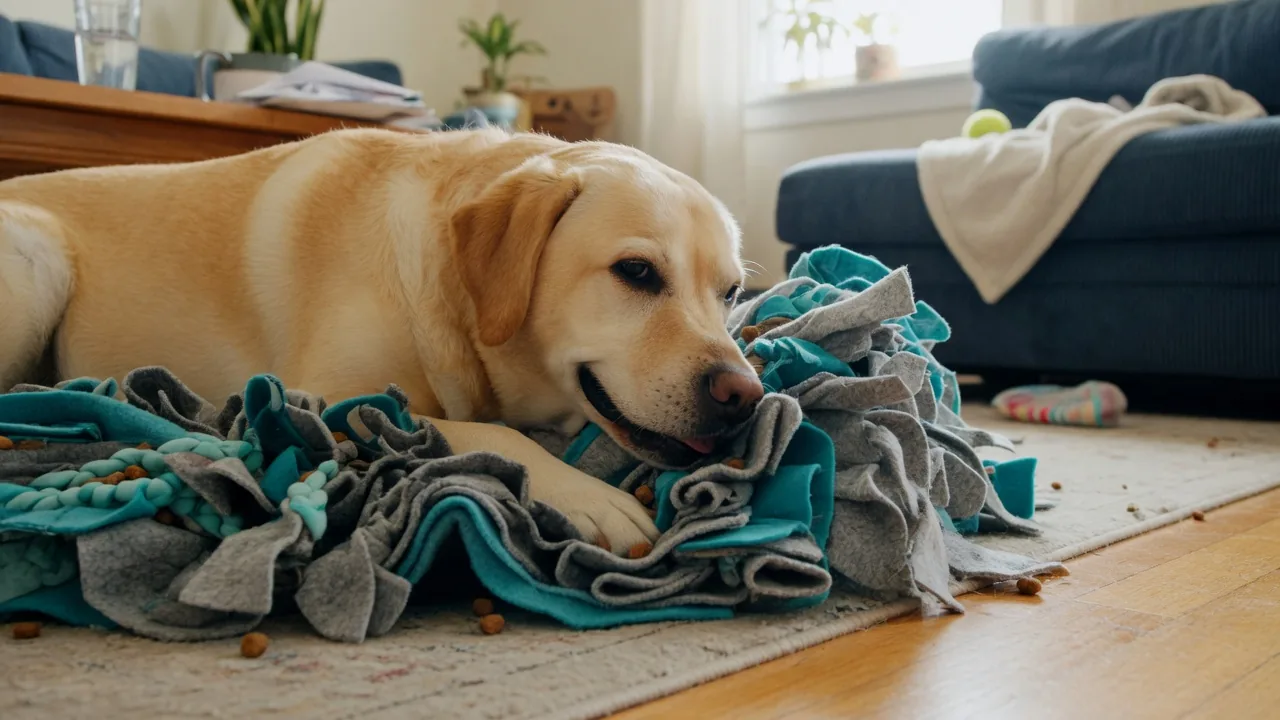
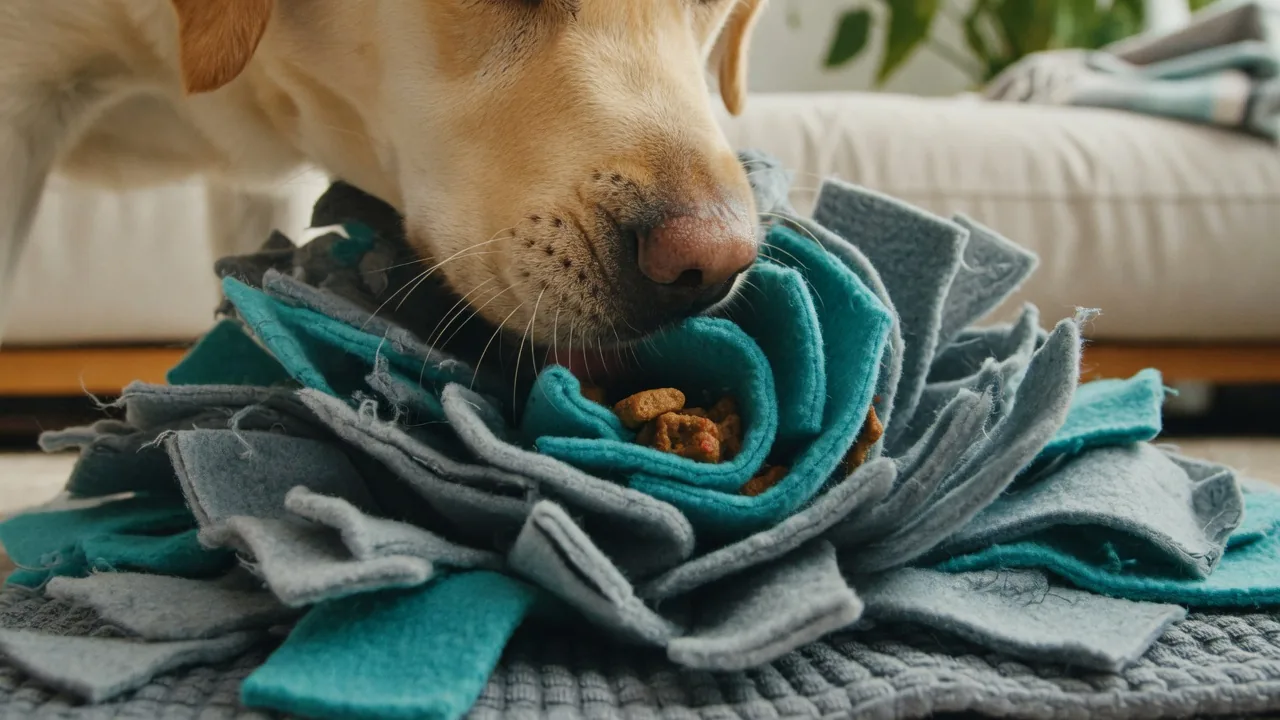
A snuffle mat is a fabric base covered in fleece strips. You scatter dry food into it, and the dog has to find each piece by smell and work it free with its nose and lips. Two things follow from that.
The meal takes longer. A dog can't take a mouthful of kibble from a snuffle mat; it gets one or a few pieces at a time. How long a meal lasts depends on the dog, the mat, and how deep the food is tucked. A beginner's portion on the surface may be gone in two minutes; a full meal worked deep into dense fleece can take ten to fifteen.
The dog uses its nose. Dogs have a sense of smell vastly more sensitive than ours, and foraging for food is something they're built to do. A bowl asks nothing of that ability. A mat does.
What are the real benefits of a snuffle mat?
1. Slower eating. For dogs that bolt kibble, a snuffle mat is one of the most effective tools there is, because it removes the possibility of gulping a pile. Slower eating generally means less air swallowed and fewer episodes of food coming straight back up.
2. Mental occupation. Searching by scent takes concentration. Many owners find their dog settles and rests after a session. It's a useful way to give a dog something to do when exercise is limited by weather, age, or injury.
3. A calming kind of activity. Sniffing is slow, head-down, and self-paced; it doesn't wind a dog up the way chasing does. A small 2019 study found that dogs given regular nosework practice became more optimistic on a cognitive bias test than dogs given heelwork practice. That's encouraging, though it's one small study on nosework in general, not on snuffle mats specifically.
4. Low physical demand. No jumping, twisting, or running. That makes a mat suitable for puppies, older dogs, and dogs on restricted exercise, with your vet's agreement where there's an injury.
5. Practicality. It uses the food your dog already eats, takes a minute to set up, and a decent one goes in the washing machine.
Which claims about snuffle mats are exaggerated?
You'll see some confident statements online. A few deserve a second look.
"Ten minutes of sniffing equals an hour's walk." This gets repeated everywhere, and there's no research behind the number. Sniffing is tiring in its own way, but it isn't a substitute for exercise, fresh air, or time outside. Treat a mat as an addition to walks, not a replacement.
"Snuffle mats cure anxiety." They can help a mildly worried dog settle, and they're a pleasant activity. They don't treat separation anxiety, noise phobias, or fear-based behaviour, which need a proper plan from a vet or qualified behaviourist. More on that in enrichment for anxious dogs.
"Snuffle mats prevent bloat." Slower eating is sensible, especially in large deep-chested breeds, but no feeding tool has been shown to prevent bloat (GDV). Don't buy one on that promise.
"Every dog loves them." Most do. Some dogs aren't interested, some find the fabric more fun to shred than search, and some get frustrated. That's normal.
What are the risks of snuffle mats?
Chewing and swallowing fabric. This is the serious one. A dog that rips off and swallows fleece strips risks an intestinal blockage, which is a surgical emergency. Supervise every session, particularly at first, and pick the mat up when the food is gone. If your dog treats the mat as a chew toy, it isn't the right tool for that dog. Signs of a blockage include repeated vomiting, refusing food, lethargy, a painful belly, and straining or not passing stools; if your dog has swallowed fabric and shows any of these, see a vet urgently.
Hygiene. Fabric collects saliva, crumbs, and food oils. An unwashed mat smells, and a damp one can grow mould. Wash it regularly and dry it completely.
Resource guarding. A mat full of scattered food is a high-value resource. In a multi-dog home, use it with dogs separated. If your dog stiffens, freezes, or growls when approached at the mat, give it space and read food aggression in dogs; don't reach in.
Overfeeding. Food on the mat is food. If it's added on top of normal meals, weight creeps up. Take it from the daily ration.
Frustration. Food buried too deep for a beginner leads to pawing, flipping the mat, or giving up. That's a set-up problem, and it's easily fixed by starting simpler.
Wear and tear. Loose strips, frayed edges, and a peeling backing are swallowing hazards. Inspect the mat and retire it when it deteriorates.
Which dogs benefit most, and which should skip them?
| Dog | Good fit? | Notes |
|---|---|---|
| Fast eaters on dry food | Excellent | Among the most effective ways to slow kibble |
| Scent-driven breeds (hounds, spaniels, terriers) | Excellent | Plays directly to what they enjoy |
| Bored or under-occupied dogs | Very good | One part of a wider enrichment mix |
| Puppies | Good, supervised | Use easy set-ups; watch for chewing |
| Senior dogs | Very good | Gentle; keep food shallow for weak noses or stiff necks |
| Dogs on restricted exercise | Good | Check with your vet first |
| Mildly anxious dogs | Good | Start very easy; not a treatment |
| Flat-faced breeds | With care | Low-pile mat, food near the surface, supervise breathing |
| Dogs that eat fabric or have a history of swallowing objects | Avoid | Blockage risk outweighs the benefit |
| Dogs that guard food | Caution | Only alone, undisturbed; get professional advice |
| Dogs fed only wet or raw food | Poor fit | Fabric and wet food don't mix; use a bowl or lick mat |
| Dogs with dust or environmental allergies | With care | Wash the mat frequently |
Is a snuffle mat better than a slow feeder bowl?
They do different jobs. A slow feeder bowl is the practical everyday choice: it handles any food type, rinses clean in seconds, and can be left down. A snuffle mat provides more mental work and often slows a determined gulper more, but it's dry-food-only, needs supervising, and needs washing.
Plenty of owners use a bowl for most meals and a mat for some. The full comparison, including which to buy first, is in snuffle mat vs slow feeder bowl. If you're weighing a mat against puzzle toys, see snuffle mat vs puzzle feeder. And if wet food is what you feed, our stainless steel slow feeder is the better fit.
What makes a good snuffle mat?
Quality varies a lot, and it affects both safety and how long the mat stays interesting.
- Securely attached strips. Tug a few. Strips that pull out easily will end up swallowed.
- Dense fleece. Sparse mats are solved in seconds.
- Machine-washable, and says so. Hand-wash-only mats don't get washed often enough.
- Non-slip backing. A mat that slides gets chased and flipped.
- Right size for the dog. Large enough for a full meal to spread out; a big dog on a tiny mat finishes instantly.
- No small detachable parts. Avoid sewn-on squeakers, buttons, or decorative pieces for dogs that chew.
- Pile length suited to the face. Long, deep fleece for long-nosed dogs; shorter pile for flat-faced breeds.
Ours uses dense fleece on a non-slip backing, is machine-washable, and folds flat. Whichever you choose, the checklist above applies.
How do you use one safely?
Briefly, since the full method has its own guide:
- Use dry kibble or dry treats, taken from the daily allowance.
- Start with food visible on top; hide it deeper only as your dog gets confident.
- Stay in the room.
- Remove the mat when the food is finished. It isn't a bed or a toy.
- Shake it out after each use, and wash and fully dry it regularly.
- Check it for damage before each session.
Step-by-step instructions, difficulty levels, and cleaning are in how to use a snuffle mat.
Frequently Asked Questions
Are snuffle mats good for dogs? Yes, for most dogs. They slow eating, give dogs a natural outlet for sniffing and foraging, and provide calm mental occupation with little physical strain. They need supervision and regular washing, and they aren't suitable for dogs that chew and swallow fabric.
Do snuffle mats actually work? They work well for slowing dogs that eat dry food too fast, because the dog can only take a few pieces at a time. They also keep most dogs occupied for several minutes. They don't replace walks, and they don't treat anxiety or prevent bloat.
Are snuffle mats safe? They are safe when supervised and kept clean. The main danger is a dog tearing off and swallowing fleece, which can cause an intestinal blockage. Stay with your dog, remove the mat after use, and replace it if strips come loose.
Can I leave my dog alone with a snuffle mat? It's not recommended. Once the food is gone, some dogs start chewing the fabric, and swallowed fleece can cause a blockage. Use the mat while you're present and put it away afterwards. For time alone, choose a durable toy designed to be left with a dog.
Do snuffle mats help with anxiety? They can help a mildly anxious dog settle, because sniffing is a calm, absorbing activity. They aren't a treatment for separation anxiety, phobias, or fear-based behaviour, which need help from a vet or qualified behaviourist.
Can puppies use snuffle mats? Yes, once they're eating solid food, with close supervision. Keep the food on the surface so it's easy, use part of their normal ration, and take the mat away if the puppy starts chewing it. Puppies explore with their mouths, so watch closely.
How often should a dog use a snuffle mat? Daily use is fine, as long as the food comes out of the dog's normal allowance and the mat is washed regularly. Many owners use one for a single meal a day or a few times a week alongside a regular or slow feeder bowl.
Save this guide