Snuffle Mat vs Puzzle Feeder: Nose Work or Paw Work?
A snuffle mat and a puzzle feeder both slow eating and add enrichment, but they engage your dog differently: a snuffle mat taps into scent-based foraging, while a puzzle feeder (sliding lids, spinning compartments, lift flaps) taps into paw dexterity and problem-solving, so the better pick depends on what kind of "work" your dog enjoys, not which one is objectively better. If your dog is more nose than paws, or more paws than nose, that difference matters more than most buying guides let on.
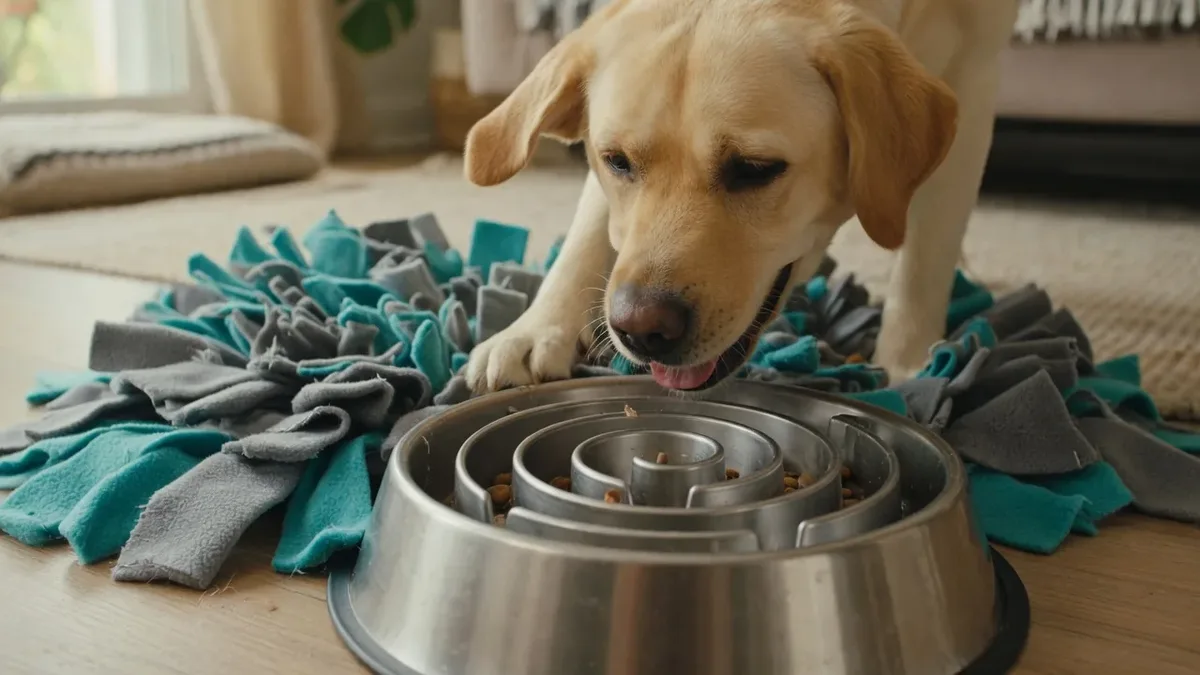
This page compares a snuffle mat with a puzzle toy (sliding lids, flaps, rotating compartments). If you are choosing between a snuffle mat and a slow feeder bowl for mealtimes, read snuffle mat vs slow feeder bowl instead.
Below: how each works, a side-by-side comparison, which dogs take to which, how to test your own dog before you buy, safety and cleaning, a quick-start routine and the mistakes that make both fail.
How do a snuffle mat and a puzzle feeder compare?
| Factor | 🟦 Snuffle Mat | 🟨 Puzzle Feeder (toy) |
|---|---|---|
| Main skill used | Scent, sniffing, foraging | Paws, nose-nudging, problem-solving |
| Best for | Most dogs; instinctive from the first try | Dogs that enjoy manipulating objects, sliding parts, flipping lids |
| Learning curve | Usually none | Some dogs need several tries to understand the mechanism |
| Best food | Dry kibble and small treats | Small treats, or part of a meal |
| Effort level | Low to medium; easy to adjust by how deeply food is hidden | Medium to high; fixed by the toy's design, unless you buy levels |
| Cleaning | Machine-washable fabric | Wipe or hand-wash; interior mechanisms trap residue |
| Chewers | Fleece can be pulled out and eaten if unsupervised | Plastic or wood parts can be chewed or cracked |
| Full daily meal? | Workable | Usually better as an occasional activity |
| Supervision | Light | More, especially with moving or small parts |
| Mess | Kibble spills onto the floor | Fewer spills, but crumbs inside the toy |
Neither is better in the abstract. The question is which kind of mental work your dog actually enjoys, and which one you can keep up with day after day.
What does a snuffle mat do best?
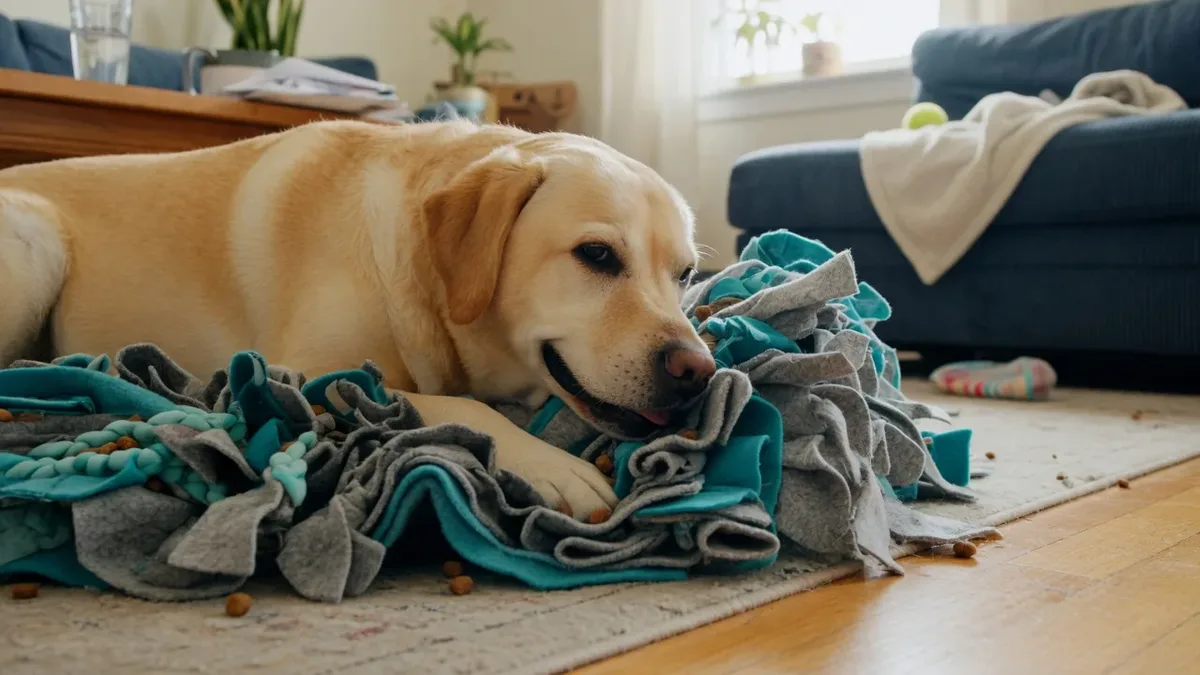
A snuffle mat is a fabric base with densely packed fleece strips that hide kibble or treats. Your dog sniffs, noses and forages each piece out from between the folds. There's no mechanism to learn, only scent work.
That makes it a low-barrier enrichment tool: most dogs take to it immediately, because sniffing is instinctive rather than a skill they need to acquire. Sniffing and foraging tend to be a settling rather than winding-up activity, and many owners use a mat to help a dog calm down after a walk or during a quiet evening. If you want the how-to side, including how to scatter food and build up difficulty, see how to use a snuffle mat.
Best for: everyday enrichment, bored or anxious dogs, rainy-day mental exercise, and dogs you want to slow down without teaching a mechanism. It also lets you control difficulty yourself: sprinkle kibble on top for a gentle start, tuck it deep for a challenge.
Our Snuffle Mat for Dogs is machine-washable fleece with a non-slip base: no small hard parts to lose or chew through, just fabric you can toss in the wash.
👉 See the Snuffle Mat for Dogs →
What does a puzzle feeder do best?
A puzzle feeder in the toy sense asks your dog to move something with paws or nose to release food: sliding covers, rotating compartments, lift-up flaps, ball dispensers. Difficulty runs from beginner (nudge a lid) to advanced (multi-step sequences), which our puzzle toy levels explained guide covers.
This rewards a different dog: one who enjoys figuring something out rather than following a scent trail. Some dogs that find an open-ended search frustrating do better with a puzzle that has a visible, learnable mechanism and a clear reward. Dogs who love manipulating objects, such as many terriers, collies, poodles and other quick-thinking breeds, often take to puzzles, though individual dogs vary far more than breeds do.
The trade-offs are real. Puzzle toys are usually best for treats or part of a meal, they need closer supervision (some dogs chew instead of solve), and hard plastic or wooden parts are harder to clean than washable fabric. Our dog puzzle feeder guide covers the types and where each fits.
Which dogs take to which format?
| Your dog... | Start with |
|---|---|
| Sniffs everything on walks | Snuffle mat |
| Is anxious, restless in the evening, or crate-resting | Snuffle mat |
| Is a fast eater who inhales kibble | Neither is the main fix: see snuffle mat vs slow feeder bowl |
| Paws at objects, flips toys, solves things | Puzzle feeder |
| Gets bored of "just sniffing" quickly | Puzzle feeder, then add the mat |
| Is a heavy chewer | Neither unsupervised; consider a bowl or a supervised session |
| Is a puppy or a senior with a weak nose or mobility | Snuffle mat at an easy setting |
| Has just started enrichment | Snuffle mat, then step up |
Choose both if you want variety: a snuffle mat for regular meals or calm-down sessions, a puzzle toy for occasional "figure this out" challenges when you can watch.
How can you test which one your dog prefers?
You can learn a lot before buying anything:
- The towel test (scent). Roll a few kibbles or treats into a towel on the floor. A dog that digs, noses and unrolls it is showing scent-foraging interest.
- The box test (manipulation). Put a treat in a small cardboard box with a flap, or under an upside-down cup. A dog that paws, tips or nudges is showing object-manipulation interest.
- Time both for a few minutes, once each, on different days. Which one does your dog keep going back to? Which one do they abandon?
Preference in a homemade test usually carries over to the real product. If both work, buy the snuffle mat first. It has the lower learning curve and cleans more easily, and you can add a puzzle later. For the cheaper homemade versions, see dog enrichment ideas.
Are they safe, and how do you clean them?
Snuffle mat
- Fleece strips can be chewed or pulled loose. Supervise enthusiastic chewers, and stop using any mat that is fraying or has lost strips.
- Machine-wash when kibble dust and oils build up, and let it dry fully before using it again. A damp mat can smell and go mouldy.
- Shake out crumbs before washing so the machine's filter doesn't clog.
Puzzle feeder
- Check regularly for cracks and loose parts. Retire any toy with a broken piece.
- Hand-wash following the maker's instructions; hidden compartments and sliding parts trap residue, so wash them promptly. Don't use them with wet or sticky food unless the toy is designed for it.
- Remove it when the session ends, so it doesn't turn into a chew toy.
In both cases count the food toward your dog's daily allowance. Enrichment feeding is meal time, not an extra snack. If your dog is on a weight plan, measure what goes in. For heavier chewers and anxious dogs, our enrichment for anxious dogs article suggests lower-stakes options.
How do you use them in a daily routine?
A simple pattern that works for many households:
- Weekday mornings or evenings: part or all of the meal on a snuffle mat. Five to fifteen minutes of foraging per session is plenty for most dogs.
- Weekends or "extra time": a supervised puzzle feeder session with a handful of treats.
- Fast eaters at standard meals: a slow feeder bowl for pacing; snuffle mat vs slow feeder bowl explains when to pick which.
- Rainy days and crate rest: a snuffle mat, which is easy to scale for low activity. See crate rest enrichment.
Three tools, three jobs: pacing (bowl), scent work (mat), problem-solving (puzzle). You don't need all three, but the combination gives variety, and variety is what stops enrichment going stale. For more ways to combine these, see mental stimulation for dogs.
What mistakes make both of them fail?
- Starting too hard. If the first session ends in frustration, the dog learns that the mat or toy is a chore. Begin with food in plain sight.
- Letting a chewer go solo. Both formats can end up in a dog's stomach.
- Using enrichment as the only exercise. It tires the brain, not the legs. Keep walks.
- Never changing the challenge. Rotate hiding places, difficulty and toys.
- Adding calories. Take enrichment food from the daily allowance.
- Ignoring a frustrated dog. Barking, gnawing or giving up means make it easier, or stop.
- Expecting a miracle for behaviour issues. Enrichment helps boredom; it does not replace training or a vet check for anxiety or compulsive behaviour. See signs your dog is bored.
The verdict
Snuffle mat vs puzzle feeder isn't about which is "better"; it's about which kind of mental work suits your dog. If your dog is a natural sniffer and you want a zero-learning-curve, washable, everyday tool, the snuffle mat wins on practicality. If your dog loves figuring out a mechanism and you're happy to supervise treat-based sessions, a puzzle toy adds a different kind of challenge. Plenty of dogs, and owners, end up using both.
👉 See the Snuffle Mat for Dogs →
Frequently Asked Questions
Is a snuffle mat or a puzzle feeder better for dogs? Neither is universally better. A snuffle mat uses scent and foraging, which most dogs take to instantly, while a puzzle feeder uses paw dexterity and problem-solving, which suits dogs that enjoy figuring out a mechanism. The right choice depends on your dog's preference.
Can a snuffle mat replace a puzzle feeder toy? For everyday enrichment and calming, yes; many owners rely on a snuffle mat alone. A puzzle toy offers a different challenge, object manipulation, that a mat doesn't replicate, so some dogs benefit from both.
Is a snuffle mat good for every dog? Most dogs take to it quickly since sniffing is instinctive. Dogs more motivated by manipulating objects may prefer a puzzle toy, but it's still worth trying a mat first given the low learning curve. Heavy chewers need supervision.
Do I need to supervise a snuffle mat like I would a puzzle toy? Snuffle mats generally need less supervision since there are no hard parts to break off, though enthusiastic chewers should still be watched. Puzzle toys with moving parts typically need closer supervision.
Which is better for a dog that eats too fast? A puzzle feeder is usually an occasional treat challenge rather than a daily meal, so it is not the main fix for gulping. For pacing every meal, compare a snuffle mat with a slow feeder bowl in our snuffle mat vs slow feeder bowl guide.
Which is easier to clean, a snuffle mat or a puzzle feeder? A snuffle mat, because most can go in the washing machine. Puzzle toys usually need hand-washing, and moving parts and hidden compartments can trap food residue.
How long should a snuffle mat or puzzle session last? Five to fifteen minutes is plenty for most dogs. Stop sooner if your dog gets frustrated, and use the daily food allowance rather than adding extra.
Save this guide