Enrichment for Anxious Dogs: Why Sniffing Helps Them Settle
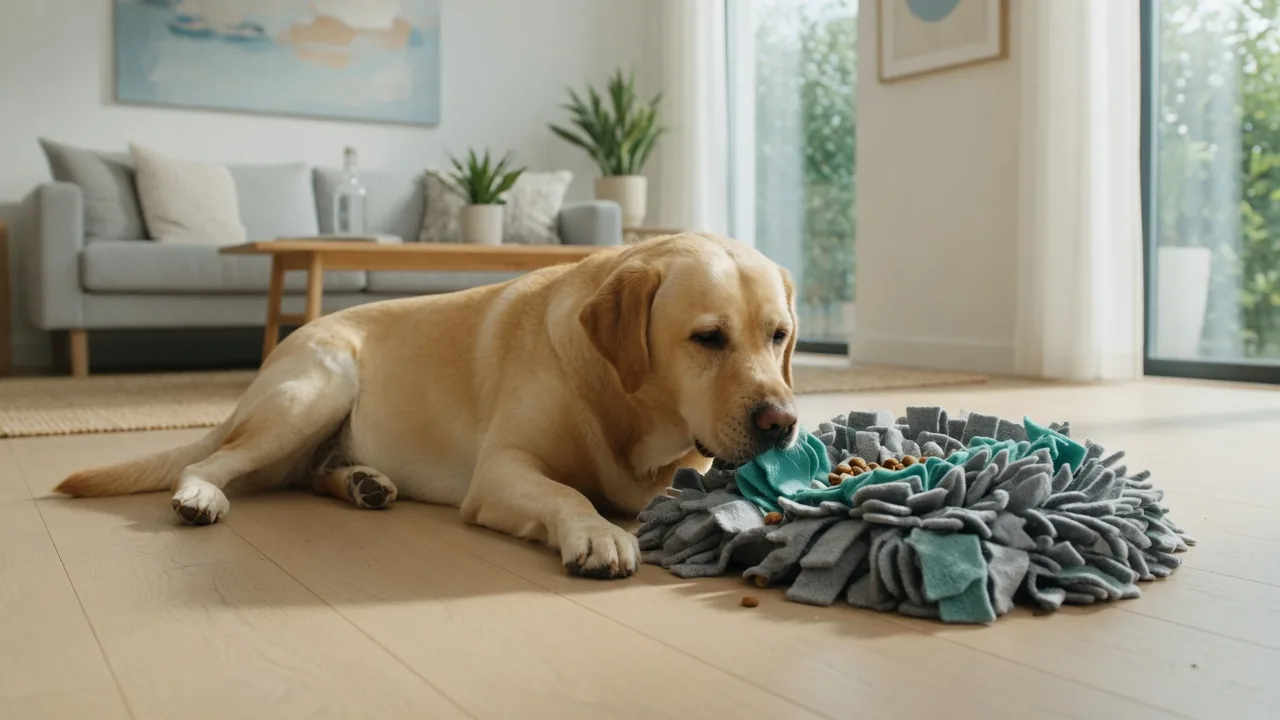
The best enrichment for anxious dogs is slow, self-paced, and nose- or tongue-led: snuffle mats, scatter feeding, sniff walks, lick mats, and long-lasting chews. These lower arousal instead of raising it. They help a dog settle day to day, but they support a behaviour plan for clinical anxiety — they don't replace one.
That distinction shapes everything below. An anxious dog isn't a bored dog with extra steps. Activities that are brilliant for an under-stimulated adolescent — fast fetch, hard puzzles, busy dog parks — can make a worried dog worse. What a nervous dog needs is the opposite: easy wins, predictability, and the freedom to walk away.
This guide covers why sniffing and licking help, which activity fits which kind of anxiety, how to introduce things without adding pressure, and where enrichment stops being enough.
Why does sniffing help an anxious dog settle?
Sniffing is what dogs do when they feel safe enough to gather information. It's slow, head-down, and self-directed, and it happens at walking pace or standing still. Compare that with chasing a ball: head up, heart pounding, eyes scanning. One winds a dog up; the other tends to bring it down.
There's a small amount of research pointing the same way. In one 2019 study, pet dogs that practised nosework for two weeks became more "optimistic" on a standard cognitive bias test, while dogs that practised heelwork for the same period did not. It was a small study, and "optimism" in a lab test isn't the same as curing anxiety, so treat it as encouraging, not conclusive. Most of what we know still comes from trainers and behaviourists watching thousands of dogs: nose work calms.
Licking and chewing seem to work similarly. They're repetitive, rhythmic, and absorbing, and many dogs visibly soften while doing them — slower breathing, looser body, eyes half closed.
There's also something simpler going on. Enrichment gives an anxious dog a choice and a task it can succeed at. For a dog that spends much of its day feeling it has no control, that matters.
Is your dog anxious, or just bored?
They can look alike — both produce pacing, whining, and chewed furniture — but they call for different responses.
| Sign | More likely boredom | More likely anxiety |
|---|---|---|
| When it happens | Any time there's nothing to do | Around specific triggers: being left, noises, strangers |
| Body language | Loose, playful, attention-seeking | Tense, tucked tail, ears back, lip licking, yawning, panting |
| Response to food | Takes it eagerly | May refuse food entirely |
| Response to activity | Settles after exercise or a puzzle | Stays on edge even when tired |
| Destruction | Random items, often toys or shoes | Doors, window frames, crate bars (escape points) |
If the first column sounds like your dog, signs your dog is bored is the better starting point. If it's the second, keep reading — and note the food row, because it becomes important.
Which enrichment suits which kind of anxiety?
"Anxious" covers several different problems. Match the tool to the situation.
General nervousness or a newly adopted dog. Start with the easiest possible sniffing: a handful of kibble scattered on the floor or on top of a snuffle mat, in a quiet room, with you sitting nearby and not hovering. Predictable mealtimes in the same spot do as much good as any toy.
Noise sensitivity (fireworks, thunder). Enrichment helps most before the dog is frightened. Set up a den-like safe space, close curtains, add steady background sound, and offer a lick mat or stuffed chew early in the evening. If your dog is already trembling and won't eat, don't push food at it; comfort it and let it hide. Dogs with severe noise fear often need veterinary help, and there are medications designed for exactly this.
Fear of strangers or other dogs. Sniffing activities at a comfortable distance from the trigger can help a dog decompress after a hard walk. Using food to lure a scared dog closer to the thing it fears is a common mistake: the dog ends up near the scary thing, finishes the treat, and panics. Structured desensitisation should be guided by a qualified behaviourist.
Separation-related distress. This is where enrichment is most over-sold. Many dogs with true separation anxiety won't touch food once they're alone, however tempting. A stuffed toy that's untouched when you come home is useful information, not a failure. Worse, if the snuffle mat only ever appears as you pick up your keys, it can become a signal that you're leaving. Use food enrichment at random relaxed times too, and treat separation anxiety as something to work on with a vet or a qualified behaviourist.
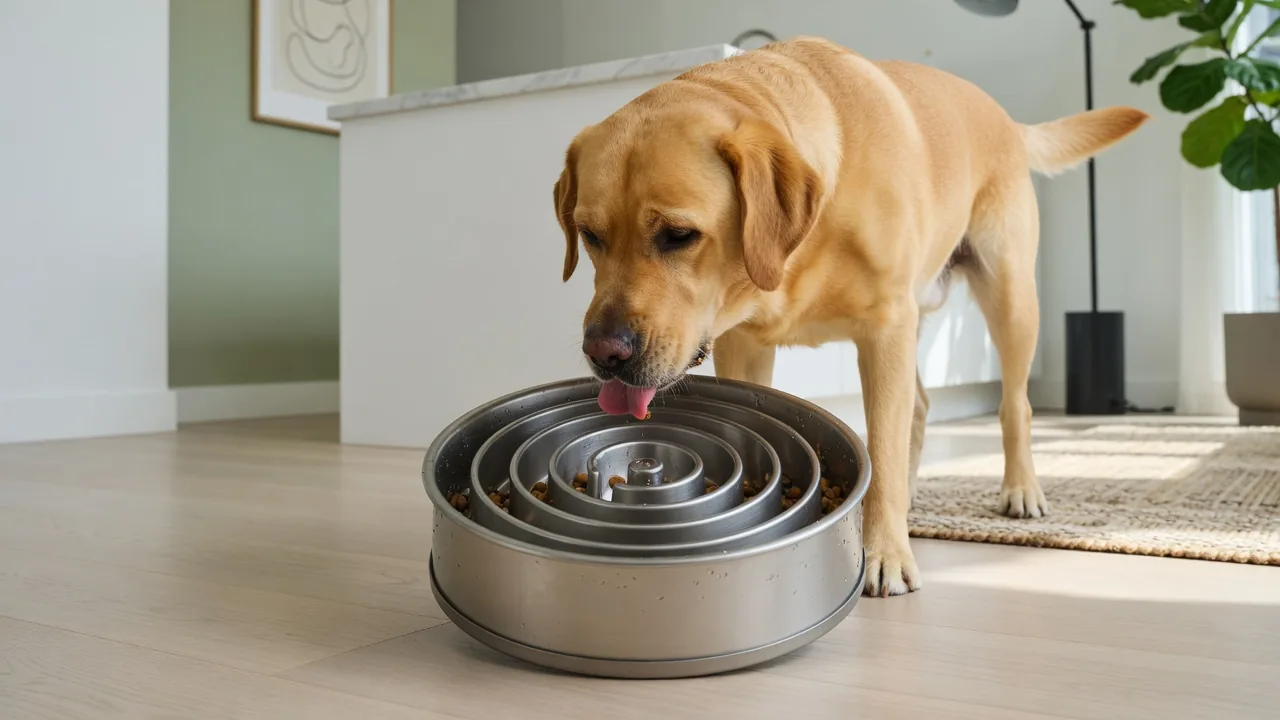
Anxious, frantic eating. Some worried dogs bolt meals, particularly rescues with a history of scarcity. A stainless steel slow feeder can pace the meal, but introduce it gently (see below). For a dog that guards food, feed alone, behind a closed door, and get professional advice before adding anything that makes food harder to get; food aggression in dogs covers this.
What are the best calming enrichment activities?
1. Snuffle mat or scatter feeding. The gentlest entry point. Begin with food sitting visibly on the surface. Only tuck it deeper into the fleece once your dog is working confidently. Technique tips are in how to use a snuffle mat.
2. Sniff walks. A long lead, a quiet route, and no destination. Let your dog choose the pace and stop for as long as it likes. Twenty minutes of this often settles a nervous dog more than an hour of marching. Pick the time of day with the fewest triggers.
3. Lick mats. Soft food spread thin over a textured mat. Useful for grooming, nail trims, and settling in the evening. See our lick mats for dogs guide.
4. Long-lasting chews. Chewing is absorbing and self-soothing. Choose something appropriate for your dog's size and chewing style, and supervise.
5. Treat searches around one room. Hide five pieces of kibble in easy places while your dog watches, then say "find it." Confidence builds quickly with a game that's impossible to lose.
6. A slow feeder for ordinary meals. Turns dinner into a few minutes of focused work. Keep the pattern easy at first.
7. Simple, familiar training. A few repetitions of a cue your dog already knows, rewarded generously, gives a worried dog a predictable way to earn good things. Keep sessions under two minutes.
For a wider list aimed at dogs in general, see dog enrichment ideas.
What should you avoid with an anxious dog?
- High-arousal games as a cure. Repetitive ball chasing leaves many dogs wired, not calm. A tired dog isn't necessarily a relaxed one.
- Puzzles that are too hard. Frustration is stress. If your dog paws frantically, barks at the toy, or gives up and walks away, make it easier immediately.
- Hovering and cheering. Some nervous dogs find attention at the food bowl pressuring. Set it up, step back.
- New things on bad days. Introduce a new mat or bowl on a calm afternoon, not during a storm.
- Crowded, noisy "enrichment." Busy dog parks and daycare overwhelm many anxious dogs.
- Leaving fabric or chewable items with an unsupervised dog that shreds or swallows things when stressed.
- Forcing it. If your dog doesn't want to engage, leave the food where it is and walk away. Choice is the point.
How do you introduce enrichment to a nervous dog?
- Pick the calmest time and place. Usual feeding spot, no visitors, no other pets nearby.
- Make the first go impossible to fail. Food on top, fully visible. Ten seconds of success is a good first session.
- Stay close but neutral. Sit down, look elsewhere, let your dog explore.
- Watch the body. A loose, wagging, nose-down dog is enjoying it. A stiff dog, a dog eating in darting snatches, or one that keeps checking the room needs it easier or needs a break.
- Raise difficulty slowly. One small change every few days: food slightly deeper, a slightly longer search.
- End before your dog loses interest, and pick the item up afterwards.
A new slow feeder can worry some dogs for a day or two — the shape is unfamiliar and the food is harder to reach. Sprinkle part of the meal over the top of the ridges and feed the rest by hand or from the old bowl until your dog approaches it happily.
If your dog won't eat at all, that's the clearest sign it's too stressed in that moment. Don't coax. Create distance from whatever is worrying it, let it settle, and try again later. A dog that is routinely too anxious to eat needs veterinary attention.
What does a calming daily routine look like?
Predictability is itself calming. A simple pattern many anxious dogs do well on:
- Morning: a quiet sniff walk, then breakfast from a snuffle mat or slow feeder.
- Midday: a short "find it" search or two minutes of easy training, followed by rest in a safe spot.
- Late afternoon: a chew or lick mat during the busiest, noisiest part of the household's day.
- Evening: dinner in the usual place, a calm toilet walk, then settled time near you.
Protect sleep, too. Adult dogs sleep a large part of the day, and a dog that never gets undisturbed rest copes worse with everything. More activity is not always the answer; sometimes the kindest change is a quieter house. The principles behind this are covered in mental stimulation for dogs.
Give any new routine two to three weeks before judging it. Look for small changes: settling faster after walks, fewer startled reactions, taking food in situations where it used to refuse.
When is enrichment not enough?
See your vet, and ask about referral to a veterinary behaviourist or a properly qualified behaviour professional, if your dog:
- Panics when left alone: howling, destruction at doors and windows, soiling, self-injury
- Shows aggression linked to fear
- Is often too stressed to eat, or is losing weight
- Trembles, hides, or drools for long periods
- Has anxiety that appeared suddenly or is getting worse
- Is older and newly restless or confused at night
Sudden behaviour change can have a medical cause. Pain is a common and often-missed contributor to anxiety, and conditions affecting hormones or, in older dogs, cognition can be involved too. A vet check comes first. Medication is sometimes part of treatment, and for some dogs it's what makes learning possible; there's no shame in needing it.
Enrichment still has a place alongside all of that. It just isn't the whole plan.
If anxiety shows up as chewing or damage, our guide on why dogs destroy everything helps you tell stress apart from boredom and teething.
Frequently Asked Questions
Does enrichment help with dog anxiety? It helps with everyday stress. Slow, self-paced activities such as sniffing, licking, and chewing lower arousal and give a nervous dog easy successes. Enrichment supports a behaviour plan but doesn't treat clinical anxiety, separation anxiety, or phobias by itself.
Why does sniffing calm dogs down? Sniffing is a slow, head-down, self-directed activity that dogs do when they feel safe, and it doesn't raise excitement the way chasing does. A small 2019 study found nosework made dogs more optimistic on a cognitive bias test. The evidence is limited but matches what behaviourists observe.
Can a snuffle mat help with separation anxiety? Only a little. Many dogs with real separation anxiety won't eat when alone, so the mat goes untouched. It can be part of a wider plan, but separation anxiety usually needs gradual training guided by a vet or qualified behaviourist, sometimes with medication.
What should I do if my anxious dog won't eat from a puzzle or mat? Refusing food usually means the dog is too stressed or the task is too hard. Make it much easier, with food visible on the surface, try at a calmer time, and never force it. A dog that is often too anxious to eat should see a vet.
What activities should anxious dogs avoid? Avoid anything that winds the dog up or overwhelms it: repetitive high-speed fetch, crowded dog parks, puzzles beyond its skill level, and being lured towards things it fears. Choose calm, predictable, low-pressure activities instead.
How long does it take for enrichment to calm an anxious dog? A single sniffing or licking session can settle a dog within minutes. Changes in overall anxiety are slower; give a consistent daily routine two to three weeks and look for small improvements, such as settling faster or taking food in situations where it used to refuse.
When should I see a vet or behaviourist about my dog's anxiety? See a vet if anxiety is sudden, severe, getting worse, involves panic when left alone, aggression, or refusing food, or if an older dog becomes newly restless. Pain and other medical problems can cause anxiety, so a health check comes before behaviour work.