Food Aggression in Dogs: The Basics
Food aggression in dogs, more accurately called resource guarding, is a dog's instinct to protect food from being taken, and it runs from a stiff body and hard stare to growling, snapping or biting. Mild guarding can often be managed at home with calm feeding and good management. Growling, snapping or any bite history, or any child in the house, needs a qualified behavior professional, not a blog post.
This guide covers how to read the warning signs, why dogs do it, what to do today to keep everyone safe, a careful look at what mild-case training involves, what makes things worse, and how to find the right professional. Where a bowl or mat can help, we'll say so honestly, and where it can't, we'll say that too.
What does food aggression look like?
Resource guarding sits on a ladder. Dogs almost always start at the bottom rung and move up only if the lower signals are ignored or punished. Learning the early rungs lets you step in before a bite.
| Level | What you see | What it means |
|---|---|---|
| Subtle | Eating faster, hunching over the bowl, stiffening, freezing mid-bite, "whale eye" (whites of the eyes showing), turning the body to shield the food | Worried that you or another pet might take it |
| Moderate | Hard stare, lip lift, growl, snarl, standing over the bowl, taking the food away to eat elsewhere | A clear "stay back" |
| Serious | Snapping, lunging, air-snaps, biting | The earlier signals have failed or been punished |
A few details are easy to miss. Guarding can be aimed at people, other dogs, cats, or all of them, and a dog may guard only high-value items like bones or chews while eating dinner without fuss. It can also be specific to one person. The dog who growls at a child but not at the adults is giving you useful information.
A growl is not "bad behavior." It is communication, and the safest dogs are the ones that warn first.
Why do dogs guard food?
There is rarely one cause, and it is not a sign of "dominance" or a "bad dog." The usual contributors:
- Instinct. Protecting something valuable is normal survival behavior. Some dogs simply feel it more strongly, and genetics plays a part.
- Past scarcity. Strays, shelter dogs and dogs from crowded litters have often learned that food isn't guaranteed.
- Competition. In multi-dog or multi-pet homes, food can feel like a contest. Bowls close together make it worse.
- Learning. If growling has ever made a person back off, the dog has learned that growling works. Equally, if every approach by a person has meant losing the food, the dog learns that approach means loss.
- Pain or illness. A dog that suddenly starts guarding when it never did before may be in pain. Dental disease, an upset stomach or other discomfort can make a dog protective around the mouth and the meal. A sudden change in behavior is a reason for a vet visit before anything else.
- Stress and arousal. A dog already anxious or under-stimulated may be more reactive at mealtimes.
What should you do today to keep everyone safe?
Before any training, make mealtime safe. This is management, not a cure, and it works immediately.
- Feed in a separate, quiet space. A closed room, a crate the dog is comfortable in, or behind a baby gate. No foot traffic.
- Never allow children near a dog while it is eating or chewing. Not "supervised nearby." Physically separated. Children are bitten most often because they walk up to a dog that doesn't know how to say stop any more clearly.
- Feed other pets apart. Separate rooms, with doors closed, until the guarding is addressed. Don't rely on "they've always been fine."
- Pick up the bowl only after the dog has walked away. Don't reach in. If you need to remove food, use a method that doesn't put your hand near the dog: let it finish, then collect the bowl when it has moved off.
- Pause high-value chews and bones. Rawhide, bully sticks and bones are the most guarded items. Stop offering them until you have a plan.
- Keep a log. Note what the dog guards, where, who is nearby, and what the early signs were. A professional will find it valuable.
If your dog has bitten or seriously threatened anyone, the plan above is a holding position until you've booked a professional, not a long-term solution.
What can you try for mild guarding?
"Mild" means the dog shows tension, speed-eating or a stiff body but does not growl, snarl, snap or bite. If your dog is at the moderate or serious levels, skip to the professional section. Even for mild cases, this is a general outline, not a prescription, because the right pace depends on your dog's body language.
The approach that trainers and shelter behavior teams generally recommend is desensitization and counterconditioning. The goal isn't obedience. It is changing the dog's emotional reaction, so that a person approaching the bowl predicts something good rather than a loss.
In outline:
- Work below the dog's threshold. Start at a distance where the dog stays relaxed, with soft eyes, a loose body and eating normally. If it stiffens, you're too close.
- Approach, add something better, retreat. From that distance, toss a higher-value treat toward the dog than what's in the bowl, then walk away. The pattern is "person approaches, something wonderful happens, person leaves." Over many repetitions the approach starts to mean good news.
- Progress slowly, in tiny steps. Only move closer or on to the next stage when the dog is clearly relaxed. Going back a step is part of the process, not a failure.
- Trade, don't take. Practice swapping low-value objects (a toy, not food) for a treat, away from mealtimes, so the dog learns that giving something up pays off.
- Keep sessions short and calm. A few minutes. Stop on a good note.
Two warnings. The steps above look simple and are not. Timing and reading body language are the hard part, and a mistake at the wrong stage can set progress back. And if you see any growl, stiffening that hardens into a stare, or a snap, stop and bring in a professional. Don't push through it.
What makes food aggression worse?
These common reactions feel logical and tend to backfire:
- Punishing a growl. Shouting, scruffing or "alpha" rolls remove the warning without changing the feeling behind it. The next step up the ladder may arrive with no warning at all.
- Taking the bowl "to show who's boss." Repeatedly removing food teaches the dog that hands near the bowl are a threat, and makes it guard harder.
- Putting a hand in the bowl as a test. It proves nothing and risks a bite.
- Hand-feeding as a cure-all. It can be a useful part of a plan under professional guidance, but it isn't a fix by itself.
- Letting a child "practice" taking the bowl. Never.
- Ignoring it and hoping it fades. Guarding that is rehearsed and rewarded by people backing off usually grows.
Punishment-based advice is common online. It runs against what behavior professionals generally recommend, and it is a major reason some dogs end up biting without warning.
Where do slow feeders and snuffle mats fit in?
Honest answer: they are supporting tools, and in some situations they are the wrong tool.
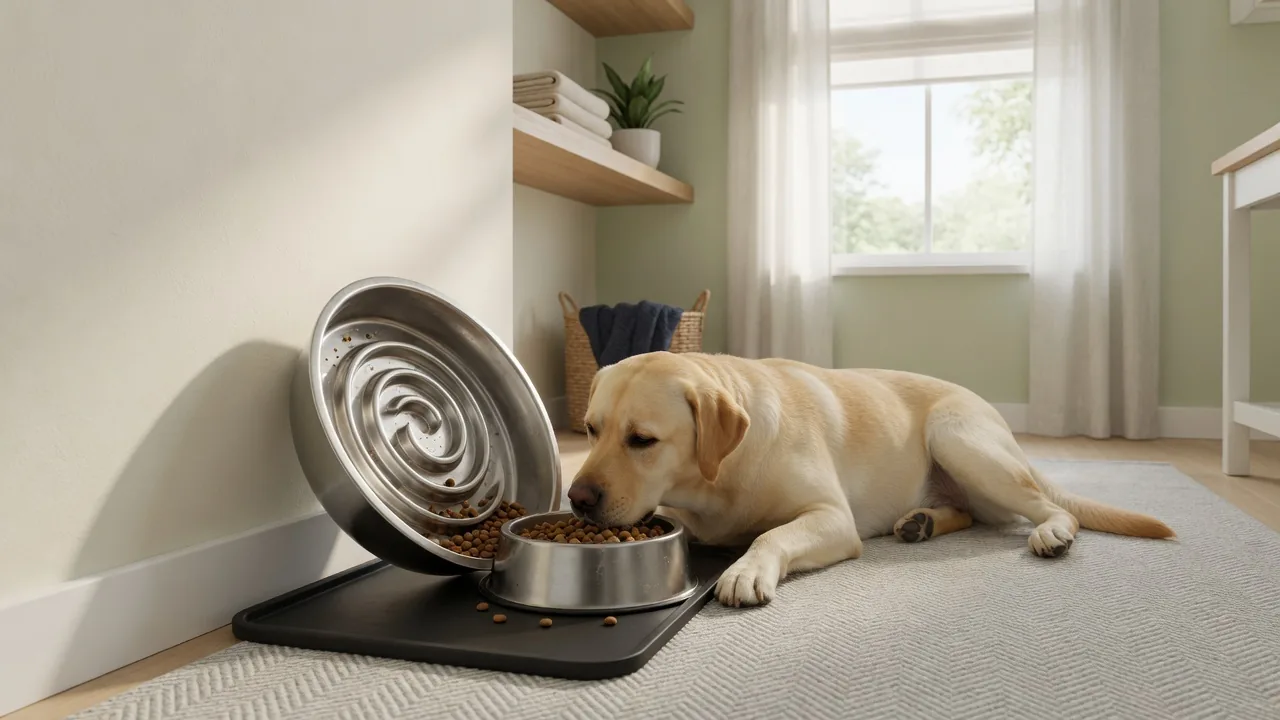
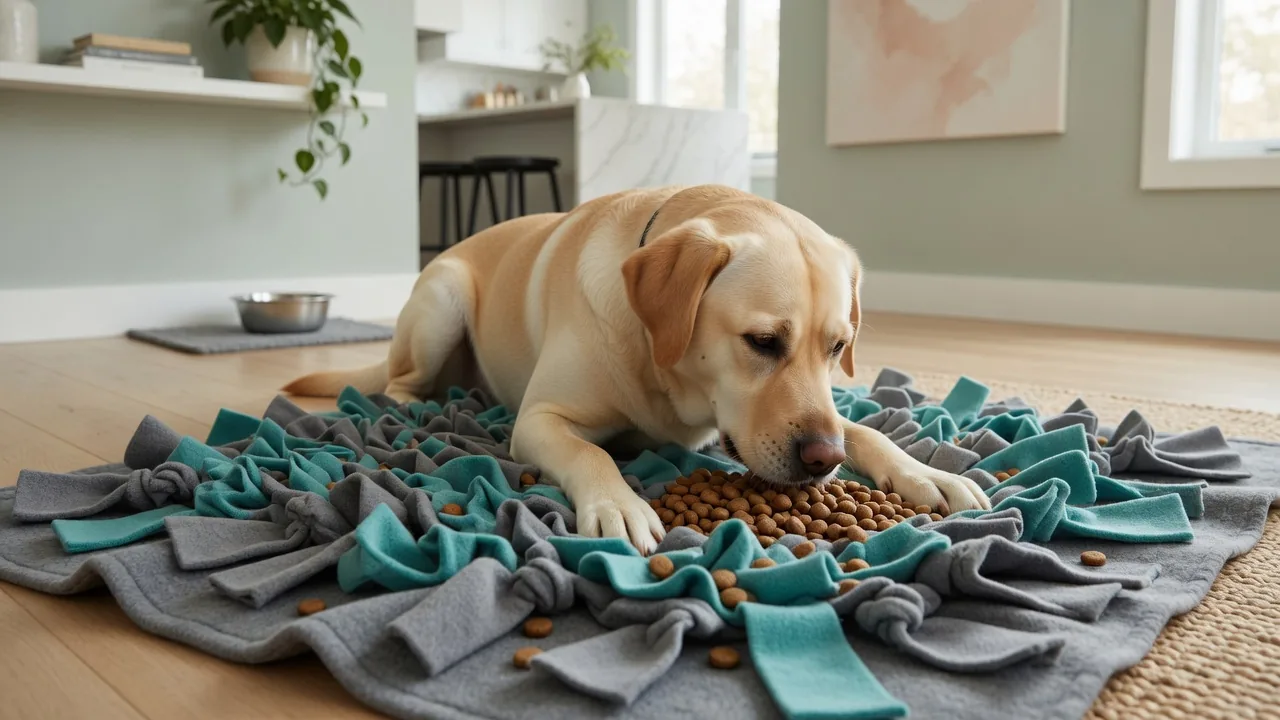
Where they can help. Many guarding dogs are also gulpers that eat in a frantic, defensive rush. A slower meal can calm the pace and the intensity for some dogs. A stainless steel slow feeder paces eating with a raised maze, and scatter-feeding on a snuffle mat turns food into a sniffing task, which can be calmer and more absorbing than a bowl. If your dog's rushing is part of the picture, our guides on why dogs eat so fast and how snuffle mats work explain more.
Where they don't help, or can backfire.
- They are not a treatment for guarding. A moderate or serious case still needs a professional.
- A hard-to-empty bowl or mat can itself be a valuable resource and may be guarded. Offer it only in a separate space, and take away nothing from a dog that is growling.
- In a multi-dog home, never feed two dogs close together from enrichment items. Separate rooms, doors shut.
- Don't pick up a mat or bowl to "test" the dog. The same rules apply as for any bowl.
Calm routines help too: regular meal times, a quiet room, and enough exercise and mental work through the day. Our dog enrichment ideas and enrichment for anxious dogs guides cover that side of things. Treat all of this as supporting your training plan, not replacing it.
When should you call a professional, and who?
Call now if your dog:
- growls, snarls, snaps or bites when approached while eating or chewing,
- guards against children, or children live in or visit the home,
- has escalated over time, or has ever bitten,
- guards other things too (toys, spaces, people),
- or if you feel unsafe or unsure how to feed it.
Who to ask:
- A veterinarian first. Pain and illness can drive guarding, and a vet can rule them out and refer you on.
- A veterinary behaviorist (a veterinarian with specialist behavior training) or an applied animal behaviorist for moderate and serious cases, especially with bites or children involved.
- A certified trainer who uses reward-based methods. Ask how they'd approach guarding. Anyone who recommends punishment, "dominance" or confrontation is the wrong person.
A professional can assess your dog in person and design a plan matched to its triggers, which no article can do. Good professionals will also tell you honestly if management, not "cure," is the realistic goal. Many dogs get much better, and some simply need a feeding setup that keeps everyone safe for life.
The bottom line
Food aggression is guarding, not "badness." Respect the early warnings, make mealtimes safe today with separate space and no children nearby, keep punishment out of it, and bring in a qualified professional for anything beyond mild stiffness. Slower, calmer feeding tools can support the plan, but they don't replace it.
👉 See the Stainless Steel Slow Feeder Dog Bowl → 👉 See the Snuffle Mat for Dogs →
Frequently Asked Questions
What is food aggression in dogs? It's more accurately called resource guarding: an instinctive behavior where a dog protects food from being taken. It ranges from stiffening, eating faster and a hard stare to growling, snapping and biting, and may be aimed at people, other dogs or both.
Is food aggression a sign of a bad dog? No. Guarding is a normal survival instinct, not a sign of dominance or a bad temperament. It is often linked to past scarcity, competition with other pets, learning, or pain. The behavior is a problem for us, but for the dog it's a reasonable worry.
Should I punish my dog for growling over food? No. Punishing a growl removes the warning without changing the feeling behind it, so the dog may skip straight to snapping or biting. Treat a growl as information: back off calmly, make mealtimes safer, and ask a professional for help.
Can I fix food aggression myself? Mild guarding, such as speed-eating or stiffening without growling, may improve with calm, undisturbed feeding and careful reward-based training. Growling, snapping, biting, or any child in the home means you need a veterinary behaviorist or a qualified reward-based trainer.
Does a slow feeder help with food aggression? It can calm frantic eating in some dogs, but it isn't a treatment. It can even become another guarded item. Use it in a separate space, never take it from a growling dog, and get professional help for anything beyond mild guarding.
Why did my dog suddenly start guarding food? A sudden change is worth a vet check first. Dental pain, stomach upset, other illness, or a change in household stress can all trigger guarding in a dog that never did it before. Your vet can rule out medical causes before you treat it as purely behavioral.
Is it safe to have children around a dog that guards food? Not without strict management. Keep children completely separated from a guarding dog while it eats or chews, and don't let them approach the bowl, bones or chews. If a dog has guarded against a child, get professional help promptly.