Can You Use a Slow Feeder for Wet Food?
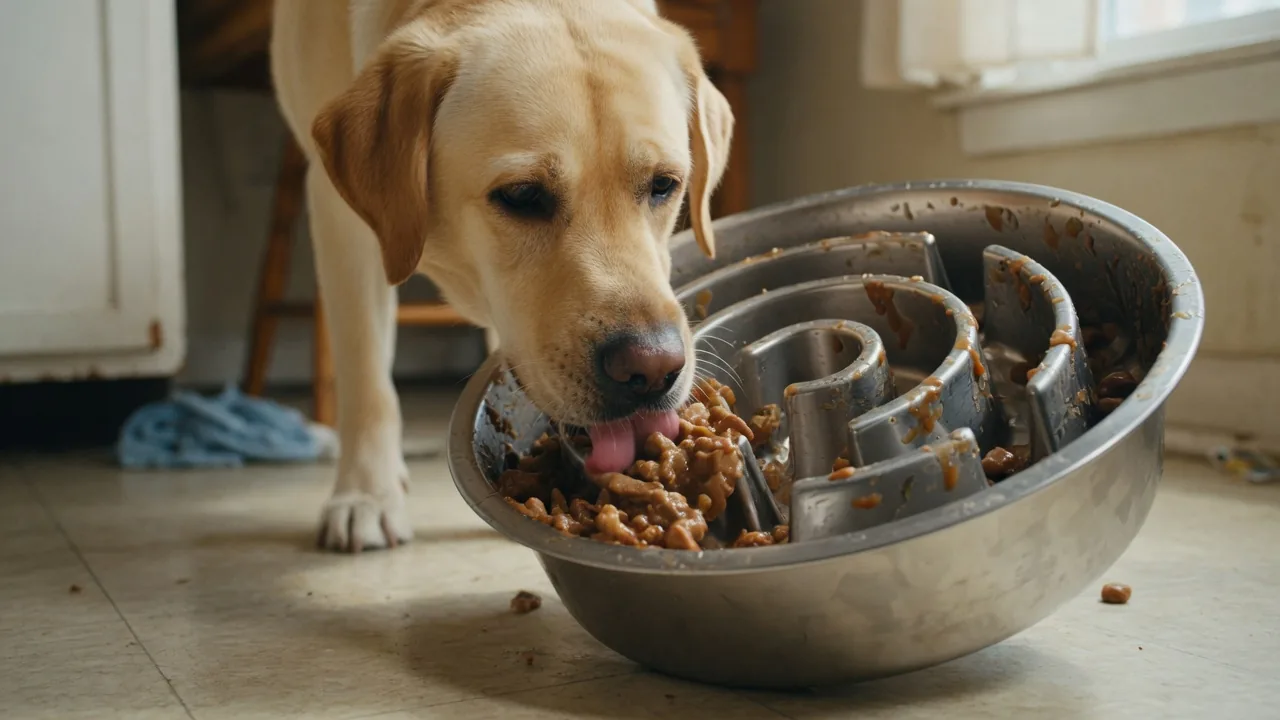
Yes, you can use a slow feeder for wet food. Press the food thinly into the channels instead of piling it in the middle, pick a bowl with wide, smooth grooves you can reach with a sponge, and rinse it straight after the meal. Loaded that way, wet, raw, and mixed meals all slow down well; dumped in a heap, they don't.
That last part is where most disappointment comes from. Wet food behaves nothing like kibble in a maze bowl. Kibble rolls into the channels by itself and has to be chased; wet food sits wherever you put it. So the bowl only does half the work, and how you load it does the rest. This guide covers the loading method, which bowl designs suit soft food, how to handle raw meals safely, and when a different tool is the better choice.
Does a slow feeder really slow a dog down with wet food?
It does, by a different mechanism. With kibble, the ridges block the dog's muzzle from scooping a mouthful. With wet food, the ridges force the dog to lick food out of grooves instead of biting chunks off a mound. Licking is a slower way to eat than gulping, and the more surface area the food is spread across, the longer the meal takes.
Three things decide how much slowing you get:
- Texture. Smooth pâté spreads into channels and has to be licked out, so it slows best. Chunks-in-gravy and shredded foods slow least, because a dog can pick the chunks out and lap the gravy.
- How thinly it's spread. A thin layer pressed into every groove beats a deep pile every time.
- Temperature. Chilled or part-frozen food takes far longer than food at room temperature.
If your dog still clears a properly loaded bowl very quickly, the bowl isn't broken. Some dogs are simply efficient lickers, and freezing (below) is the fix.
How should you load wet food into a slow feeder?
This is the method that makes the difference:
- Start with the right amount. Measure the meal as usual. The slow feeder changes the pace, not the portion.
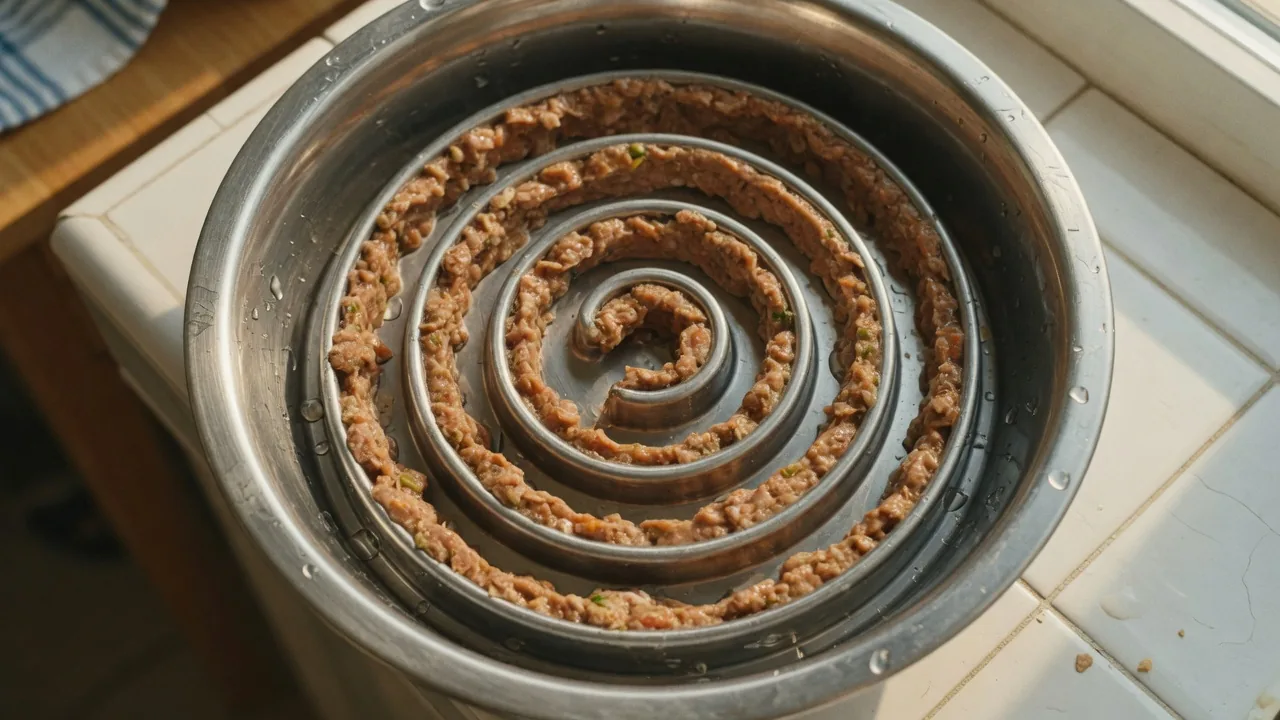
- Spoon it in small dollops around the bowl, not one scoop in the centre.
- Press it down with the back of a spoon or a silicone spatula, pushing the food to the bottom of the channels and along their full length. You want food in the grooves, with the ridge tops mostly visible.
- Smear what's left up the sides of the ridges. Vertical surfaces are slow to clean off with a tongue.
- For chunky food, mash first. A fork turns chunks-in-gravy into something that spreads. Otherwise the chunks get picked out in seconds.
- Serve on a non-slip surface. Licking pushes a bowl around more than eating kibble does. A rubber mat or a bowl with a non-slip base stops the chase across the kitchen.
The whole process adds perhaps thirty seconds to mealtime prep.
Mixed feeding is the easiest case of all. Put the kibble in first so it settles into the channels, then spread the wet food over it and press down. The wet food glues the kibble in place, so the dog has to lick and work each piece free. If you're still deciding whether to feed wet, dry, or both in the first place, our kibble vs wet food comparison walks through that choice.
How should you load pate, chunks, and raw food?
Each wet food texture needs a slightly different approach.
| Food type | How it behaves in a slow feeder | How to load it |
|---|---|---|
| Pate or loaf | Spreads and sticks; the best fit | Press thinly into every channel and smear up the ridges |
| Chunks in gravy | Dog licks the gravy and picks out the chunks | Mash with a fork, or stir into kibble before loading |
| Shredded or flaked | Falls between ridges, then gets lapped up | Mash lightly and press down; add a spoonful of water if it is dry |
| Minced or ground raw | Spreads like pate, with stricter hygiene | Press thin, serve right away, and wash the bowl after every meal |
| Raw chunks, bones, whole prey | Sits on top of the ridges | Not a fit for a maze bowl; serve another way and ask your vet |
| Kibble plus wet topper | Sticks the kibble in place | Kibble first, topper pressed over it |
Two cautions. First, keep to your dog's normal diet. A slow feeder changes the pace, not the menu, so don't add richer food just to fill the grooves, especially if your dog has a sensitive stomach or a prescription diet. Second, if your dog is on a raw diet, follow your vet's or nutritionist's guidance on the formula and safe handling.
Which slow feeder pattern suits wet food best?
Not every maze suits soft food. Deep, narrow, tightly curled channels are excellent for kibble and miserable for pâté: the food packs into corners your dog's tongue can't reach and your sponge can't either.
| Bowl feature | Good for wet food? | Why |
|---|---|---|
| Wide, shallow-to-medium channels | Yes | Tongue reaches the bottom; easy to wipe clean |
| Smooth, rounded ridges | Yes | No sharp corners where food packs in and dries |
| Deep, narrow spiral maze | Poor | Food lodges out of reach; hard to clean |
| Stainless steel | Yes | Non-porous, doesn't scratch easily, tolerates hot water |
| Ceramic (glazed, uncracked) | Yes | Smooth and heavy; replace if it chips or crazes |
| Plastic | With caution | Works when new; scratches can hold residue and odour over time |
| Silicone lick mat | Yes, for part of a meal | Excellent for smooth foods; small capacity |
A fingertip test in the shop (or a close look at product photos) tells you most of what you need: if you can run a finger along the bottom of every channel, your dog's tongue and your dish brush can get there too.
Material matters more with wet food than with kibble, because soft food leaves a film that dry food doesn't. Scratched plastic can hold on to that film, which is where the lingering smell in old plastic bowls comes from. Our stainless steel slow feeder is dishwasher-safe and non-porous, which is the main reason wet and raw feeders choose steel; the full comparison is in stainless steel vs plastic slow feeders.
One honest caveat: any slow feeder designed mainly around kibble will leave a little wet food in the tightest corners. A quick spatula scrape back into the middle halfway through the meal, or accepting a teaspoon of leftovers, is normal.
Which slow feeder fits your dog's muzzle for wet food?
For wet food the muzzle matters more than the weight, because your dog has to get a tongue to the bottom of the grooves.
| Dog | What to look for | Why |
|---|---|---|
| Short, flat-faced breeds (Bulldogs, Pugs, Boxers) | Wide, shallow channels | A short muzzle can't reach into deep, narrow grooves; see slow feeders for Bulldogs |
| Long, narrow muzzles (Dachshunds, collies, greyhounds) | Channels wide enough to enter, moderate depth | A narrow muzzle fits but a long tongue still needs a clear path; see slow feeders for Dachshunds |
| Broad muzzles (Labradors, Golden Retrievers) | Large bowl, rounded ridges, heavy base | Plenty of tongue and enthusiasm; see slow feeders for Labradors and Golden Retrievers |
| Giant breeds | Large capacity, floor level | Wet meals take up more room; see slow feeders for Great Danes |
| Small and toy dogs | A small bowl or a lick mat | A big maze swallows a small portion; the food just gets lost in the grooves |
| Senior dogs or dogs with sore teeth | Shallow, smooth grooves, food at room temperature | Less effort, and nothing hard to lick off |
Not sure how a pattern will suit your dog? Ask your vet, especially for a flat-faced breed that already has trouble breathing while eating.
Can you freeze wet food in a slow feeder?
Yes, and it's the single most effective upgrade. Spread the meal into the channels as above, then put the bowl in the freezer.
- 20–30 minutes firms the surface and stretches the meal noticeably.
- A couple of hours, or overnight, freezes it solid and turns dinner into a long licking session.
Practical points: stainless steel and silicone handle the freezer well; check the manufacturer's guidance for plastic and ceramic, which can become brittle or crack. Let a solidly frozen bowl sit on the counter for a few minutes so the surface isn't hard enough to stick to a tongue. And go gently with dogs that have dental problems or sensitive teeth; a chilled meal rather than a frozen one is kinder for them, and worth a word with your vet.
Frozen meals are especially handy in hot weather and for dogs on restricted exercise, when a meal that takes time is doing two jobs at once.
Is a slow feeder safe for raw food?
It can be, with stricter hygiene. Raw meat can carry bacteria such as Salmonella, which is a risk for the people in the house as much as for the dog. A maze bowl has more surface and more corners than a plain bowl, so it needs more care, not less:
- Use a non-porous bowl (stainless steel or intact glazed ceramic). Skip scratched plastic for raw.
- Wash after every raw meal with hot, soapy water or a dishwasher cycle. Rinsing alone isn't enough.
- Don't leave raw food out. Pick the bowl up when your dog walks away.
- Wash your hands and wipe the feeding surface afterwards.
- If anyone at home is very young, elderly, pregnant, or immunocompromised, talk through raw feeding hygiene with your vet.
Minced or ground raw spreads into channels just like pâté. Chunks and meaty bones don't belong in a maze bowl at all; they simply sit on top.
How do you clean a slow feeder after wet food?
Timing is everything. Wet food rinses off in seconds while it's fresh and sets like glue once it dries.
- Rinse immediately after the meal under warm running water.
- Brush the channels with a dish brush or bottle brush. A sponge alone skips the corners.
- Wash with hot soapy water or run through the dishwasher if the bowl is rated for it. Daily for wet food; after every meal for raw.
- Dry fully before the next use.
Hand-wash or dishwasher? Both work for a bowl that is rated for the dishwasher. Our stainless steel slow feeder is listed as dishwasher-safe, but check the care instructions that come with any bowl before you load it. Plastic bowls are often top-rack only, and some don't tolerate high heat. Hand-washing with a brush gets into the channels better than the dishwasher spray does, so scrub first if the bowl is crusted. Wash dog bowls separately from your own dishes if you prefer, and don't use the same sponge on both.
Preventing mold and smells:
- Dry the bowl fully, including the underside of the ridges and the base, before storing it. A damp bowl in a cupboard is where mold starts.
- Don't leave wet food sitting. Pick the bowl up when your dog is done.
- Keep a bottle brush just for the dog's dishes and let it dry between uses.
- If the bowl still smells after washing, soak it in a mix of white vinegar and warm water, then rinse well. If you see black, green or slimy spots, replace a plastic bowl instead of scrubbing it.
- Scratched or pitted surfaces hold residue. Retire any bowl with deep scratches or chips.
If food has already dried on, soak the bowl in warm water for ten to fifteen minutes before brushing rather than scraping at it. And if a bowl feels slimy even after washing, that film needs a proper scrub. The full routine, including deep cleans and dealing with smells, is in how to clean a slow feeder bowl.
When is a different tool better than a slow feeder?
A slow feeder isn't always the right answer for soft food.
A lick mat is purpose-built for spreadable food. It's flat, has shallow texture, and suits smooth pâté, yogurt, and purées. The limit is capacity: fine for a small dog's meal or part of a larger dog's, not a full dinner for a Labrador. Our guide to what to put on a lick mat covers fillings.
A stuffable rubber toy holds a portion of wet food, freezes well, and suits crate time.
A snuffle mat is the wrong tool for wet food. Fabric and wet food don't mix. Keep the snuffle mat for dry kibble and treats.
Plenty of owners settle on a combination: slow feeder for the main meal, lick mat for a portion or a treat.
What mistakes should you avoid?
- One big scoop in the middle. The dog eats the mound off the top and the maze does nothing.
- Choosing the most complicated maze. Complex patterns are for kibble. For wet food they mean wasted food and hard cleaning.
- Leaving the bowl down for hours. Wet food spoils at room temperature. Pick it up within about half an hour, sooner in warm weather.
- Rinsing instead of washing. A rinse removes what you can see. The film left behind needs soap and a brush.
- Expecting kibble-level slowing from chunky food. Mash it, mix it with kibble, or freeze it.
A slow feeder also won't fix the underlying reason a dog bolts food. If the gulping is extreme, new, or comes with vomiting, see how to stop your dog eating too fast and speak to your vet.
For soft food, a lick mat is a good companion in the shop alongside the slow feeder bowl.
Frequently Asked Questions
Can you put wet food in a slow feeder? Yes. Spread the wet food thinly and press it into the channels with a spoon or spatula so your dog has to lick it out. A bowl with wide, smooth grooves works best, and it should be rinsed straight after the meal before the food dries.
Do slow feeders work with wet food as well as with kibble? They work differently. Kibble is slowed because ridges block scooping; wet food is slowed because the dog has to lick it from grooves. Smooth pâté spread thin slows well, chunky food much less. Freezing the loaded bowl gives the biggest improvement.
Is a slow feeder good for raw food? It can be, provided the bowl is non-porous, such as stainless steel, and you wash it with hot soapy water or in a dishwasher after every raw meal. Minced raw spreads into the channels well. Wash your hands and the feeding area too, since raw meat can carry bacteria.
Can you freeze wet food in a slow feeder? Yes. Spread the food into the channels and freeze for 20 to 30 minutes for a firmer meal, or a few hours for a solid one. Stainless steel and silicone handle freezing well. Let a fully frozen bowl stand a few minutes before serving.
How do you clean a slow feeder after wet food? Rinse it under warm water as soon as the meal ends, scrub the channels with a dish brush, then wash with hot soapy water or run it through the dishwasher if the bowl is rated for it. If food has dried on, soak it for ten to fifteen minutes first.
What is the best slow feeder for wet food? Look for wide, shallow-to-medium channels with rounded ridges, a non-slip base, and a non-porous material such as stainless steel. Avoid deep, narrow spiral mazes, which trap soft food where neither your dog's tongue nor a brush can reach it.
Is a lick mat or a slow feeder better for wet food? A lick mat is ideal for smooth, spreadable food in small amounts, such as a small dog's meal or a treat. A slow feeder holds a full meal for a medium or large dog. Many owners use both: the bowl for dinner, the mat for a portion or a calming activity.