How to Clean a Slow Feeder Dog Bowl (Properly)
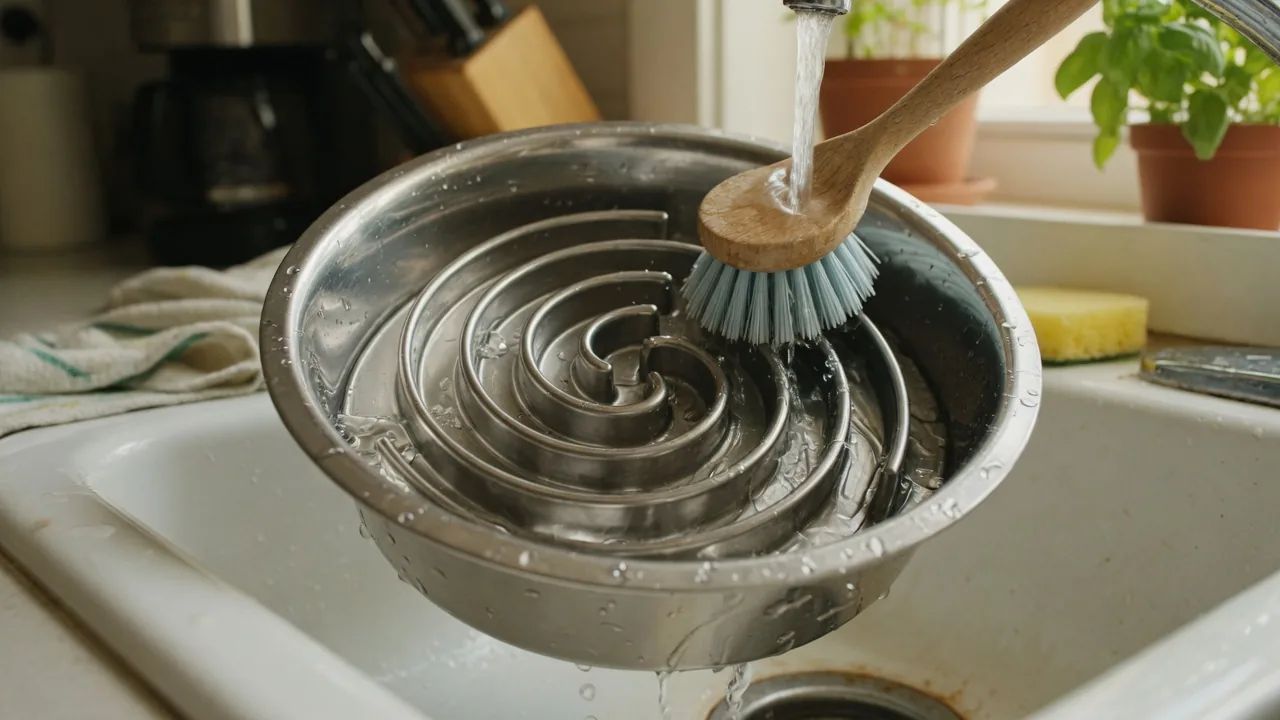
To clean a slow feeder dog bowl, wash it after every meal with hot water, dish soap and a brush that reaches into each channel, rinse well and let it dry fully. Once a week, soak and deep-clean it or run it through a hot dishwasher cycle if the material allows. Wet and raw food need a wash immediately after eating.
That's more often than most people wash a dog bowl, and the maze is the reason. Ridges and corners hold on to food film that a quick swish under the tap doesn't shift. The routine below takes about a minute a day once it's a habit, and there's a section for each material, because steel, plastic, silicone and ceramic don't all tolerate the same treatment.
Why does a slow feeder need more cleaning than a normal bowl?
Run a finger around a dog bowl that's only been rinsed and you'll feel a slippery layer. That's biofilm: a mix of saliva, food residue and the bacteria living in it. It clings, it resists a plain-water rinse, and it rebuilds within a day.
A flat bowl has one smooth surface to wipe. A slow feeder has walls, channels and inside corners — several times the surface, much of it out of a sponge's reach. Kibble dust and fat settle at the base of each ridge. Wet food smears into the corners and dries hard.
This is ordinary kitchen hygiene, not a scare story. The standard food-safety advice for pet owners is the same as for your own plates: wash food bowls with soap and hot water after each use. It protects the dog, and it protects the people in the house, since the same germs that live on raw meat and in pet food can end up on hands and worktops. A clean bowl also smells of nothing, which matters to picky eaters.
What do you need to clean a slow feeder properly?
Not much, but the brush is non-negotiable.
- A stiff-bristled bottle brush or dish brush with a head narrow enough for the channels. A sponge alone can't reach the base of the ridges.
- A small detail brush (an old toothbrush works) for tight corners and the underside rim.
- Ordinary unscented or mild dish soap.
- Hot water.
- A clean tea towel or a drying rack.
- A separate sponge or brush for pet bowls, especially if you feed raw. Don't use the one you wash the family's dishes with.
- Optional: white vinegar and baking soda for limescale, film and smells.
How do you clean a slow feeder after each meal?
- Tip out leftovers. Don't top up fresh food over old.
- Rinse straight away with hot water. Residue that's still wet comes off in seconds. Dried-on residue takes soaking.
- Soap and brush every channel. Work the bristles along the base of each ridge and into the corners, then around the rim, where saliva collects.
- Wash the outside and the base too. Drool and food run down the sides and under the bowl.
- Rinse until there are no suds. Leftover soap can put a dog off their food.
- Dry it. Towel-dry or leave it upside down on a rack. Bacteria and mould like damp, so don't stack a wet bowl in a cupboard.
For a dog on dry kibble, this takes under a minute. If you can't wash after every meal, once a day is the minimum for kibble. Wet and raw meals need washing as soon as the dog has finished.
Having two bowls and rotating them makes all of this easier: one in use, one clean and dry.
How do you deep clean a slow feeder each week?
A weekly deep clean deals with whatever the daily wash missed.
- Soak the bowl in hot, soapy water for 10–15 minutes.
- Scrub every channel with the bottle brush, then go round the corners and the rim with the detail brush.
- Deal with film or smell. Make a paste of baking soda and a little water, scrub it into the channels and rinse. Or soak for 10–15 minutes in a mix of equal parts white vinegar and water, which also loosens limescale. Use one or the other — mixed together they just neutralise each other.
- Take off any removable rubber ring or feet and wash underneath. Water gets trapped there, and that's where mould and black gunk appear first.
- Rinse thoroughly and dry completely before putting the ring back on.
If the bowl is dishwasher-safe, a hot cycle can replace steps 1–3. Check the channels afterwards, though. Dishwashers are good at heat and bad at dislodging food that has dried into a corner, so a quick brush beforehand helps.
Sanitising. Hot soapy water and a proper scrub are enough for most households. If your dog is fed raw, has been ill, or someone at home has a weakened immune system, you may want to sanitise as well: after washing, use a dilute solution of plain unscented household bleach mixed and timed according to the instructions on the bottle for food-contact surfaces, then rinse very thoroughly and air dry. Never mix bleach with vinegar or any other cleaner. Avoid leaving stainless steel soaking in bleach for long periods, as it can mark the surface. If you'd rather skip bleach, a hot dishwasher cycle is the simpler route for materials that can take it.
Can you put a slow feeder in the dishwasher? Cleaning by material
| Material | Dishwasher? | Use | Avoid | Replace when |
|---|---|---|---|---|
| Stainless steel | Yes | Hot water, soap, nylon brush; vinegar for water spots | Steel wool, harsh scourers, long bleach soaks | Rarely — if dented so it rocks, or the base ring perishes |
| Hard plastic | Only if labelled, usually top rack | Soft brush, mild soap | Abrasive pads, very hot cycles (warping), harsh chemicals | Scratched, cracked, chewed, warped or permanently smelly |
| Silicone | Often yes — check label | Hot soapy water; baking soda paste for greasy film | Sharp tools that nick the surface | Torn, sticky after washing, or chewed |
| Ceramic | Usually yes | Soap and a soft brush | Knocks against the sink; sudden temperature changes | Chipped, cracked or the glaze is crazed |
Always go by the manufacturer's instructions for your particular bowl. "Top rack only" matters with plastic because the lower rack sits nearer the heating element.
A few stainless-steel specifics, since owners often ask:
- White spots or cloudy patches are limescale from hard water. Wipe with vinegar, rinse and dry.
- A rainbow or bluish tint is a harmless heat or mineral mark. Vinegar usually removes it.
- Small orange specks are often rust transferred from something else — steel wool fragments, or contact with other metal in the dishwasher. Scrub them off with baking soda paste and avoid steel wool.
- Dry it after washing if your water is hard, to keep it looking clean.
Steel is the easiest of the four to keep hygienic, which is a big part of why we make our stainless steel slow feeder from it. If you're weighing up materials, see stainless steel vs plastic slow feeders.
How should you clean a slow feeder after wet or raw food?
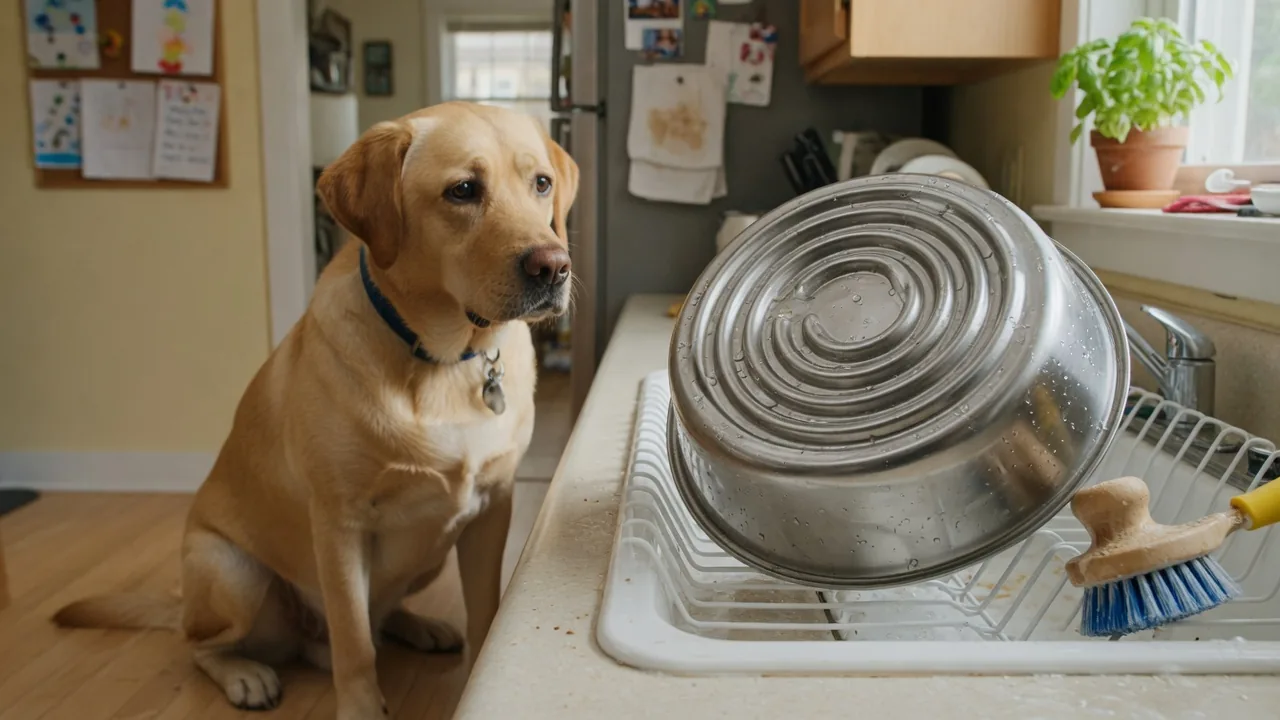
Wet food smears and sets like glue. Raw food carries the same bacteria as raw meat in your own kitchen. Both change the routine.
- Pick the bowl up as soon as your dog finishes. Don't leave wet or raw food sitting out; it spoils quickly at room temperature, faster in warm weather.
- Wash immediately with hot soapy water and a brush, or put it straight in the dishwasher.
- For raw feeding: use a dedicated brush or sponge, wash your hands afterwards, and wipe down the sink, tap and any surface the bowl touched. Clean the floor or mat where the bowl sat, too.
- If food has dried on, soak for fifteen minutes first. Don't chisel at it with a knife or scourer — on plastic and silicone that creates the scratches you're trying to avoid.
- Sanitise weekly (dishwasher or the bleach method above).
Choosing a pattern with wider channels makes wet-food cleaning far less painful. More on that in slow feeders for wet food.
Why does the bowl still smell or feel slimy after washing?
Work through these in order.
Slimy straight after washing? You're rinsing, not scrubbing. Biofilm needs soap and friction. Brush every channel.
Smells once it's dry? Residue is left in the corners or under the rubber base. Deep clean, and take the base ring off.
Greasy film that won't shift? Common on silicone and plastic with fatty foods. Scrub with baking soda paste and hot water.
Black or pink spots? Mould or bacterial growth, usually under the rim or base ring where it stays damp. Scrub, sanitise and dry properly from now on. If the spots are in the material itself and don't come off, replace the bowl.
Smell returns within a day or two, every time? On a plastic bowl, this usually means the surface is scratched and holding residue below where a brush can reach. Cleaning won't fix that. It's time for a new bowl — and a good moment to consider one that doesn't scratch. Our comparison of the best stainless steel slow feeders covers what to look for.
What cleaning mistakes should you avoid?
- Rinsing with water only. It leaves the film behind.
- Sponge instead of brush. The channels stay dirty.
- Topping up without washing. Old residue goes under new food.
- Steel wool or harsh scourers — on any material. They scratch plastic and can leave rust specks on steel.
- Strongly scented or antibacterial "extras." Dogs' noses are sensitive; a perfumed bowl can put them off eating.
- Mixing cleaning products. Bleach with vinegar or ammonia produces dangerous fumes.
- Putting the bowl away damp.
- Forgetting the water bowl and the feeding mat. They grow the same film.
- Keeping a damaged bowl. Cracks, chips and deep scratches can't be cleaned.
The bottom line
Cleaning a slow feeder properly comes down to three habits: wash with soap and a brush after meals, deep clean weekly, and dry it before it goes away. Match the method to the material, be stricter with wet and raw food, and replace any bowl that's scratched, cracked or smells no matter what you do.
👉 Stainless Steel Slow Feeder Dog Bowl — dishwasher-safe →
Frequently Asked Questions
How do you clean a slow feeder dog bowl? Empty leftovers, rinse with hot water, then scrub every channel with dish soap and a bottle brush, including the rim and the outside. Rinse off all the suds and dry the bowl fully. Do a deeper soak-and-scrub or a hot dishwasher cycle once a week.
How often should I clean a slow feeder bowl? Ideally after every meal, and at least once a day for dry kibble. Wash immediately after wet or raw food. Add a weekly deep clean, and wash the water bowl daily as well.
Can you put a slow feeder bowl in the dishwasher? Stainless steel slow feeders can go in the dishwasher. Plastic ones only if the label says so, usually on the top rack, because heat can warp them. Many silicone and ceramic bowls are dishwasher-safe too. Always follow the manufacturer's instructions.
Why does my slow feeder bowl smell even after washing? Usually residue is left in the corners or under the rubber base, so deep clean and remove the base ring. If a plastic bowl smells again within a day or two every time, it is probably scratched and holding residue, and it should be replaced.
What is the slimy film in my dog's bowl? It is biofilm, a layer of saliva, food residue and bacteria that sticks to the surface. Rinsing with water does not remove it. Scrub with soap, hot water and a brush, and wash the bowl daily to stop it building up again.
Is it safe to clean dog bowls with vinegar or baking soda? Yes. Diluted white vinegar helps with limescale and odours, and baking soda paste lifts greasy film. Use them separately, rinse thoroughly afterwards and still wash with soap. Neither is a substitute for proper scrubbing.
What brush is best for cleaning a slow feeder? A stiff bottle brush or narrow dish brush that fits into the channels, plus a small detail brush or old toothbrush for corners. Avoid steel wool and abrasive pads, and keep a separate brush for pet bowls if you feed raw food.