Dog Bloat (GDV): Signs, Causes & How to Prevent It
The first signs of dog bloat (GDV) are a suddenly swollen or hard belly, unproductive retching, restlessness and drooling. If you notice these, treat it as an emergency and contact your vet or nearest emergency clinic immediately. Bloat is one of the fastest-moving emergencies in dogs. Also called GDV (gastric dilatation-volvulus), it happens when the stomach fills with gas and, in the dangerous form, twists on itself, cutting off blood flow within hours.
One thing before the detail: if you think your dog has bloat, stop reading and call. Do not wait to see if it passes, and do not try home remedies.
⚠️ This article is general information, not veterinary advice. Bloat is a life-threatening emergency. When in doubt, contact your vet immediately.
What is bloat (GDV) in dogs?
"Bloat" gets used for two related things:
- Gastric dilatation (simple bloat): the stomach fills with gas, food or fluid and stretches, but does not twist.
- GDV (gastric dilatation-volvulus): the swollen stomach rotates, trapping its contents and cutting off its own blood supply. Pressure on nearby blood vessels and the diaphragm affects circulation and breathing, and the dog can go into shock.
From the outside, you can't tell which is happening, and a dilated stomach can twist. That's why every suspected case is handled as an emergency, not something to monitor at home.
What are the symptoms of bloat in dogs?
Signs usually come on suddenly, often within hours of a meal, a big drink, or exercise, though they can also appear without an obvious trigger. Watch for:
- A swollen, tight or distended abdomen, sometimes drum-like when tapped. In a deep-chested dog, this can be subtle early on.
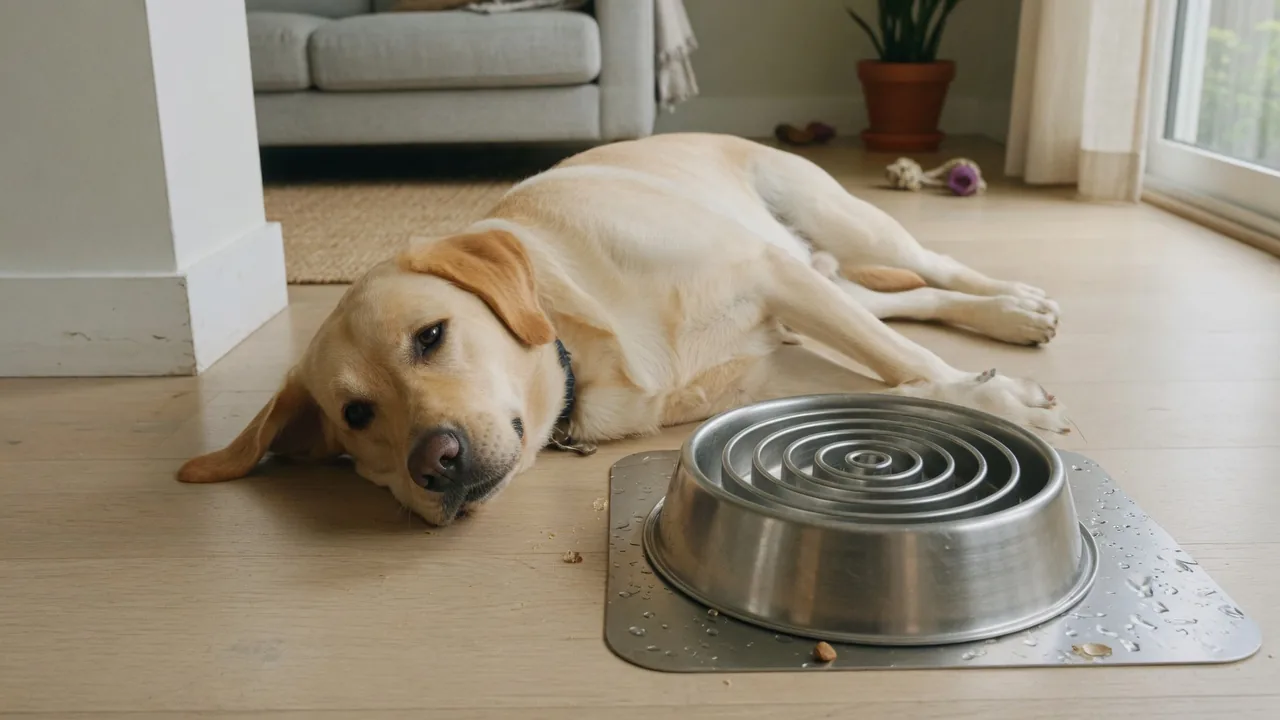
- Unproductive retching: heaving or trying to vomit with little or nothing coming up. This is the classic sign.
- Restlessness, pacing, and inability to settle or lie comfortably.
- Drooling well beyond normal.
- A hunched or "praying" posture, or looking at the flank.
- Rapid, shallow breathing or heavy panting.
- Later: pale or gray gums, weak pulse, collapse.
You won't see every sign, and you don't need to. A swollen belly with unproductive retching is a go-now combination. Even one or two signs that worry you, in a breed at risk, justify a call.
Is it bloat, or something less serious?
Owners understandably wonder whether it's just gas or a gulped meal. This table is not a diagnostic tool. It shows why the worrying pattern is different, and when to stop guessing.
| Looks like | Usually | What differs from bloat |
|---|---|---|
| Hiccups after eating | Gulped air, harmless and brief | Dog is otherwise comfortable; no retching, no swelling. See dog hiccups after eating |
| Gas, rumbling, farts | Diet or swallowed air | Dog is comfortable and belly is soft. See dog gas remedies |
| Vomiting after eating fast | Regurgitation or simple vomiting | Food actually comes up, and the dog settles afterwards. See dog eats too fast and throws up |
| Bloat / GDV | Emergency | Unproductive retching, hard swollen belly, restlessness, distress |
If you can't tell the difference, that is the answer: call.
What should you do if you suspect bloat?
- Call your vet or the nearest emergency clinic now, and tell them you suspect bloat so they can prepare. Phone while someone else drives, if you can.
- Go immediately. Every hour matters. Don't wait for the symptoms to peak or for morning.
- Keep your dog calm and still on the way.
- Do not try to make your dog vomit, give medication, or press on or "burp" the belly. None of these is safe, and a twisted stomach can't be relieved at home.
- Don't give food or water.
- Note the timeline: when the dog last ate or drank, when signs began. This helps the vet.
Treatment at the clinic usually involves stabilizing the dog (often with IV fluids and pain relief), relieving gas pressure, imaging to confirm whether the stomach has twisted, and, for GDV, emergency surgery to reposition the stomach. Vets commonly tack the stomach to the body wall (gastropexy) during that surgery so it can't twist again. The sooner treatment starts, the better the outlook, which is exactly why recognizing the signs matters.
What causes bloat in dogs?
The cause isn't fully understood, and it usually involves several factors at once rather than one trigger. Large epidemiological studies, including long-running work at Purdue University, have pointed to a mix of body shape, temperament and feeding factors. In plain terms:
- Deep, narrow chest. The best-recognized risk factor. Dogs whose chest is much deeper than it is wide are over-represented.
- Larger body size. Risk is higher in large and giant dogs.
- Age. Risk tends to increase as dogs get older, possibly because the ligaments that anchor the stomach loosen.
- Family history. A close relative that has had bloat increases the odds.
- Temperament. Fearful or anxious dogs have been reported at higher risk than relaxed, happy ones.
- Eating habits. Eating very fast, and being fed a single large meal a day, have been associated with higher risk.
- Being underweight. Thin dogs have been over-represented in some studies.
- Exercise and stress around meals. Vigorous exercise soon before or after eating is commonly cited, although the evidence is less clear than for the factors above.
- Raised bowls. The evidence is mixed and contested. We go through it in our guide on whether raised dog bowls cause bloat.
Because causes are multi-factorial and not fully proven, no single change guarantees prevention. The goal is to shift the odds on the factors you can control.
Which dogs are most at risk?
Any dog can bloat, but risk is highest in large and giant deep-chested breeds, including:
- Great Danes (consistently among the highest)
- German Shepherds
- Standard Poodles
- Boxers
- Weimaraners
- Dobermans
- Irish Setters, Bloodhounds, Saint Bernards and similar breeds
Mixed-breed dogs with a deep, narrow chest and large frame can be at risk too, so judge the body, not just the breed label. Look at your dog from the side: if the chest is much deeper front-to-back than wide, mention it to your vet.
For high-risk dogs, ask your vet about prophylactic gastropexy, often combined with spaying or neutering or done laparoscopically. It tacks the stomach in place so that it can't rotate. It doesn't necessarily stop the stomach filling with gas, but it removes the twisting that makes bloat lethal. It's surgery with its own risks and costs, so it's a decision to make with your vet.
How can you reduce the risk of bloat?
None of this prevents bloat. These steps shift the odds on the factors you control.
1. Slow down fast eating
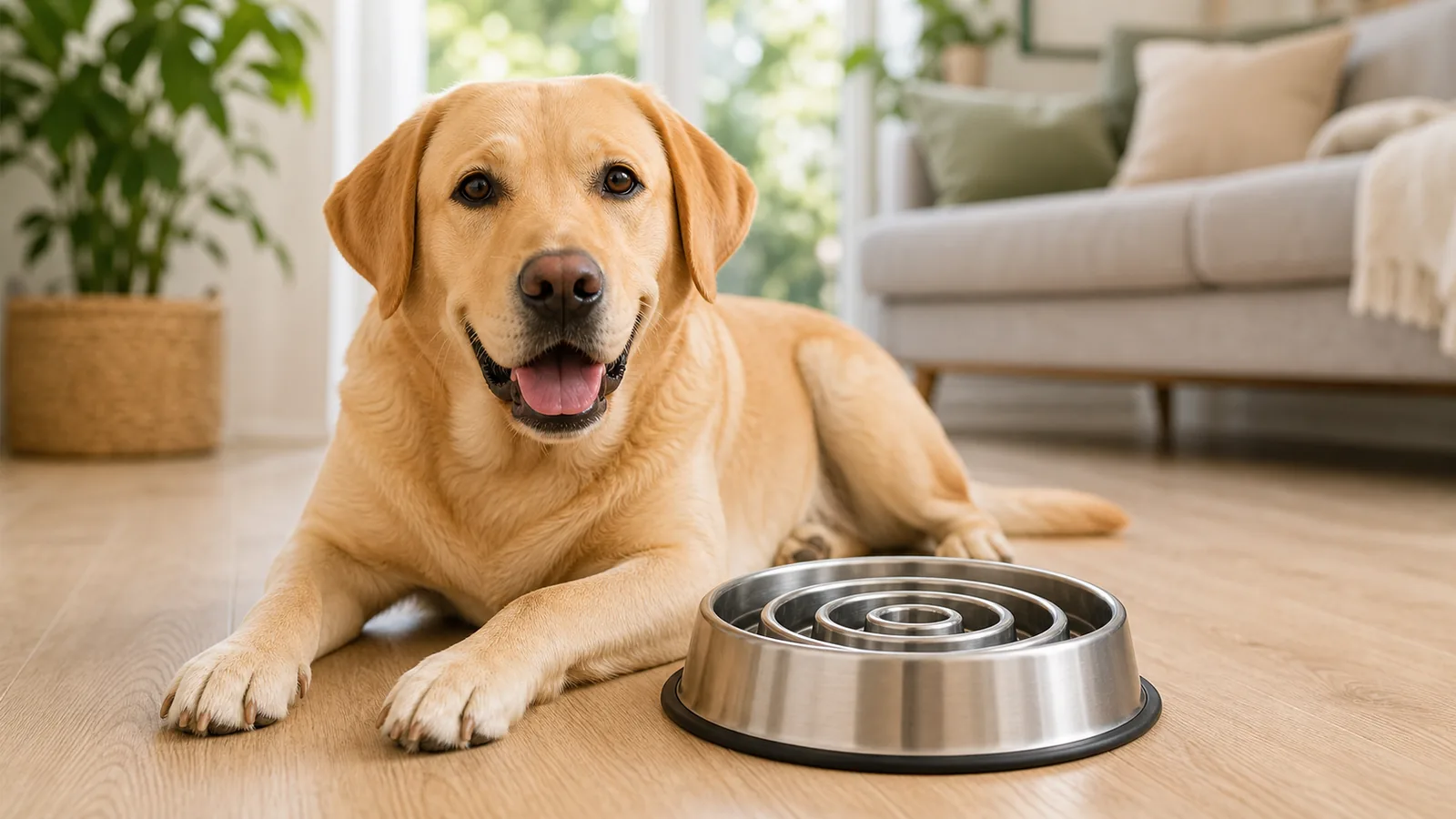
Gulping means swallowing more air, one of the factors linked to bloat. A slow feeder is one of the simplest at-home measures. Our explainer on whether slow feeder bowls are good for dogs covers how they work and where they fall short, and our guide to stopping a dog eating too fast lists other methods. A stainless steel slow feeder paces meals at every feeding. For big dogs, see slow feeders for large dogs.
2. Split the daily ration
Two or more meals a day, rather than one large one, is a common recommendation for at-risk dogs. See how often to feed your dog for schedules.
3. Keep exercise away from mealtimes
Many vets advise a calm window before and after eating. An hour is a common rule of thumb, but ask your vet what suits your dog. Fresh water should always be available, and be wary of a dog gulping a huge amount right after exercise.
4. Lower mealtime stress
Feed anxious dogs in a quiet place. In multi-dog homes, feed apart so there's no racing or guarding.
5. Keep your dog at a healthy weight and don't change foods abruptly
Sudden diet switches can upset digestion. Introduce new food over several days, and ask your vet about diet for a high-risk dog.
6. Talk to your vet about breed-specific prevention
This is where gastropexy discussions belong, along with any history of bloat in your dog's family. If you're buying a puppy of a high-risk breed, ask the breeder about bloat in the line.
These steps support, and never replace, veterinary advice. Don't use any of them to postpone a vet visit if your dog shows symptoms.
Can a slow feeder prevent bloat?
No bowl can. Honest framing: swallowed air is one contributing factor among several, and slowing a meal may reduce it. That's a reasonable, low-cost precaution, especially for a dog that eats like it's being timed. It does nothing about body shape, age, genetics or temperament, which carry more weight. If your dog is high-risk, treat a slow feeder as a small piece of a plan that your vet shapes, not as the plan.
The bottom line
Bloat is a fast, life-threatening emergency. The most useful thing any owner can do is recognize it and act immediately: a swollen belly plus unproductive retching means the vet, now. You can't eliminate the risk, but slowing fast eating, splitting meals, keeping exercise away from meals and calming mealtimes may help reduce it. For high-risk breeds, make a prevention plan with your vet, including the question of gastropexy.
Frequently Asked Questions
What are the first signs of bloat in a dog? Usually a suddenly swollen or hard belly, unproductive retching (heaving with little or nothing coming up), restlessness and pacing, drooling and a hunched posture. Signs can start within hours of eating. Treat any combination as an emergency and contact your vet immediately.
How quickly does dog bloat progress? GDV can become life-threatening within hours. There is no safe wait-and-see window, so go to your vet or an emergency clinic right away rather than monitoring at home.
Can a slow feeder prevent bloat? No bowl can prevent bloat. A slow feeder may reduce one contributing factor, swallowed air from gulping, but it is not a cure or a guarantee. It is one sensible precaution alongside veterinary guidance.
Which dogs are most at risk of bloat? Large, deep-chested breeds such as Great Danes, German Shepherds, Standard Poodles, Boxers, Weimaraners and Dobermans. Older age, a fearful temperament, being underweight and a family history of bloat can add to the risk.
Is bloat always an emergency? Yes. Even simple bloat can progress to the twisted form (GDV), so any suspected bloat should be treated as an emergency and not monitored at home.
What is the difference between bloat and GDV? Bloat (gastric dilatation) is a stomach swollen with gas; GDV is when that stomach also rotates, trapping its contents and blood supply. You can't tell them apart from outside, which is why both need urgent care.
Can bloat be prevented with surgery? A preventive gastropexy tacks the stomach in place so it can't twist, and vets sometimes recommend it for high-risk breeds, often at the same time as spaying or neutering. It is major surgery that needs a vet's judgment, and it doesn't guarantee the stomach never fills with gas.
Save this guide