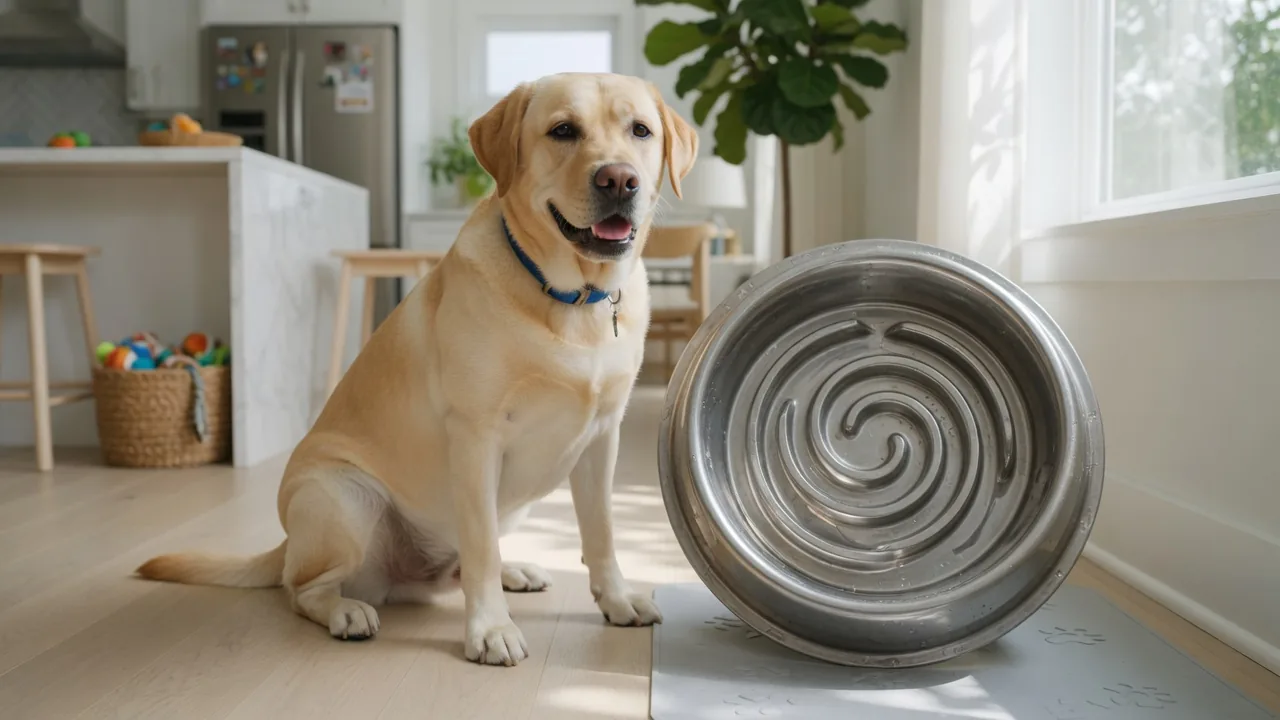
Why Does My Dog Get Hiccups After Eating?
Hiccups after a meal are common in dogs and usually harmless. The most frequent cause named by veterinary and kennel club sources is eating or drinking too fast, which swallows air and fills the stomach quickly; excitement, cold and stress are other triggers. Most bouts pass within minutes. Hiccups that last for hours, keep returning through the day, or come with coughing, wheezing, vomiting, pain or low appetite deserve a call to your vet.
This page is general information, not a diagnosis. We are a pet-feeding site, not a veterinary practice, so wherever we make a health statement we say which source it comes from (full list at the end), and where the sources disagree we say that too. The rest of the page covers what a hiccup is, what can set it off around mealtimes, what to watch at home, which look-alikes matter, and when to phone a vet.
What is actually happening when a dog hiccups?
A hiccup is a reflex. The diaphragm, the sheet of muscle under the lungs that drives breathing, goes into a sudden spasm, and the opening at the top of the windpipe closes abruptly. That closing is what makes the "hic" sound (American Kennel Club).
In dogs it often looks more dramatic than it sounds. The chest or belly jumps in a steady rhythm, sometimes with hardly any noise. A dog that is wandering about, wagging and hiccuping is typically having an ordinary bout.
Why mammals hiccup at all is not settled. The AKC notes that scientists do not know the exact reason and mentions two theories: that it helps relieve gas or an upset stomach, or that it is left over from development before birth.
What are the common possible causes of dog hiccups?
Sources agree on a short list of everyday triggers. PetMD (veterinarian-reviewed) lists swallowing air, eating or drinking too fast, overeating, excitement, cold or sudden temperature changes, rough play, stress and rapid, heavy breathing. The AKC and the Royal Kennel Club give very similar lists for puppies, adding tiredness.
Less often, hiccups are connected to a medical problem. PetMD names respiratory illness (including kennel cough), asthma, pneumonia, heart disease and heatstroke, and the Royal Kennel Club says that hiccups lasting days or weeks can occasionally point to infection, injury or other problems, though it describes those cases as very rare. You cannot tell the difference by watching, which is why duration and accompanying signs matter more than the hiccups themselves.
Why do hiccups show up right after meals?
Mealtime combines several of the everyday triggers at once.
Swallowed air. A dog that gulps takes in air with each mouthful. Air plus food in the stomach is the usual explanation sources give for post-meal hiccups, and it is also why the same dogs often burp and pass gas.
A fast-filling stomach. Eating a large meal very quickly is listed as a trigger by the Royal Kennel Club (eating too much, or too quickly). If you are unsure whether your dog's pace counts as fast, we have rough timings in how long it should take a dog to eat.
Excitement. Some dogs are wound up before the bowl lands: spinning, panting, breathing quick and shallow. Excitement and heavy breathing are both listed as triggers by PetMD and the AKC, and fast breathing also tends to make the gulping worse.
Drinking fast, or cold water. Gulping water can do the same job as gulping food, and cold is a listed trigger. We cover the water side in dog drinks water too fast.
Why do puppies hiccup so much more than adult dogs?
Puppy hiccups are very common. The Royal Kennel Club calls them "perfectly normal" and says they are usually nothing to worry about unless they last a long time or come with other signs. The AKC likewise says hiccups are much more common in puppies and usually decrease as dogs age; the Royal Kennel Club puts the decline at around four months onward.
Why puppies are more prone is not firmly established. The Royal Kennel Club lists several theories, including still-developing digestive organs, and it notes that puppies tend to eat, drink and play at speed, which feeds the air-swallowing trigger. If your puppy is bright, eating, growing and hiccuping, that fits what these sources describe as normal. Slowing meals is still a good habit to build early, and our guide to a puppy eating too fast covers how to do it at puppy scale.
What should you watch for at home?
You do not need to do anything clever. A few minutes of observation, and a note or a phone video, give your vet far more than "he hiccups sometimes".
- How long does a bout last? Time it. Most last minutes. Write down any that run past an hour.
- How often? Once after dinner, or several times a day, or on most days for a week? Frequency is one of the points the Royal Kennel Club and PetMD both raise.
- When, relative to food? Straight after a rushed bowl, after drinking, after play, after excitement, or at unrelated times? A pattern around fast eating points to the feeding-related causes above; no pattern is worth mentioning to your vet.
- What else is going on? Coughing, wheezing or changed breathing, drooling, vomiting or regurgitation, retching, reduced appetite, lethargy, signs of pain. The sources list each of these as a reason to call.
- Is your dog bothered? Relaxed and distracted by a toy is reassuring. Anxious, pacing, drooling or unable to settle is not hiccups-as-usual.
- Film a typical episode. Twenty seconds on a phone tells a vet more than a description.
If you want to track patterns over a couple of weeks, a simple notebook or notes app is a good way to log meal times, speed and symptoms in one place.
Is it really hiccups? How to tell them from look-alikes
Owners describe several different things as "hiccups". This table is a guide to what to compare, not a way to diagnose your dog.
| What you see | What it might be | Typical pattern | What to do |
|---|---|---|---|
| Rhythmic, quiet jerks of chest/belly; dog relaxed | Hiccups | Every few seconds, usually minutes | Let it pass; see the section below |
| Loud, rapid snorting breaths in, head and neck extended, dog stands still | Reverse sneezing | Several seconds up to about a minute | VCA Canada describes it as harmless; mention it to your vet if it is new, frequent or severe |
| Heaving belly, drooling, lip-licking, then food comes up | Nausea or vomiting | Builds over a minute or more | See our guide on eating too fast and throwing up; vet if it repeats |
| Food slides back out soon after eating with little effort | Regurgitation | Minutes after a fast meal | Slow the meal; ask your vet if it repeats |
| Honking or hacking cough, not rhythmic | Coughing | Bursts | Vet visit; PetMD lists coughing with hiccups as a reason to call |
| Repeated retching with little or nothing coming up, swollen belly, restlessness, drooling | Possible bloat (GDV) | Gets worse, dog distressed | Emergency vet immediately |
| Twitching of the face or a limb, dog seems unresponsive | Not hiccups | Not tied to breathing rhythm | Film it and call your vet |
If food is coming back up after fast meals, that is a different problem with its own fixes: see dog eats too fast and throws up.
When do dog hiccups need a vet?
On their own, a short bout in an otherwise well dog is not usually a worry. These are the points where the sources we checked say to get advice:
- Duration. Sources give different thresholds. PetMD (DVM-reviewed) says to see a vet if hiccups last more than an hour or so and happen several times a day. The AKC and the Royal Kennel Club say longer than a few hours. We use the cautious end: if a bout passes an hour, or hiccups keep returning through the day or over several days, phone your vet for advice, and do not wait if any of the signs below appear.
- Breathing changes. The AKC says to see a vet if hiccups turn into a wheezing sound or come with irregular or difficult breathing. The Royal Kennel Club adds coughing, sneezing and a runny nose.
- Digestive or general signs. PetMD and the Royal Kennel Club list drooling, vomiting, retching, diarrhoea, low appetite, lethargy and not eating or drinking.
- Pain or distress. If your dog seems bothered, agitated or in pain, call.
- Puppies. PetMD advises a vet visit for a puppy with hiccups plus vomiting, diarrhoea or appetite changes.
One combination is an emergency, not a hiccup question. The American College of Veterinary Surgeons (ACVS) describes gastric dilatation-volvulus (GDV, or bloat) as rapidly progressive and life-threatening, needing immediate medical attention. Early signs it lists include restlessness, stretching, drooling and unproductive retching; later signs include panting, a swollen abdomen, weakness and collapse. If your dog is retching without bringing anything up, has a swollen belly, or seems distressed after a meal, go to an emergency vet now. ACVS names large and giant breeds and deep-chested dogs as higher risk, with Great Danes, Weimaraners, St. Bernards and Irish and Gordon setters among those commonly affected, though nearly any breed has been reported. Hiccups alone are not a sign of bloat. More detail is in our guide to dog bloat and GDV symptoms.
How do you handle a hiccup bout that has already started?
Mostly, you wait. PetMD says most hiccups stop on their own within a few minutes. If you would like to help, these are the gentle options named across the sources:
- Let your dog settle. Keep things calm. A cuddle or a slow chest rub helps your dog relax, and calmer breathing tends to end a bout (PetMD suggests distraction with a cuddle or a soft belly rub).
- Take the food and water away for now. PetMD suggests removing bowls, and the Royal Kennel Club advises not feeding a puppy until the hiccups stop to lower the risk of choking.
- Offer a small, slow sip of water if your dog wants one. Do not let a gulper drain the bowl.
- Try a short, relaxed walk. Both PetMD and the Royal Kennel Club mention it. Keep it gentle on a full stomach.
What not to do: do not startle your dog, pull the tongue, press on the eyes or hold the mouth or nose. The Royal Kennel Club says such folk remedies should never be tried on a dog. Do not give human hiccup remedies or antacids, and do not offer a big meal or treat "to wash it down".
What feeding-related factors can you change?
If your dog hiccups after most meals, treat it as a note about how they eat. This list draws on advice from PetMD and the Royal Kennel Club (slow feeders, smaller and more frequent meals, calm mealtimes, avoiding sudden diet changes and extremes of temperature) plus ordinary practical steps. Most owners will not need to get past the first two.
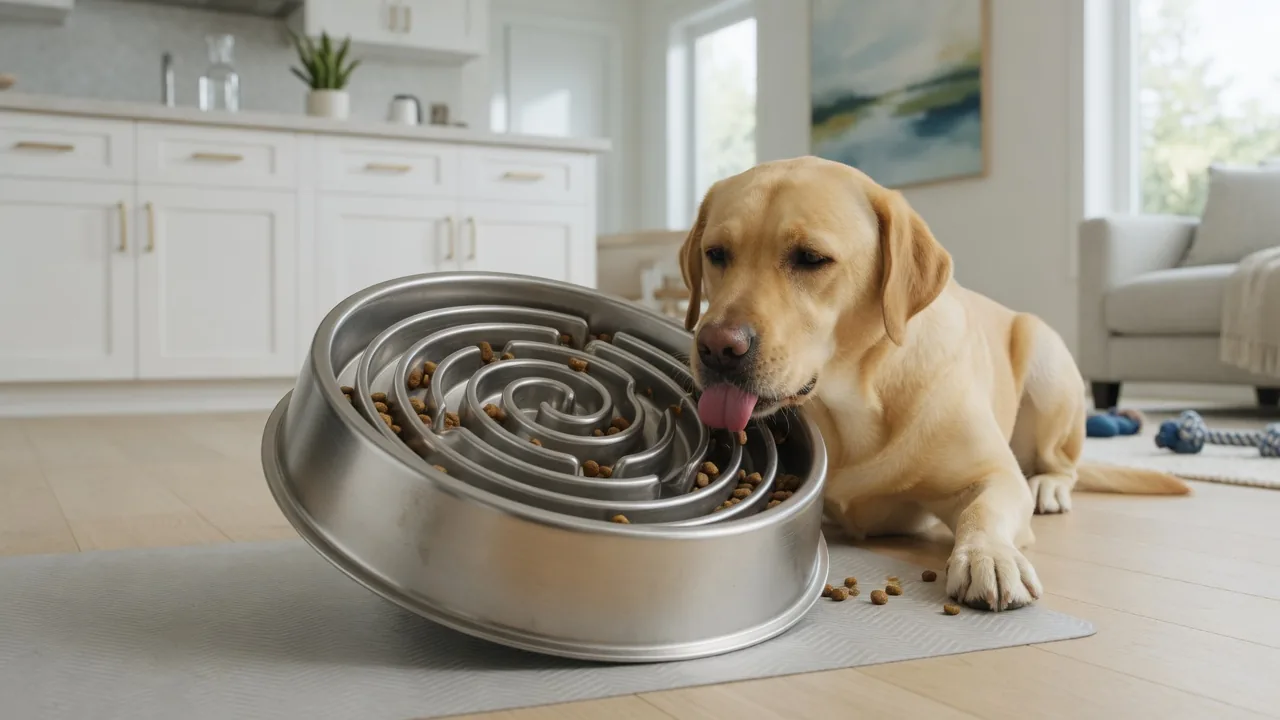
1. Slow the bowl down. Both PetMD and the Royal Kennel Club suggest slow-feed bowls. A stainless steel slow feeder breaks the meal into shallow channels so your dog picks up a few pieces at a time instead of taking open-mouthed scoops, which should mean fewer big gulps. If a maze bowl is new to you, our maze dog bowl guide explains how to choose a pattern.
2. Split the daily ration. PetMD and the Royal Kennel Club both suggest smaller, more frequent meals. The total amount stays the same; ask your vet about portions if you are unsure. Our puppy feeding schedule shows how to space meals by age.
3. Lower the excitement before food. Prepare the meal quietly, ask for a sit, and wait for a few seconds of calm before the bowl goes down.
4. Keep dogs apart at mealtime. Competition is a common reason dogs rush. Feeding in different rooms often changes the pace.
5. Keep the time after eating quiet. The Royal Kennel Club suggests avoiding exercise for about an hour after a meal. If you have a large or deep-chested breed, ask your vet how long to wait, since these dogs carry a higher bloat risk.
6. Change food gradually, and only for a reason. PetMD lists sudden diet changes as a possible trigger. If you suspect the food does not agree with your dog, ask your vet before switching. Change foods gradually over several days if your vet agrees.
For every other way of slowing a fast eater, such as muffin tins, scatter feeding and hand feeding, see how to stop your dog eating too fast.
Two honest limits. A slow feeder addresses gulping, one common trigger. It will not do anything for hiccups driven by excitement alone, and it is not a treatment for a medical cause. We also do not claim that a slow feeder prevents bloat: a 2016 RCVS Knowledge review of six studies found the evidence on whether fast eating raises GDV risk was too limited and mixed to conclude either way, and ACVS lists fast eating only as a possible contributor. If you have slowed meals properly for a couple of weeks and nothing has changed, that is useful information to take to your vet.
The bottom line
For most dogs, hiccups after dinner are a short, harmless side effect of eating with too much enthusiasm. If they turn up at most meals, slowing the pace, splitting the portions and calming the build-up are the changes the sources recommend. Long bouts, breathing trouble, digestive symptoms or pain go to your vet; retching with nothing coming up and a swollen belly goes to an emergency clinic.
👉 See the Stainless Steel Slow Feeder Dog Bowl →
Disclosure: we sell the slow feeder linked above, and the buy button leads to Amazon, where we earn a commission on qualifying purchases at no extra cost to you. See our affiliate disclosure.
Sources
Health statements on this page rely on the following. Accessed 27 October 2026.
- American Kennel Club, "Can Dogs Get Hiccups?" (updated 23 March 2026): https://www.akc.org/expert-advice/health/can-dogs-get-hiccups/
- Royal Kennel Club (formerly The Kennel Club, UK), "Why does my puppy have hiccups?": https://www.royalkennelclub.com/health-and-dog-care/health/health-and-care/a-z-of-health-and-care-issues/why-does-my-puppy-have-hiccups
- PetMD, "Dog Hiccups: What Are They and How Do Dogs Get Them?" (reviewed by Barri J. Morrison, DVM, 30 November 2024): https://www.petmd.com/dog/general-health/dog-hiccups
- VCA Canada, "Reverse Sneeze in Dogs" (Weir, Williams and Ward, DVMs; updated 31 October 2022): https://vcacanada.com/know-your-pet/reverse-sneeze-in-dogs
- American College of Veterinary Surgeons, "Gastric Dilatation-Volvulus": https://www.acvs.org/small-animal/gastric-dilatation-volvulus/
- RCVS Knowledge, Buckley L., "Are dogs that eat quickly more likely to develop a gastric dilatation (+/- volvulus) than dogs that eat slowly?", Veterinary Evidence 1(4), 2016: https://doi.org/10.18849/VE.V1I4.53
Frequently Asked Questions
Why does my dog get hiccups after eating? The most common reason given by veterinary and kennel club sources is eating or drinking too fast, which swallows air and fills the stomach quickly. Excitement, stress, cold and heavy breathing are other triggers. Most bouts pass on their own within minutes.
How long should dog hiccups last? Most bouts last a few minutes. Sources differ on when to call a vet: PetMD says more than an hour or so with repeats through the day, while the AKC and the Royal Kennel Club say longer than a few hours. A cautious rule is to phone your vet if a bout passes an hour or keeps coming back over several days.
When do dog hiccups need a vet? Get advice if hiccups are long-lasting or frequent, or come with coughing, wheezing or difficult breathing, vomiting, retching, drooling, diarrhoea, low appetite, lethargy or signs of pain. Puppies with hiccups plus vomiting, diarrhoea or appetite changes should be seen too.
Are hiccups after eating a sign of bloat? Hiccups alone are not a described sign of bloat. The ACVS lists restlessness, drooling, unproductive retching, a swollen abdomen, weakness and collapse. If you see retching with nothing coming up or a swollen belly after a meal, treat it as an emergency and go to a vet immediately.
Do puppies get hiccups more than adult dogs? Yes. The AKC and the Royal Kennel Club both say hiccups are much more common in puppies, and the Royal Kennel Club says episodes tend to decrease from about four months onward. Frequent short bouts in an otherwise bright, eating puppy are described as normal.
How can I stop my dog's hiccups? Mostly you wait. Keep your dog calm, take the bowls away for now, offer a small slow sip of water if wanted, or try a short gentle walk. Do not startle your dog, pull the tongue or hold the nose or mouth.
Will a slow feeder bowl stop my dog's hiccups? It may help when gulping is the trigger, because it slows the meal and so can reduce swallowed air. It will not help hiccups caused by excitement alone or by a medical problem, so talk to your vet if slowing meals makes no difference.
What is the difference between hiccups and reverse sneezing in dogs? Hiccups are rhythmic jerks of the chest or belly. Reverse sneezing is a burst of loud, snorting breaths in, with the head and neck extended, usually lasting several seconds to about a minute. VCA Canada describes it as harmless, but mention it to your vet if it is new, frequent or severe.